Why Amazon Paused Drone Delivery in Arizona
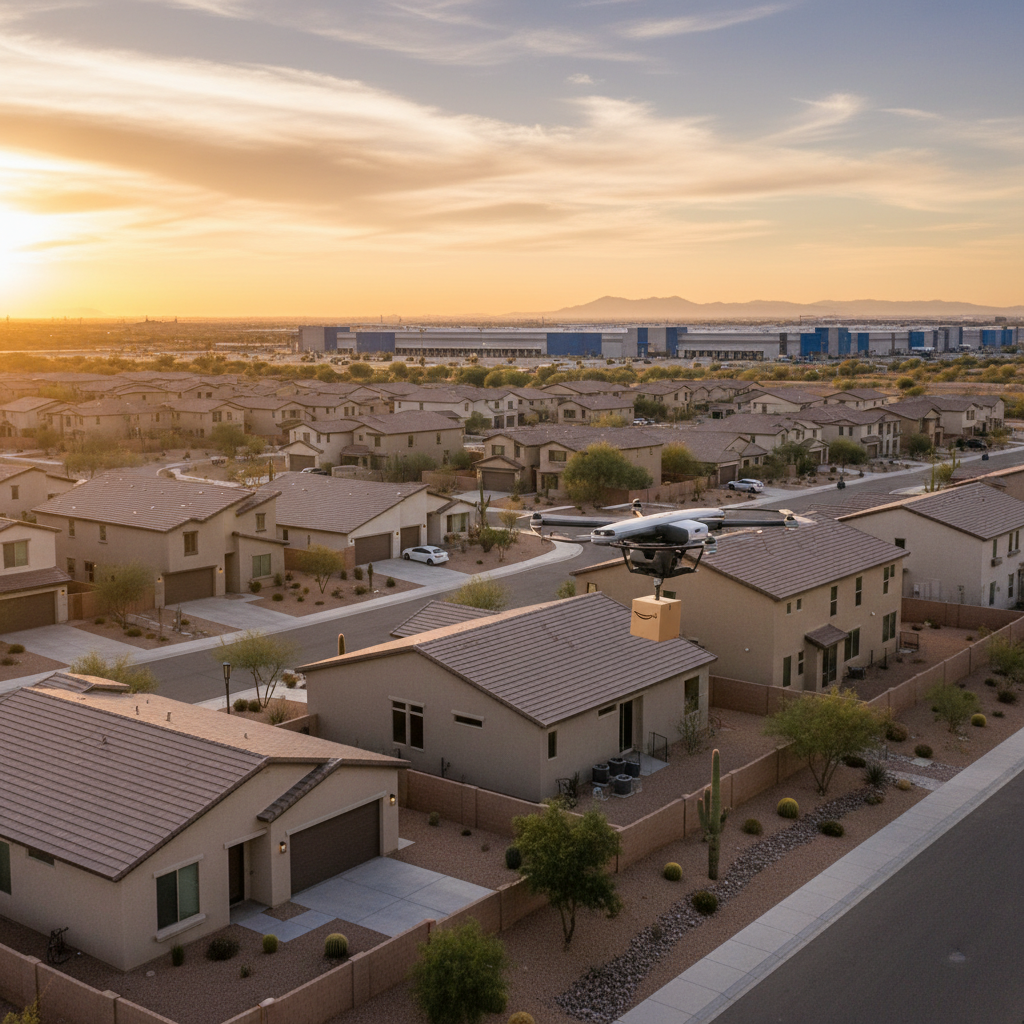
Prime Air over the West Valley: Tolleson, Arizona becomes a real-world testbed for flying robots with packages.
If you blinked, you might’ve missed it: Amazon’s futuristic drone delivery in Arizona went from big launch… to sudden pause… to cautious restart.
So what actually happened with Amazon’s drone delivery pause in Arizona—and what does it say about the future of getting ChapStick dropped into your backyard by a flying robot?
Let’s unpack it.
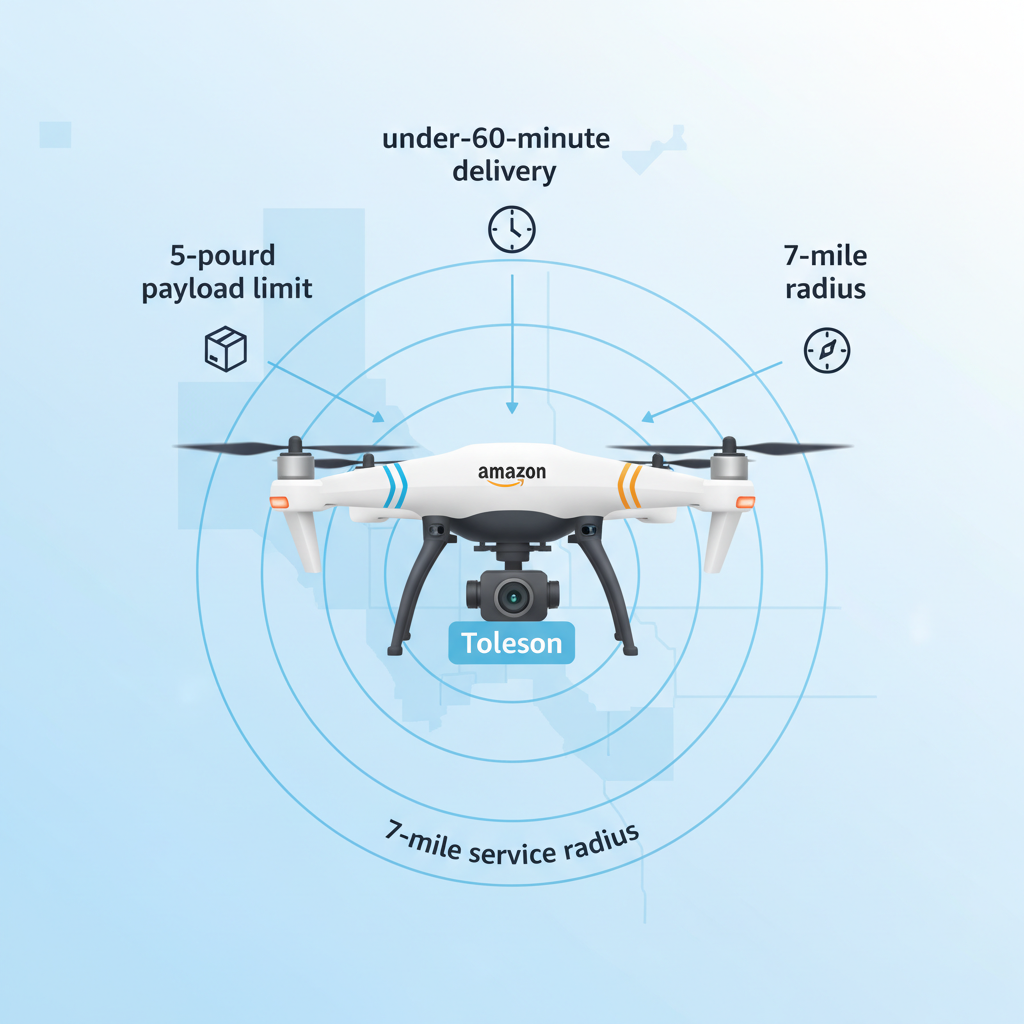
Prime Air 101: a 5-pound payload, under-60-minute targets, and a tight radius around Tolleson.
Quick recap: When did Amazon drone delivery start in Arizona?
Amazon’s Prime Air drone delivery officially took off in the West Valley of the Phoenix metro area (around Tolleson, Arizona) in late 2024. Customers within a limited radius could order eligible products—up to about 5 pounds—and get them delivered by drone in under an hour. (aboutamazon.com)
A few key details of the Arizona rollout:
- Location: West Valley / Tolleson area, linked to a same‑day delivery site.
- Weight limit: Items up to 5 lbs (think toiletries, small electronics, office supplies).
- Speed: Targeted delivery in 60 minutes or less.
- Drone model: Amazon’s MK30 drone, designed to be quieter, fly farther, and handle light rain.
The service was marketed as an ultra‑fast option, tightly integrated into Amazon’s existing same‑day network rather than a standalone science experiment. (aboutamazon.com)

Behind the scenes: control rooms, live telemetry, and a constant watch on what the MK30 is doing in the sky.
So why did Amazon pause drone delivery in Arizona?
In January 2025, Amazon voluntarily paused all commercial Prime Air drone deliveries in both Tolleson, Arizona and College Station, Texas. (azfamily.com)
According to company statements, the core reasons were:
1. Software changes to the MK30 drone
Amazon said it needed to update the drone’s software and would suspend commercial operations until those updates were completed and approved by the FAA. (azfamily.com)
2. Safety and regulatory alignment
The company emphasized that “safety underscores everything we do in Prime Air” and framed the pause as precautionary, not reactive. Employees at the affected sites stayed on payroll during the pause, signaling this wasn’t a shutdown, but a time‑out. (azfamily.com)
3. Environmental and sensor challenges (the unglamorous part)
Reporting later highlighted that Arizona’s dusty environment contributed to altitude sensor issues in the MK30, which led to the need for a software fix. Desert dust particles were interfering with how accurately the drone measured its distance from the ground—obviously a big deal when you’re descending into people’s yards. (ecommercenorthamerica.org)
There was also a separate crash at Amazon’s Pendleton, Oregon, test site in December 2024 involving two MK30 drones, one of which reportedly caught fire after crashing. Amazon insisted this incident was not the primary reason for the commercial pause in Arizona and Texas, but it certainly intensified scrutiny and urgency around safety and software reliability. (geekwire.com)
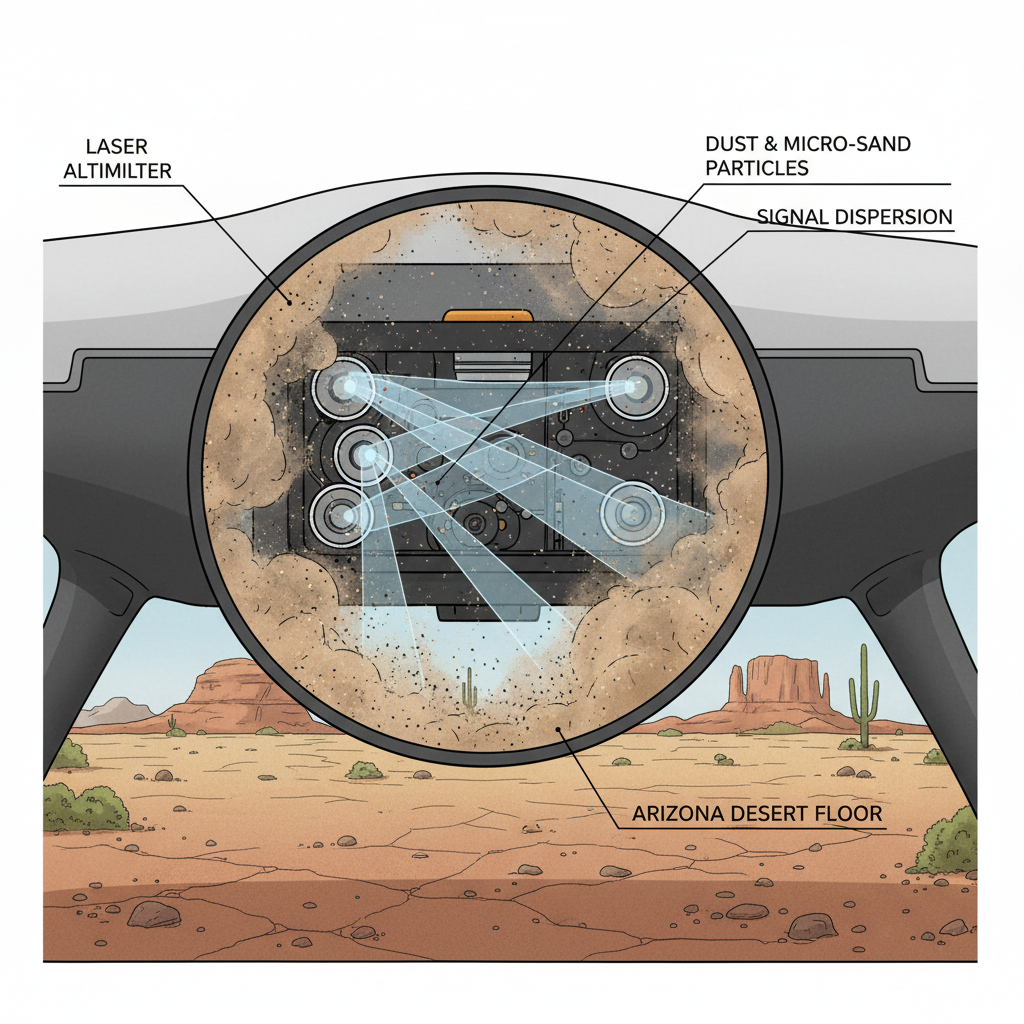
Unexpected villain: micro-sand and desert dust confusing the MK30’s sense of how far it is from the ground.
Was the Oregon crash the real reason?
Short answer: Amazon says no, but it definitely didn’t help.
Here’s the timeline:
- Dec 2024: Two MK30 drones crash at Amazon’s Pendleton, Oregon test facility; one reportedly catches fire. (geekwire.com)
- Jan 17, 2025: Amazon voluntarily pauses commercial drone deliveries in Arizona and Texas to implement software updates and seek FAA approval. (azfamily.com)
Amazon has been firm that the Oregon incident was not the primary reason for pausing operations—pointing instead to software changes and ongoing system improvements. But practically speaking, a high‑profile crash at a test site plus altitude sensor glitches in dusty Arizona were always going to converge into one reality: hit pause, fix the system, then resume.
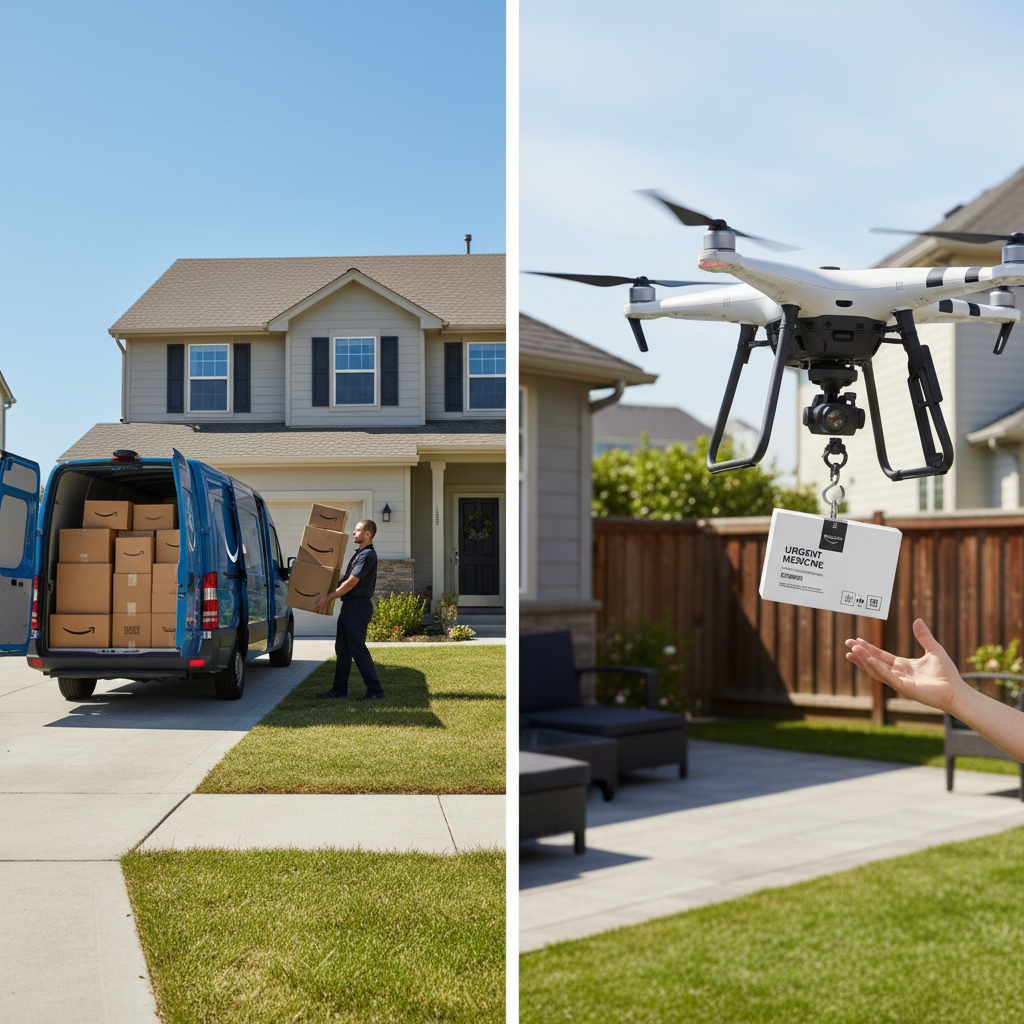
Different jobs, different vehicles: vans for bulk, drones for “I need this right now” items.
How long did the Arizona pause last?
The pause wasn’t permanent.
- The operational halt began around January 17, 2025. (azfamily.com)
- After roughly two months of downtime, Amazon resumed Prime Air operations in both Tolleson, AZ and College Station, TX, once the MK30 software updates were complete and the FAA signed off. (ecommercenorthamerica.org)
By spring 2025, local coverage in Arizona showed Amazon actively flying again, demonstrating drone drops within a 7‑mile radius of the Tolleson facility and promoting 60‑minute deliveries of small items like headphones, batteries, and toiletries. (azfamily.com)
Drones are for the fast, light stuff—not your 55-inch TV or Costco bulk order. Yet.
What exactly can drones deliver in Arizona?
Even post‑pause, Amazon’s drone service in Arizona is intentionally narrow.
Typical constraints include:
- Weight: Up to about 5 pounds.
- Product types: Smaller, high‑need items (health, household, tech accessories, personal care, etc.). (techcrunch.com)
- Coverage area: Limited radius (about 7 miles) around the Tolleson drone hub, covering parts of the West Valley. (azfamily.com)
- Timing: Daylight hours, favorable weather—no heavy winds, no heavy rain, and no late‑night missions (yet). (techcrunch.com)
“Help, I need baby wipes, batteries, or allergy meds right now, but I don’t want to leave the house.”
Not:
“Please air‑drop my 55‑inch TV and Costco haul.”
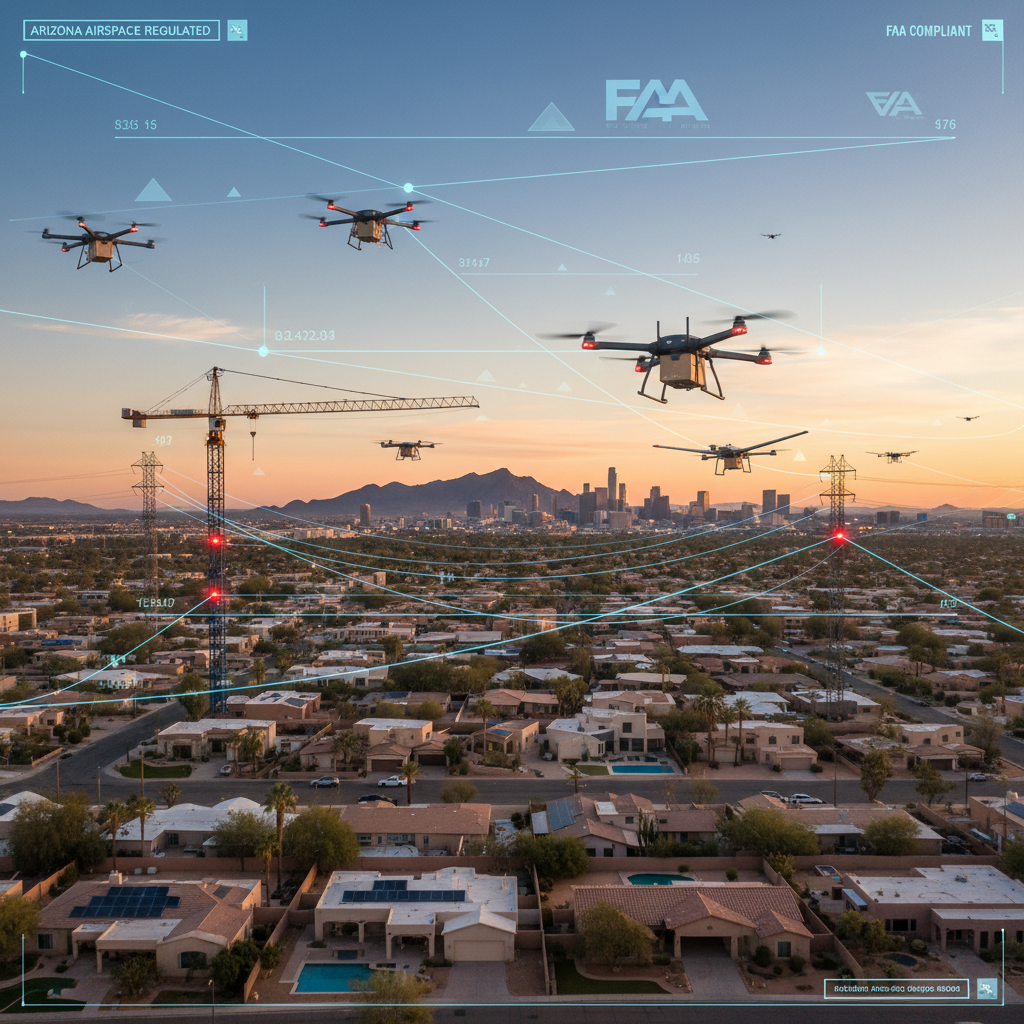
Tomorrow’s sky: tightly managed aerial “lanes” where drones weave around cranes, power lines, and regulations.
What does the Arizona pause tell us about the future of drone delivery?
The Arizona pause is a case study in how emerging tech actually rolls out in the real world.
1. Safety will always trump speed
No matter how cool 30‑minute drone delivery sounds in a keynote, the FAA, local communities, and Amazon’s own lawyers care a lot more about:
- Where drones fly relative to power lines, cranes, and homes.
- How they behave in wind, dust, and heat.
- What happens when systems misread altitude or have sensor issues.
The Arizona pause, plus separate drone crash investigations (like the later collision with a crane boom near Tolleson in 2025), show regulators are closely watching, and Amazon can’t just “move fast and break things” in the sky. (techcrunch.com)
2. Environmental realities matter (dust is the villain now)
Arizona is beautiful—but from an engineering perspective, it’s also dusty, hot, and windy.
Dust fouling altitude sensors isn’t the kind of futuristic problem you see in sci‑fi movies, but it’s exactly the kind of thing that determines whether drone delivery can operate safely at scale in desert metros like Phoenix. (ecommercenorthamerica.org)
3. This is still a pilot, not a mass rollout
Despite all the media hype, Prime Air remains tiny compared to Amazon’s core logistics network. As of mid‑2020s reporting, even after years of development, the total number of commercial drone deliveries was minuscule relative to competitors like Wing and Zipline, which have hundreds of thousands to millions of flights under their belts. (ecommercenorthamerica.org)
In other words: Tolleson and College Station are test beds, not the new normal.
For now, most Arizonans are spectators, not users, of drone delivery—unless you live in the right slice of the West Valley.
What does this mean if you live in Arizona?
If you’re in the West Valley near Tolleson and inside the eligible radius:
- You might see drone delivery as an option at checkout for certain small items.
- Expect restrictions based on time of day and weather.
- Service availability can still change if regulators, software updates, or incidents trigger new pauses.
If you’re not in that zone:
- Drone delivery is more of a future‑watch story than a usable service right now.
- The Arizona pause and restart cycle is still meaningful—it shows how Amazon and regulators respond to real‑world risks, which will shape if/when the service ever expands.
The Jetsons version of delivery looks sleek—but it’s built on years of debugging in places like Tolleson.
So… is Amazon drone delivery in Arizona the future or just a very expensive demo?
Honestly? It’s both.
As a demo, it proves Amazon can:
- Integrate drones into its same‑day fulfillment network.
- Hit under‑an‑hour delivery windows for small items.
- Operate in a complex metro environment, not just rural test zones.
As “the future of delivery,” it’s still facing huge hurdles:
- Safety incidents and investigations.
- Sensor and software reliability in harsh environments.
- Regulatory approval for wider, denser routes.
- Public acceptance of low‑flying robots buzzing above neighborhoods.
The Arizona pause was a reality check: you don’t get Jetsons‑style delivery without years of unglamorous debugging.
Tech, safety, and storytelling: how Amazon turns drone hiccups into a “safety-first” narrative.
If you’re watching this as a business, what should you learn from Arizona’s pause?
Three blunt lessons you can steal (no drone required):
1. Pilot small, then stress‑test in the wild.
Don’t mistake a controlled launch for a fully validated solution. Arizona showed how quickly real environments can expose hidden flaws.
2. Bake in safety pauses as a feature, not a failure.
Amazon paused, fixed, and resumed. If your innovation touches safety, compliance, or public infrastructure, you should plan for intentional pauses as part of your rollout strategy.
3. Control the narrative when things go wrong.
Amazon was quick to clarify that the Oregon crash wasn’t the primary reason for the Arizona pause, while still leaning hard on a safety‑first message. That kind of framing can be the difference between “responsible innovator” and “reckless tech giant” in the public eye. (azfamily.com)
One tiny package, one big question: can this scale safely in a dusty, crowded, very human world?
Final thought
Amazon’s drone delivery pause in Arizona wasn’t the end of the story—it was a plot twist.
Prime Air is flying again in Tolleson, but on a tight leash: small items, small radius, heavily watched. The big question isn’t “Can drones deliver packages in Arizona?” We already know they can.
The real question is: Can they do it safely, reliably, and at scale, in a world full of dust, cranes, regulations, and very skeptical neighbors?
Arizona is where we’re starting to get that answer—in real time, one tiny 5‑pound package at a time.
Leave a Reply