How Competitive Is The Amazon Future Engineer Scholarship?
A realistic look at your odds — and how to improve them
If you’re eyeing the Amazon Future Engineer Scholarship, you’ve probably wondered: “Okay but… how competitive is this, really?”
Is this a lottery-level long shot, or something a strong, prepared student can actually land?
Let’s break it down with real numbers, plain English, and some strategy.
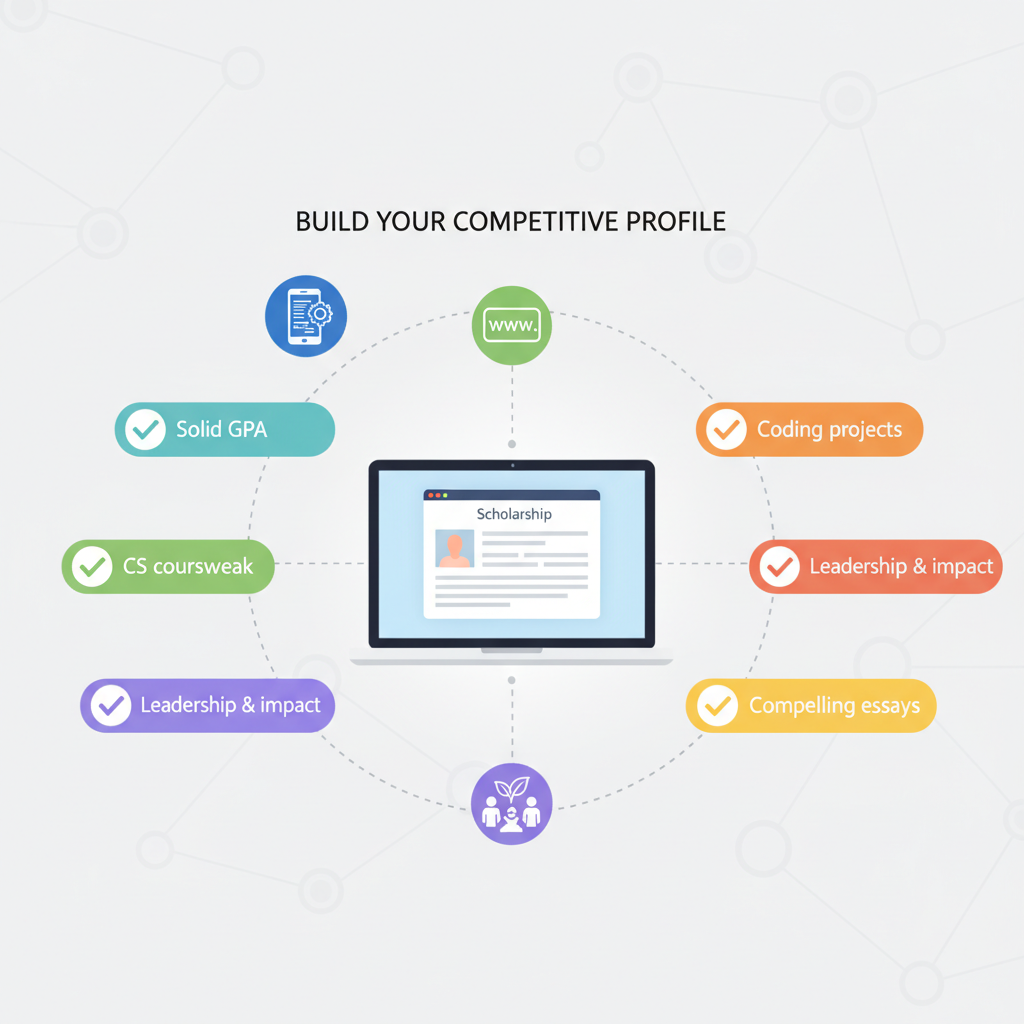
Quick Overview: What Is the Amazon Future Engineer Scholarship?
The Amazon Future Engineer (AFE) Scholarship is aimed at U.S. high school seniors from low-income backgrounds who plan to study computer science or a closely related major in college.
In recent cycles, the scholarship has offered:
- $40,000 total over 4 years for college (typically $10,000 per year)
- A paid summer internship at Amazon after your freshman year (this is huge for your resume and future earnings)
It targets students who:
- Are U.S. citizens, permanent residents, or have work authorization (like DACA)
- Are high school seniors in the U.S. or a U.S. territory
- Have taken or are taking a computer science or engineering-related course (in school, online, or via a program)
- Plan to pursue a CS, software engineering, or related major
- Meet a financial-need threshold (usually Pell-eligible or similar)
So… How Competitive Is the Amazon Future Engineer Scholarship?
1. How many students get it?
In recent years, Amazon has awarded hundreds of scholarships per year nationwide. For example, in some cycles they’ve selected around 400+ scholars in one year.
That’s a big cohort compared to many private scholarships that choose 10–50 winners.
2. What’s the acceptance rate like?
Amazon doesn’t publicly post an exact acceptance rate every year, but here’s what we can infer based on typical patterns of large national scholarships:
- A national, well-known scholarship partnered with a big tech brand will almost always get thousands of applicants.
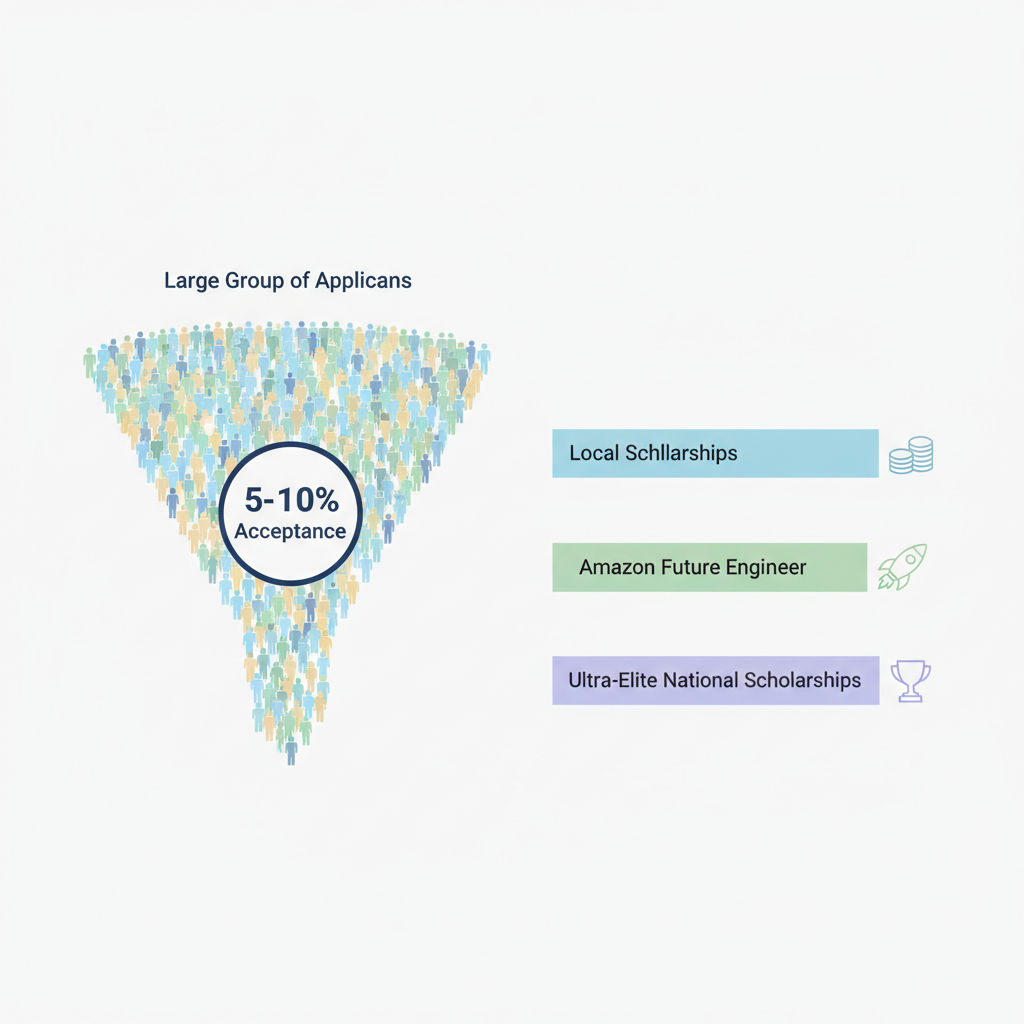
- Even if 400–500 students are chosen, if 8,000–12,000 apply (a very plausible range), that puts you in something like 5–10% acceptance territory.
Is that exact? No. Is it realistic? Yes.
So, think of it as:
- More selective than your average local scholarship
- Less cutthroat than something like Coca-Cola Scholars or Gates, which are often below 1–2%
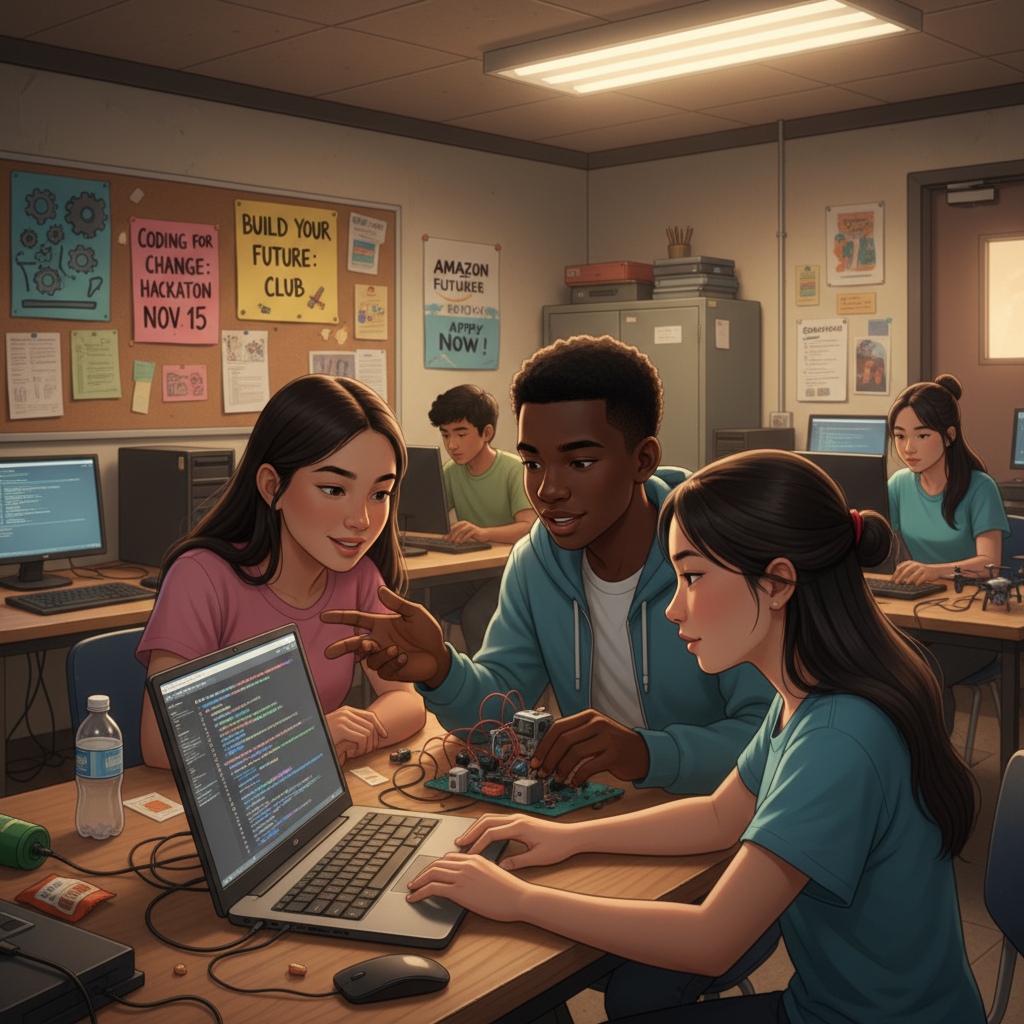
Who Are You Competing Against?
To understand competitiveness, you need to know your competition.
Typical Amazon Future Engineer applicant profile
Most strong applicants usually:
- Have solid academics
Many recipients have GPAs 3.3–3.8+ (unweighted), but you don’t need a 4.0 and 10 APs to be competitive. Think “strong and consistent,” not “perfect robot.” - Show real interest in computer science
Examples:- Took AP CS A or AP CS Principles
- Attended a summer CS camp, Girls Who Code, CodePath, etc.
- Built apps, websites, or simple games
- Participated in robotics, coding competitions, or hackathons
- Have financial need
This is non-negotiable. Many winners qualify for Pell Grants or free/reduced lunch. - Demonstrate community impact or leadership
Not necessarily as class president. Leadership can look like:- Tutoring younger students in math/CS
- Starting a coding club at school
- Building a website for a local nonprofit or small business
- Often come from underrepresented or underserved communities
AFE is explicitly interested in increasing diversity in tech, so first-gen students, students of color, and those from low-income schools are very common among recipients.
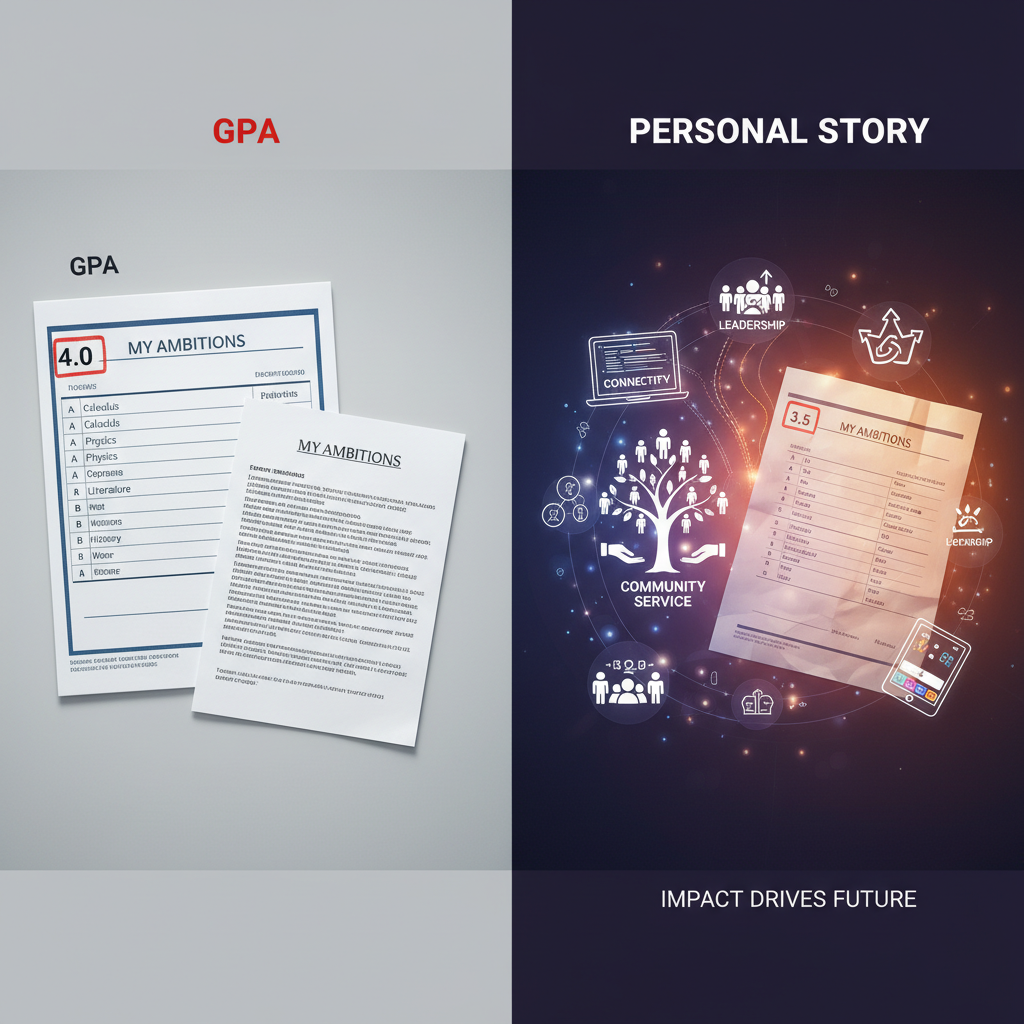
GPA vs. Story: What Actually Matters More?
A huge misconception: “If I don’t have a 4.0, it’s over.”
No.
The Amazon Future Engineer Scholarship is holistic. While they care about grades, they’re also evaluating:
- Your story – Where you come from, challenges you’ve faced, how you’ve grown
- Your commitment to CS – Not just “I like computers,” but how you’ve engaged with tech
- Your impact – How you’ve used your skills to help others, or plan to
- Your potential – Do you look like someone who will thrive in CS and possibly at Amazon?
Think of it like this
If they have:
- One student with a 4.0, 12 APs, but generic essays
- And another with a 3.6, solid rigor, strong CS engagement, and powerful essays about using tech to solve real community problems
The second student can absolutely win.
How Hard Is It Compared to Other Big Scholarships?
Let’s put Amazon Future Engineer in context.
Rough comparison of selectivity levels (not exact stats, but realistic tiers):
- Ultra-elite national scholarships (Coca-Cola, Gates, Jack Kent Cooke):
Often <1–2% of applicants selected. Brutal. - Major corporate/industry scholarships like AFE:
Likely in the 5–10% range, with hundreds of winners. Competitive but sane. - State or local scholarships (local businesses, community foundations):
Often 10–30% acceptance or more. Way less intense.
Where does Amazon Future Engineer sit?
Right in the middle:
- More competitive than many local or niche scholarships
- Less impossibly rare than the “one of 150 in the whole country” programs

What Makes a Competitive Amazon Future Engineer Application?
If you want to be in that top slice of applicants, focus on what you can control.
1. Strong but human academics
You don’t need to be perfect. You do need:
- Solid GPA (typically 3.3+ gives you a fighting chance, higher is better but not everything)
- Evidence you’ve challenged yourself relative to what your school offers
- Upward trend if earlier grades were rough
If you had a bad semester because of family, health, or work obligations, be honest about it in the application.
2. Proof you’re serious about computer science
You want your application to scream: “I don’t just want this for the money; I actually love this field.”
Ways to show that:
- Coursework: AP CS, intro programming, dual enrollment CS, or certified online courses
- Projects:
- Built a basic app or website
- Automated something in your family or school
- Used Python to analyze sports stats, grades, or anything you care about
- Activities: coding clubs, robotics, hackathons, tech volunteering
Even small, scrappy projects count. A simple website for your church or a budgeting spreadsheet macro for your family is valid tech impact.
3. Compelling essays that tell a focused story
Your essays should answer three big questions clearly:
- Who are you and what have you overcome?
Talk about your background, responsibilities (like working part-time, caring for siblings), and how those shaped your drive. - Why CS and why now?
When did you first realize tech mattered to you? What have you done since then to explore it? - How will you use CS to help others?
Scholarships like AFE love applicants who think about impact: communities, representation in tech, accessibility, education, etc.
Pro tip: Make your essay specific. Don’t say, “I want to use technology to change the world.” Say:
- “I want to build tools that make medical translation easier for Spanish-speaking families like mine.”
- “I want to create better educational apps for schools that don’t have enough teachers.”
4. Evidence of leadership and initiative
You don’t need fancy titles, but you do need initiative. Examples:
- Started a small coding workshop at your library
- Mentored younger students
- Helped your school create or revive a tech club
- Built a resource (Discord server, website, guide) to help classmates learn CS
Realistic Scenarios: Would You Be Competitive?
Here are three fictional examples to help you mentally benchmark.
Example 1: High-achieving coder with impact
- GPA: 3.9 unweighted
- Classes: AP CS A, AP Calc, dual enrollment programming
- Activities: Robotics team captain, started a girls’ coding club, built a website for a local nonprofit
- Background: First-gen, low-income, worked part-time
Competitiveness: Very strong. This student hits almost every box: academics, CS, leadership, impact, and need.
Example 2: Solid student with non-traditional CS exploration
- GPA: 3.5
- Classes: One intro programming class, mostly honors, some APs
- Activities: No formal CS club but built a budget tracker for their family using Python and Excel; tutors math to middle schoolers
- Background: Single-parent household, works 15–20 hours/week
Competitiveness: Strong. Not “auto-yes,” but very much in the serious contender zone if essays connect their story and CS work clearly.
Example 3: Great grades, weak CS engagement
- GPA: 4.0
- Classes: Many APs but no CS course
- Activities: NHS, sports, volunteering unrelated to tech
- Background: Financial need, but very little evidence of actual CS interest
Competitiveness: Surprisingly weaker. Great grades help, but for a computer science scholarship, they really want to see CS involvement and passion.
How to Increase Your Odds (Even If You’re Not a “Perfect” Applicant)
You can’t control the applicant pool, but you can control how polished and intentional your application is.
1. Start early
Do not treat this like a 24‑hour essay sprint.
Timeline tips:
- Give yourself 3–4 weeks before the deadline
- Draft essays in Week 1
- Revise in Week 2
- Get feedback in Week 3 (teacher, counselor, mentor, even a trusted friend)
- Final polish and proofread in Week 4
2. Align every part of your application with your core story
Figure out your core narrative in one sentence, like:
- “I’m a first-gen student who discovered coding while helping my family’s small business and now wants to study CS to support other small businesses through tech.”
Then make sure:
- Your essays reinforce that
- Your activities list matches it (even partially)
- Your short answers point back to it
3. Highlight concrete CS experiences (even small ones)
Don’t downplay anything just because it’s not “official.” Include things like:
- “Created a Python script to help my teacher randomize seating charts.”
- “Taught myself HTML/CSS/JavaScript and built a portfolio site.”
- “Used Excel formulas and basic VBA to help my parent’s job or community group.”
4. Make it crystal clear why you need this scholarship
They’re seeking financial-need students who will genuinely benefit. Be honest if:
- You help support your family
- You’ve had to choose work over extracurriculars
- You worry about taking on heavy loans
You don’t need to trauma-dump, but you do need to explain context.
5. Apply to multiple scholarships in parallel
Even the best Amazon Future Engineer applicant should have a backup plan.
While you apply to AFE, also look at:
- Other CS/tech scholarships
- Local community foundation awards
- State-level STEM or need-based scholarships
Is the Amazon Future Engineer Scholarship Worth the Effort?
Short answer: Yes.
Here’s why, even with tough odds:
- $40,000 over four years can massively reduce your need for loans
- A paid internship at Amazon after freshman year can:
- Give you higher earning potential for future internships
- Make getting future offers at top companies much easier
- Help you build a professional network very early
- Even if you don’t win, the essays and stories you craft can be repurposed for other scholarships and college apps
Final Thoughts: How Competitive Is It, Really?
Let’s summarize:
- The Amazon Future Engineer Scholarship is definitely competitive, likely in the single-digit acceptance range.
- It’s not as brutally selective as the ultra-elite national programs, but it’s far more selective than average local awards.
- You’re competing against motivated, tech-focused students with financial need — not just “high GPA” students.
- Your story, CS engagement, impact, and need matter just as much as your GPA.
If you:
- Care about computer science
- Come from a low-income or first-gen background
- Have done anything meaningful with tech
…then you are exactly the kind of student who should throw your hat in the ring.
And remember: The worst-case scenario is you don’t win, but you walk away with stronger essays and a clearer sense of your own story — which will help you win somewhere else.
If you want, I can help you draft or polish potential Amazon Future Engineer essays next.
Leave a Reply