Amazon LPN Numbers Explained
If you’ve ever stared at a weird little code on an Amazon package or shipment and thought, “What on earth is an Amazon LPN?”—you’re in the right place. Let’s decode it in plain English, no warehouse badge required.

What Is an Amazon LPN?
LPN in the Amazon world usually stands for License Plate Number.
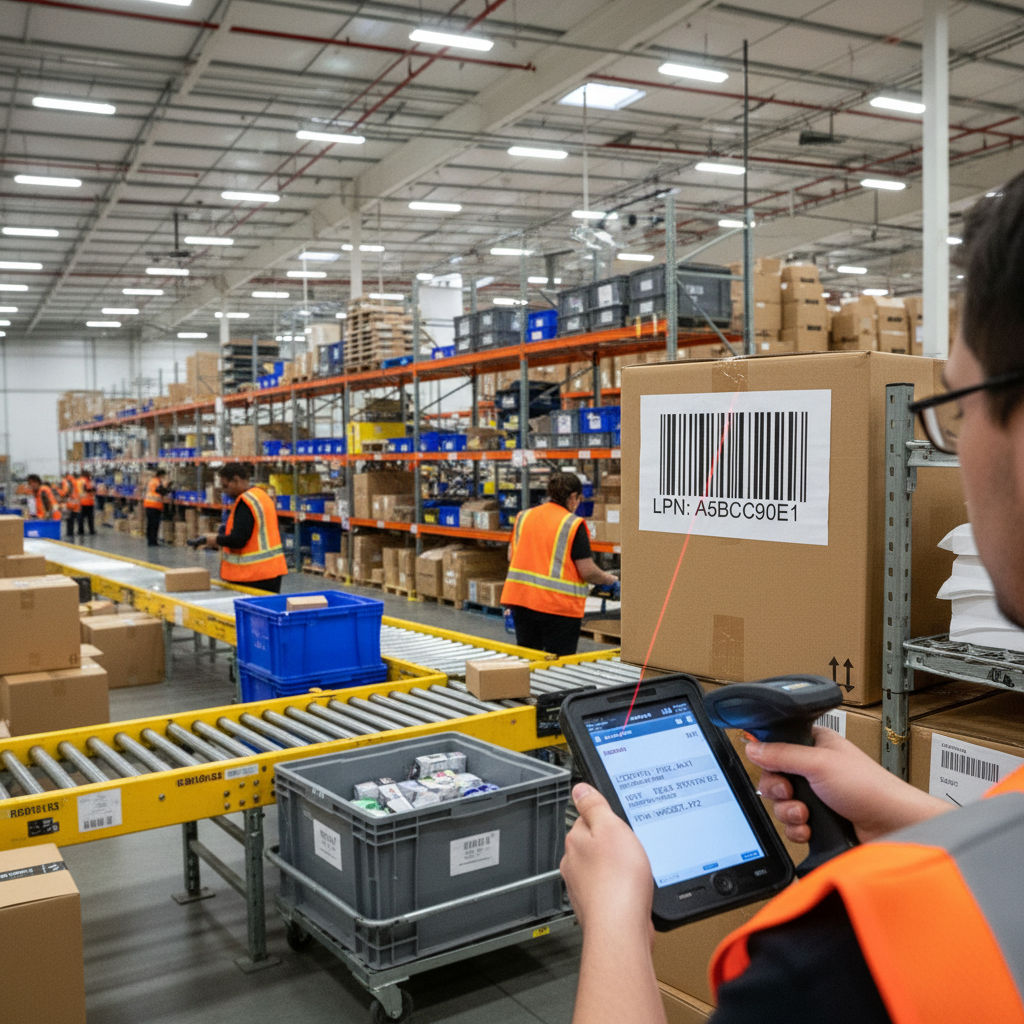
Think of it like a unique license plate for an item or package inside Amazon’s logistics system. It’s a scannable ID (usually a barcode + alphanumeric code) that lets Amazon know:
- What the item is
- Which order or shipment it belongs to
- Where it’s supposed to go next
- What happened to it in the past (returns, re-labels, investigations, etc.)
In other words, an Amazon LPN is a tracking identity for internal handling and inventory, separate from the public tracking number you see as a customer.
Where Do You See Amazon LPN Labels?
You’ll typically see LPN labels in a few situations:
-
On returned items
Many Amazon warehouse deals, liquidation pallets, or returns will have an LPN sticker on top of, or near, the original barcode. This tells Amazon (and any downstream handler) that this item went through some special process like a return, re-boxing, or inspection. -
Inside fulfillment centers
Associates scan LPNs to move units between bins, totes, packing stations, and dock doors. Every scan updates the system: “This unit moved from location A to B.” -
On liquidation or surplus stock
If you buy inventory from Amazon liquidation marketplaces (like pallets of returns), you’ll often see a lot of LPN tags used for internal audit and history.
What Does an Amazon LPN Look Like?
LPN labels can vary a bit, but they usually have:
- A barcode (the scannable part)
- An alphanumeric code like LPN RR 1234 5678 9012 or similar
- Sometimes a prefix (like LPN RR) that hints at the process or system that created it
These codes are not meant for customers to manually look up, but they’re gold for internal tracking.

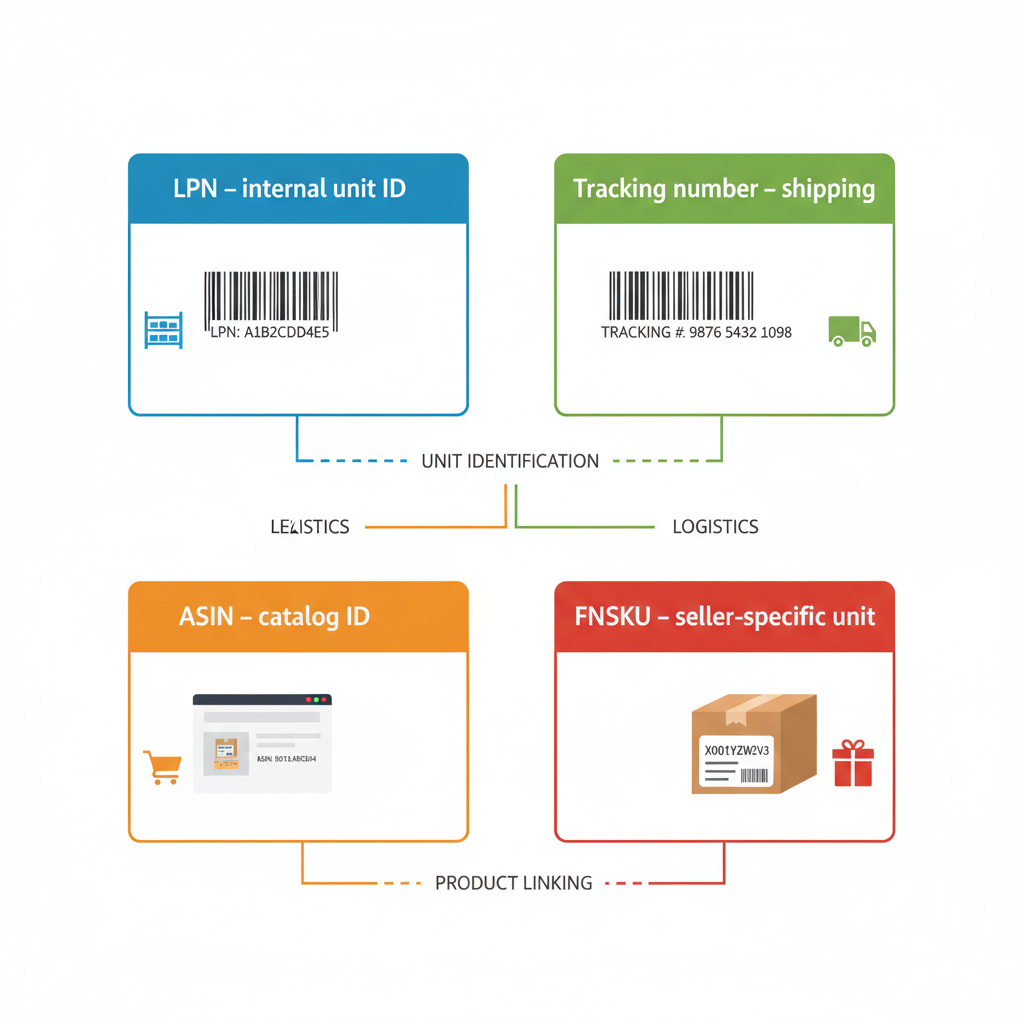
Amazon LPN vs Tracking Number vs FNSKU vs ASIN
Let’s untangle the alphabet soup.
-
LPN (License Plate Number)
Internal identifier for a specific unit or package in Amazon’s logistics workflow. -
Carrier tracking number (UPS/USPS/FedEx)
Public number you and the customer use to track shipping progress from carrier to doorstep. -
ASIN (Amazon Standard Identification Number)
Amazon’s catalog ID. One ASIN can represent thousands of identical units of a product. -
FNSKU (for FBA sellers)
The label Amazon uses to tie a specific physical unit to a specific seller’s offer in FBA.
How they relate:
- ASIN: “This is the product listing.”
- FNSKU: “This is Seller X’s unit of that product.”
- LPN: “This particular copy of the unit is here, was returned, inspected, etc.”
- Tracking number: “This whole package is moving through the external shipping carrier.”
Why Does Amazon Use LPN Numbers?
Because at Amazon’s scale, “just remembering where things are” is not a strategy.
LPNs help Amazon:
-
Track individual units, not just SKUs
If a specific unit was damaged, mis-picked, or returned, the LPN lets Amazon track that exact unit’s story. -
Handle returns efficiently
When a return comes in, applying an LPN lets the system know:- Why it was returned
- Its inspection status (sellable, refurbish, dispose, liquidate)
- Where it ended up (back to inventory, warehouse deals, liquidation, etc.)
-
Improve quality control
If multiple issues trace back to units with similar LPN histories (same shipment, same vendor, same lot), Amazon can investigate patterns and fix upstream problems. -
Avoid barcode conflicts
Lots of manufacturers use their own barcodes. The LPN gives Amazon a clean, standardized ID for internal operations without changing the original product barcode.
I’m a Customer: Should I Worry If My Item Has an LPN Sticker?
Short answer: usually, no.
An LPN doesn’t automatically mean “used” or “broken.” It often means:
- The item went through a return or reprocessing step
- The item may be from Amazon Warehouse Deals (open box, used, or like new)
- It was handled in a way that Amazon needed additional traceability
But here’s what you should check:
-
Compare to your listing condition
- Bought as New but box looks opened, taped up, or has extra LPN and quality-check stickers? That’s a red flag.
- Bought as Used / Renewed / Warehouse Deals? Extra labels are normal.
-
Inspect the packaging and contents
- Look for damage, missing accessories, repackaging.
- Take photos if something looks off.
-
Contact Amazon support if it feels wrong
- If you ordered new and it clearly looks like a return, you can request a replacement or refund.
I’m a Reseller: What Do Amazon LPN Labels Mean For Me?
If you buy Amazon return pallets, surplus, or liquidation stock, you’ll see LPN stickers everywhere.
Here’s what to keep in mind:
1. LPNs Are History Markers, Not Just Stickers
Each LPN ties to an internal record: why the item was returned, where it came from, etc. You can’t usually access those records directly, but the presence of an LPN tells you the item has a known past.
Translation: don’t assume it’s brand new.
2. Don’t Resell With LPN Labels Still On
Best practice:
- Remove or cover LPN labels before reselling on other marketplaces.
- Scan and use your own barcodes or inventory labels.
Leaving LPNs on:
- Looks unprofessional
- Can confuse buyers who google “Amazon LPN” and panic about getting a return
3. Test and Inspect Aggressively
Because these are often returns:
- Physically inspect each item
- Test electronics and moving parts
- Verify completeness (manuals, chargers, cables, accessories)
Use a simple internal grading system like:
- A: New/open box, complete
- B: Light use, minor cosmetic wear
- C: Heavier wear, or missing accessories
- D: For parts/repair
Can I Track an Order Using an Amazon LPN Number?
No.
LPNs are internal-only identifiers. They’re not meant for:
- Customers
- Carriers (UPS/USPS/FedEx)
- Public order tracking
To track an Amazon order, you’ll use:
- Your Amazon order ID inside your account
- The carrier tracking number (once shipped)
Typing an LPN into Google or a carrier site will do…nothing useful.
Does Every Item in Amazon Have an LPN?
Not always visible, and not always in the same form.
- Some items are tracked more at the bin or tote level rather than as individually labeled units visible to you.
- Items going through returns, refurbishing, or special handling are more likely to get a visible LPN sticker.
Think of it like this: the more complicated the item’s journey, the more likely it gets its own visible “license plate.”
Practical Scenarios: Amazon LPN in Real Life
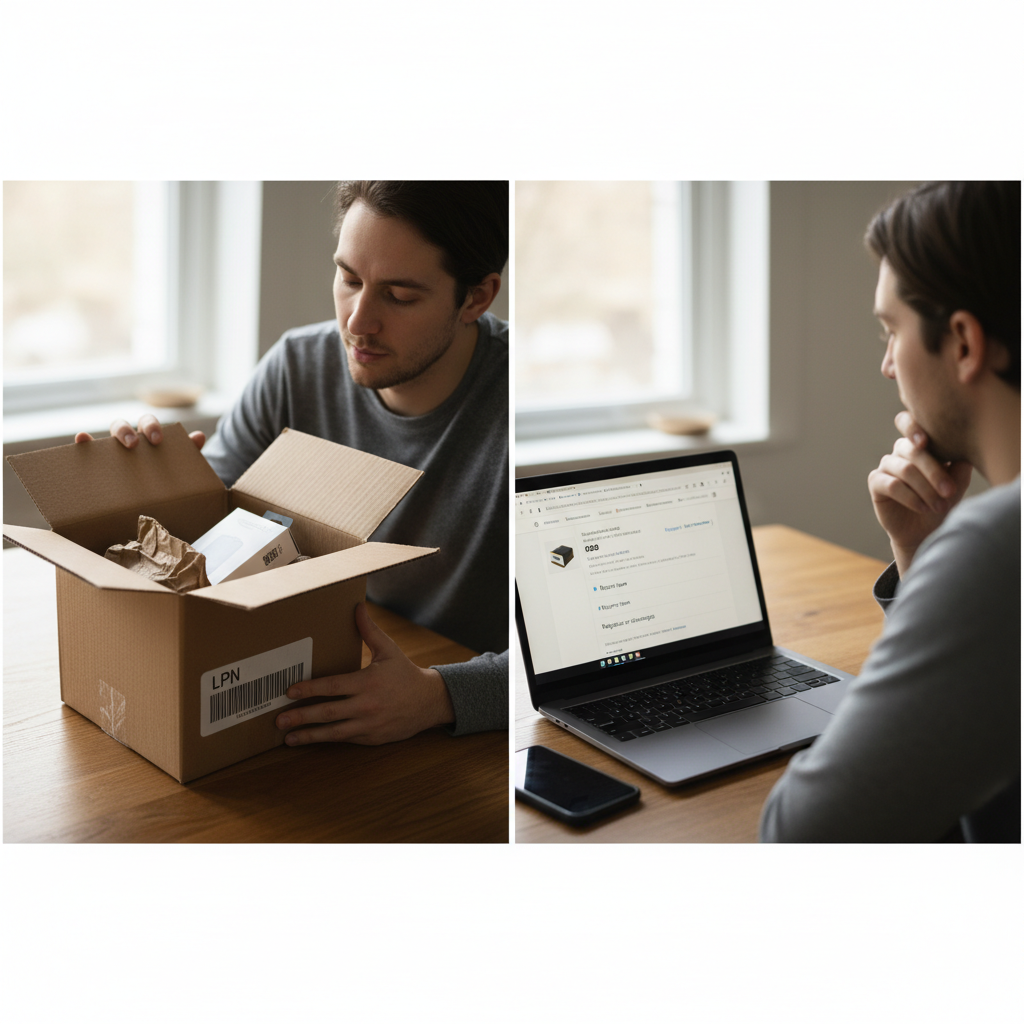
Scenario 1: You Ordered New, Got Something “Sus”
You buy a “New” gadget. Box arrives with:
- LPN sticker
- Torn shrink wrap
- Box looks like it’s been opened before
What to do:
- Take a few photos.
- Check your order to confirm it was sold as New, not Warehouse Deals.
- Contact Amazon support and say something like:
“This item was sold as new but appears to have been previously opened/returned. It has an LPN label on it, tape marks, and missing seals. Can I get a replacement or refund?”
Result: In most cases, they’ll make it right.
Scenario 2: You’re Flipping Liquidation Stock
You buy a pallet of Amazon returns. Everything has LPN stickers, random tape, and mixed conditions.
Your playbook:
-
Set up a testing/check station
Clean table, power strips, tools, cleaning wipes. -
Process one item at a time
- Remove LPN/extra Amazon labels
- Inspect and test
- Decide condition (A/B/C/D)
- Repack nicely and label with your own SKU
-
List with honest descriptions
The more accurate your condition notes, the fewer returns and headaches later.
Outcome: LPN becomes a helpful warning label: “pay attention to this one’s past.”
Key Takeaways: Amazon LPN in One Minute
If you skimmed everything (no judgment), here’s the core:
- Amazon LPN stands for License Plate Number—a unique internal ID used to track individual units or packages inside Amazon’s systems.
- You’ll often see LPN stickers on returns, warehouse deals, and liquidation items.
- An LPN doesn’t automatically mean something is bad, but it does mean it’s been through extra handling.
- Customers can’t use LPNs to track orders; they’re strictly internal.
- Resellers should remove LPN labels, test items thoroughly, and never assume LPN-tagged products are brand new.
If you ever spot an Amazon LPN and wonder what secret it’s hiding, just remember: it’s basically the item’s license plate—and like any good plate, it tells the system exactly where it’s been and where it’s supposed to go next.
Leave a Reply