Amazon Green: Color, Climate, And Commerce
How one phrase bridges design aesthetics, rainforest reality, and big‑tech sustainability.
If you hear “Amazon green” and think it’s just a paint color… you’re only about 10% right.
Depending on who’s talking, Amazon green might mean:
- A specific rich green color used in design and branding
- The actual Amazon rainforest’s lush canopy (and everything it does for the planet)
- Or Amazon the company and its push toward sustainability and greener logistics
Let’s unpack all three, because they’re more connected than they look.
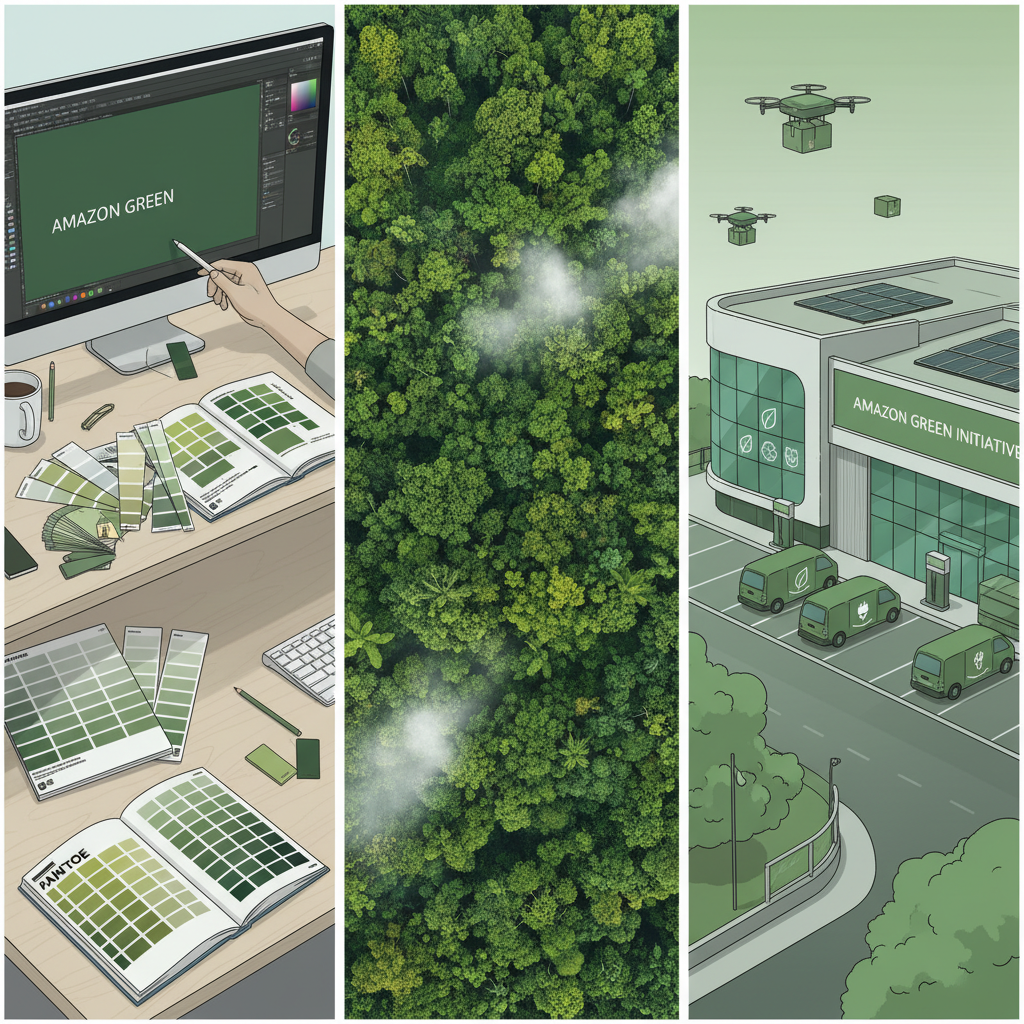
What Is “Amazon Green,” Really?
“Amazon green” started as a descriptive color name—that deep, vibrant green people associate with dense jungle foliage. You’ll see it:
- In paint catalogs and interior design palettes
- In graphic design as a hex or Pantone-style shade
- In automotive and product finishes to signal adventure, nature, or performance
But the name obviously comes from the Amazon rainforest—the giant emerald blanket over South America that shows up in every satellite image of the continent.
And lately, people also use “Amazon green” as shorthand for Amazon’s sustainability efforts:
- Greener packaging
- Renewable energy for data centers
- Electric delivery fleets
So when someone says “Amazon green,” your follow‑up question should be: Color, forest, or company?
Takeaway: One phrase, three overlapping worlds: design, nature, and Big Tech.
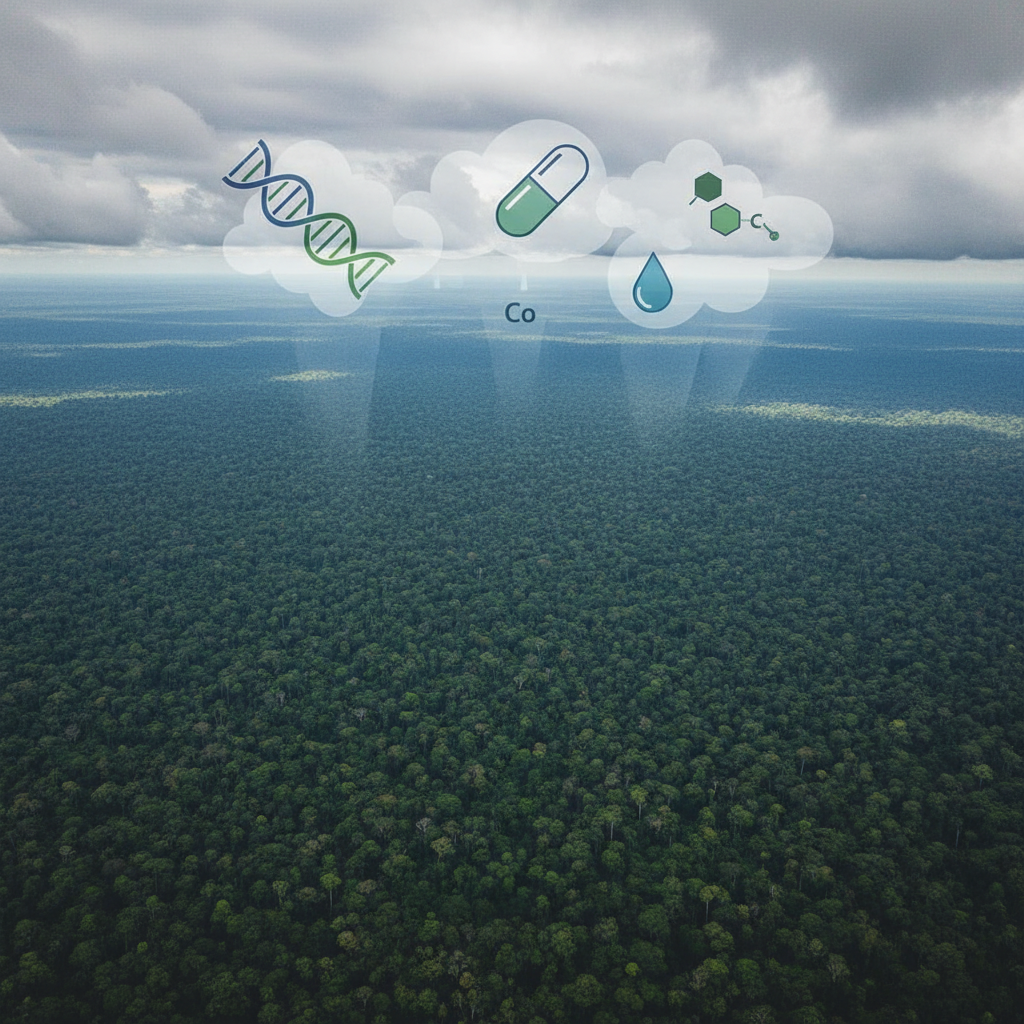
The Real Amazon Green: Why The Rainforest Matters
When we talk about Amazon green in the literal sense, we’re talking about the Amazon rainforest—the largest tropical rainforest on Earth, spanning around 2.5 million square miles across nine countries in South America.
That intense green canopy isn’t just pretty on drone footage. It’s doing serious work:
1. A Massive Carbon Sponge
Trees in the Amazon pull carbon dioxide out of the atmosphere and store it in trunks, roots, and soil. This helps slow climate change by reducing greenhouse gas levels.
Deforestation flips that around: burn or cut the trees, and that stored carbon goes back into the atmosphere. That’s why forest loss in the Amazon is such a big climate issue.
TL;DR: Healthy Amazon = big carbon sink. Damaged Amazon = big carbon source.
2. A Planet‑Scale Sprinkler System
The Amazon doesn’t just sit there—it creates its own weather. Trees pull water from the ground and release it into the air in a process called evapotranspiration.
This adds moisture to the atmosphere and helps generate rainfall patterns that reach far beyond the forest itself. Some studies show that the Amazon influences rainfall as far away as agricultural regions in South America.
Takeaway: No trees, less moisture, more droughts. That green canopy is basically climate infrastructure.
3. A Genetic Library We Barely Understand
The Amazon is one of the most biodiverse regions on Earth—plants, insects, mammals, fungi, you name it.
Why that matters to you even if you never leave your couch:
- Many modern medicines are derived from compounds found in rainforest plants.
- Future drugs, materials, and crops may come from species we haven’t even discovered yet.
When forest is destroyed, we’re not just losing trees; we’re shredding pages out of a global R&D library.

The Design Side: Using “Amazon Green” As a Color
Let’s switch gears and talk color theory.
When designers say “Amazon green”, they’re usually signaling a few things:
- Deep, saturated green with a slightly cool or neutral undertone
- Feels lush, energetic, and natural, not pastel or minty
- Reads as serious nature, not cartoon forest
You’ll see Amazon green used in:
- Outdoor brands (hiking, camping, survival gear)
- Eco‑friendly product packaging (think bamboo toothbrushes and refillable bottles)
- Automotive paints for performance or off‑road vehicles
What Amazon Green Conveys Psychologically
Color psychology is fuzzy but useful:
- Green = nature, growth, balance, health
- Darker greens = stability, reliability, maturity
So Amazon green lands in that sweet spot of wild + trustworthy. It says, “We’re outdoorsy, but we also know what we’re doing.”
Quick Tips For Using Amazon Green In Branding
If you’re a designer or founder thinking, “Should I use Amazon green?” consider this:
-
Pair it with neutrals.
Works great with off‑whites, beiges, charcoals, and natural textures (wood, kraft paper, linen backgrounds). -
Use it for accents, not walls of color.
Amazon green is bold; large blocks can feel heavy. Use it for buttons, key sections, or hero imagery. -
Avoid over‑promising ‘eco’ with just color.
If your product isn’t actually sustainable, slapping on Amazon green can feel like greenwashing.
Takeaway: Amazon green is powerful visual shorthand for “grounded, wild, and alive”—use it with intention.

Amazon (The Company) And “Going Green”
Now for the third meaning: Amazon’s climate and sustainability push.
When people say things like “Is Amazon really going green?” they’re talking about:
- How the company ships billions of packages
- What it does with energy in its data centers
- Whether its growth can align with climate goals
A few of the company’s well‑publicized initiatives include:
1. The Climate Pledge
Amazon co‑founded The Climate Pledge, a commitment to reach net‑zero carbon by 2040, a decade ahead of the Paris Agreement timeline.
In practice, that means:
- Cutting emissions from operations and transportation
- Investing in clean energy
- Supporting climate‑related projects
Is this easy for a global logistics giant? Absolutely not. But the pledge puts a target on the wall.
2. Renewable Energy For Cloud And Operations
Amazon has invested heavily in renewable energy projects around the world—wind farms, solar farms, and rooftop installations—aiming to power its operations and AWS data centers with more clean electricity.
Why this matters to non‑engineers: every time you stream, store, or compute, a server somewhere is drawing power. The greener that grid, the greener your digital life.
3. Greener Delivery: EVs, Routes, and Packaging
Some concrete “Amazon green” moves you may have seen or will soon:
- Electric delivery vans replacing some gas vehicles in certain cities
- Route optimization to reduce miles driven and fuel used
- Packaging experiments like:
- Right‑sizing boxes
- Reducing plastic fillers
- Using more recyclable materials
Is it perfect? Not remotely. But the scale means small improvements add up to massive absolute impact.
Takeaway: When a company of Amazon’s size adjusts a knob, the global emissions meter moves—one way or the other.
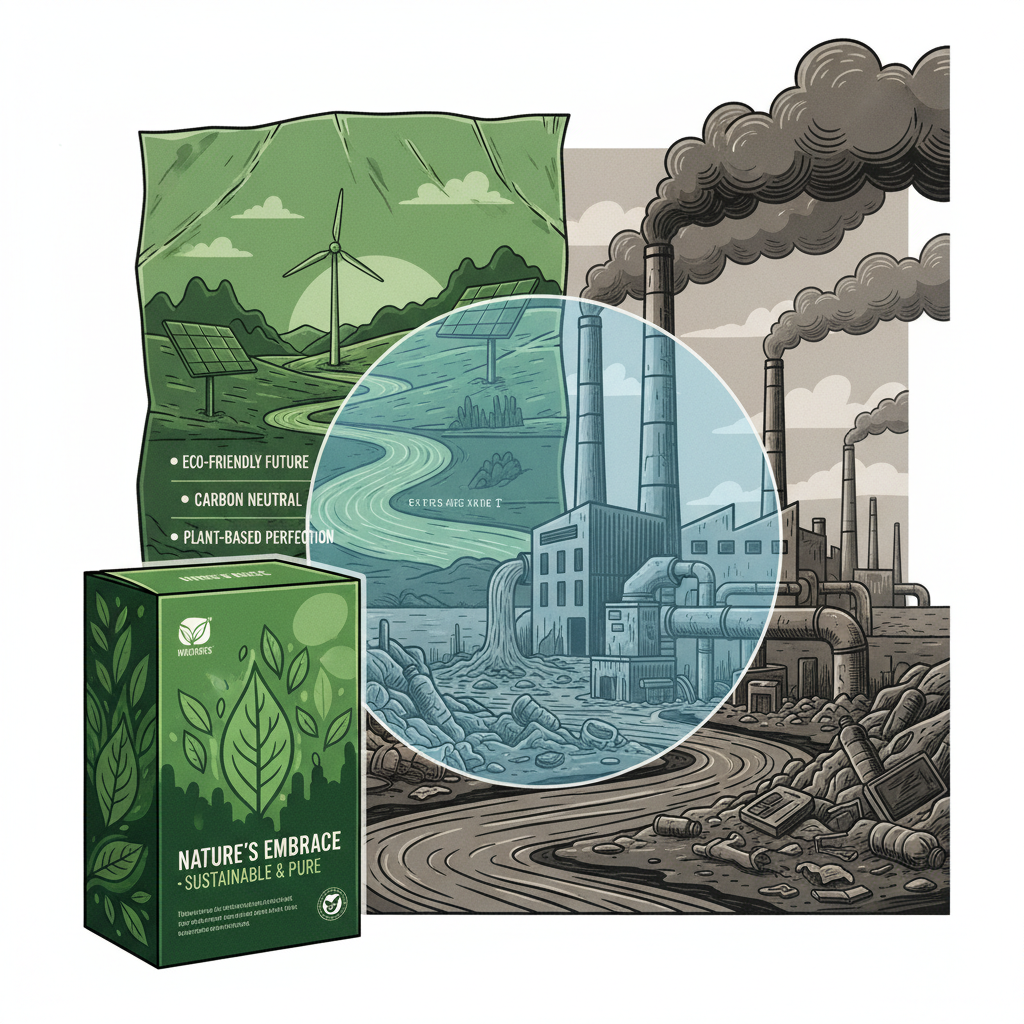
Is “Amazon Green” Just Greenwashing?
Let’s be honest: anytime a huge corporation talks about sustainability, people ask: Is this legit, or just branding?
A few key truths:
- The footprint is real. Delivering goods, running data centers, and operating logistics networks all produce significant emissions.
- The progress is mixed. Some areas move fast (like renewable electricity purchases); others move slower (like fully decarbonizing global shipping).
- Scrutiny is healthy. Independent audits, transparent reporting, and third‑party science‑based targets help separate genuine action from PR fluff.
The right approach is nuanced skepticism:
- Celebrate real, verifiable improvements.
- Call out vague claims or missing data.
- Keep pushing for deeper and faster change.
Takeaway: “Amazon green” is not a gold star by default—it’s a moving target that needs receipts.
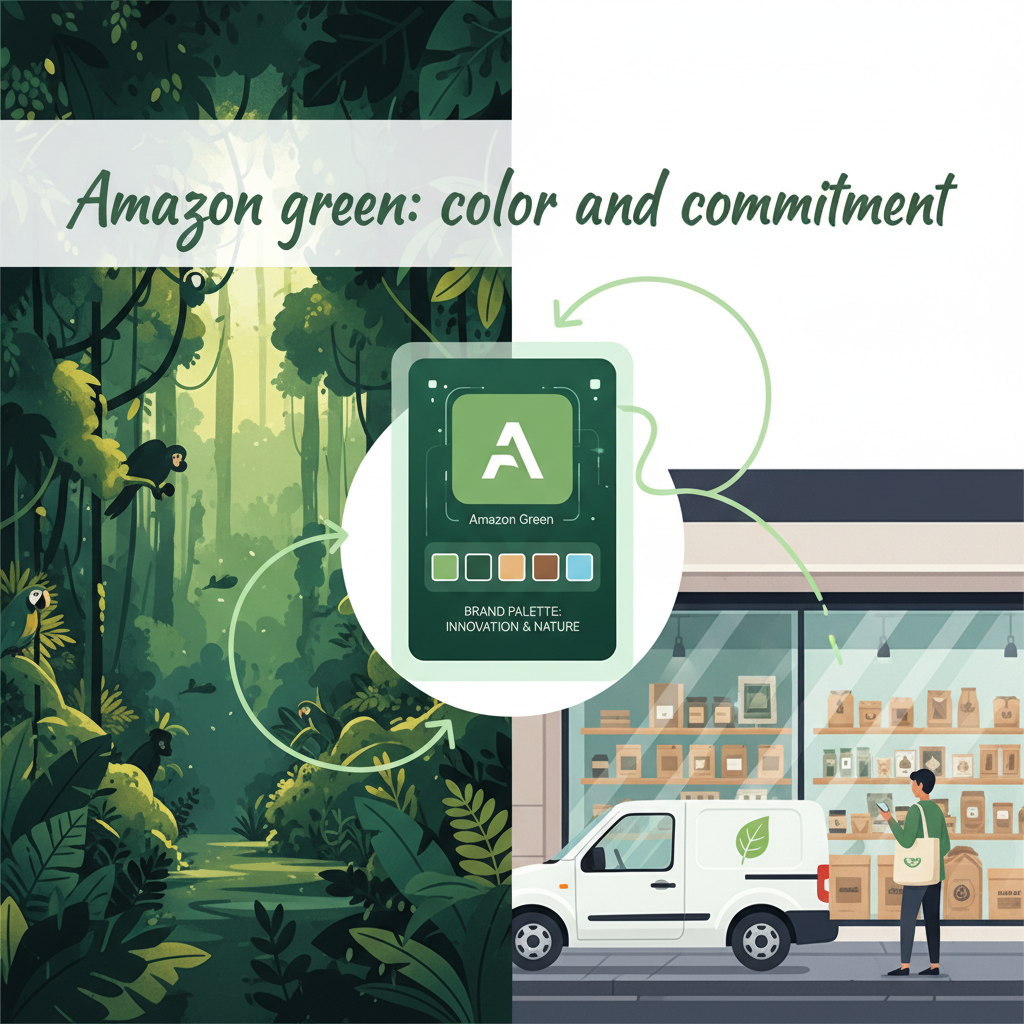
How You (Yes, You) Can Make “Amazon Green” Real
You don’t run a global e‑commerce empire (I mean, unless you do—in which case, hi). But you do have influence in how you:
1. Shop More Intentionally
- Batch your orders. Fewer shipments = fewer trips.
- Choose slower shipping when you can; it gives logistics systems room to optimize routes and loads.
- Look for products with less packaging or clear sustainability details.
2. Vote With Your Clicks And Reviews
- Support brands that back up eco claims with certifications or clear data.
- Call out products that arrive smothered in unnecessary plastic.
3. Design And Brand Honestly
If you’re a designer, marketer, or founder:
- Don’t use Amazon green just to look sustainable.
- Pair green aesthetics with actual changes: recycled materials, durable products, repair options, or take‑back programs.
Takeaway: One person’s choices won’t “save the Amazon,” but at scale, habits matter—especially on major platforms.
If You’re Choosing An “Amazon Green” Palette For Your Brand
Here’s a quick mini‑guide you can literally copy into a brief.
Brand vibes Amazon green works well for:
- Outdoor adventure gear
- Plant‑based or whole‑food brands
- Sustainable fashion or home goods
- Wellness and eco‑travel offerings
Pair it with:
- Warm neutrals (sand, clay, cream) for a cozy, earthy feel
- Cool neutrals (slate, fog gray) for a more tech‑meets‑nature vibe
Avoid:
- Overusing heavy blacks with Amazon green—it can feel harsh and militaristic.
- Combining it with too many other bright colors, unless you’re going for an intentionally loud style.
Messaging to match the color:
- Use language around growth, grounding, resilience, balance, renewal.
- Share real metrics: materials you’ve switched, energy saved, or waste reduced.
Takeaway: Don’t just pick Amazon green because it “looks eco.” Let your operations earn the color first.
Bringing It All Together: The Many Meanings Of Amazon Green
By now, you’ve seen that Amazon green isn’t just one thing:
- It’s a deep, lush color in your design toolkit.
- It’s the literal green canopy of the Amazon rainforest—a climate regulating, biodiversity‑rich giant.
- It’s shorthand for how Amazon (the company) intersects with climate and sustainability.
If you remember nothing else, remember this:
Amazon green shouldn’t just be an aesthetic. It should be a commitment—from companies, from designers, and from all of us—to make sure the real rainforest stays green, too.
So whether you’re picking a brand palette, analyzing a climate pledge, or just deciding how to ship your next order, ask:
“Is this just Amazon green in color… or in action?”
Leave a Reply