Amazon Nitro in the South: What You Need to Know
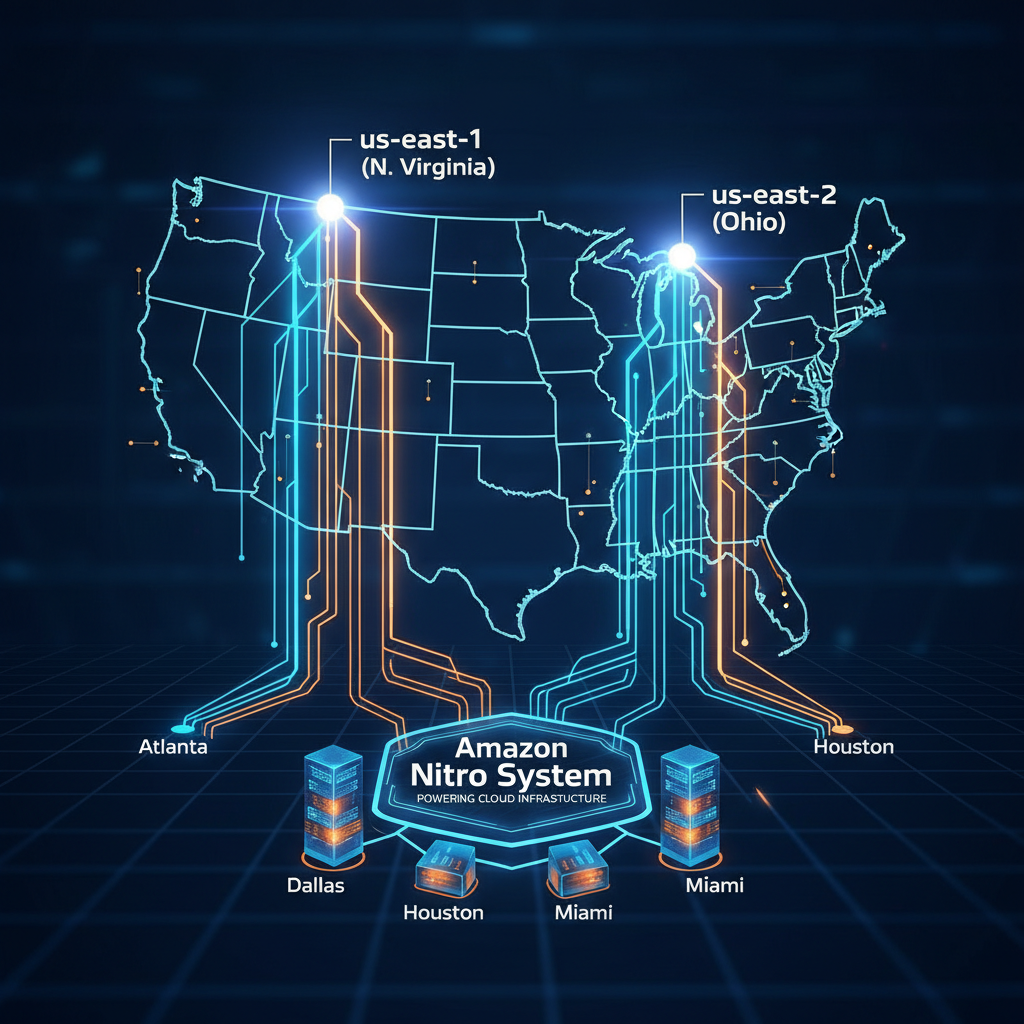
If you’ve ever tried to spin up serious workloads on AWS from the southern U.S. (or serving users in the South) and thought, “Why is this still a little laggy?”—you’re in the right place.
Today we’re talking about Amazon Nitro and what it really means for teams building and running apps in and around the southern U.S. cloud regions.
Is there a literal AWS region called “Amazon Nitro South”? No.
But is there a very real impact of Nitro-based instances in southern regions like us-east-1 (N. Virginia) and us-east-2 (Ohio) and how they serve the wider South? Absolutely.
Let’s unpack that.

What is Amazon Nitro, really?
Think of Amazon Nitro as AWS’s secret hardware sauce that makes EC2 instances:
- Faster
- More secure
- More consistent
Nitro is not a single product. It’s a system made up of:
- Nitro Cards – Dedicated hardware for things like networking, storage, and security. Instead of your CPU doing everything, Nitro cards offload those tasks.
- Nitro Security Chip – A hardware root of trust that helps protect the instance from low-level attacks and ensures the hardware/firmware stack is locked down.
- Lightweight Nitro Hypervisor – A super-thin virtualization layer that does just what it needs to and gets out of your way, giving more of the underlying hardware back to your instance.
Put together, Nitro:
- Reduces virtualization overhead
- Gives you more performance per vCPU
- Improves isolation and security
Where does “South” come in?
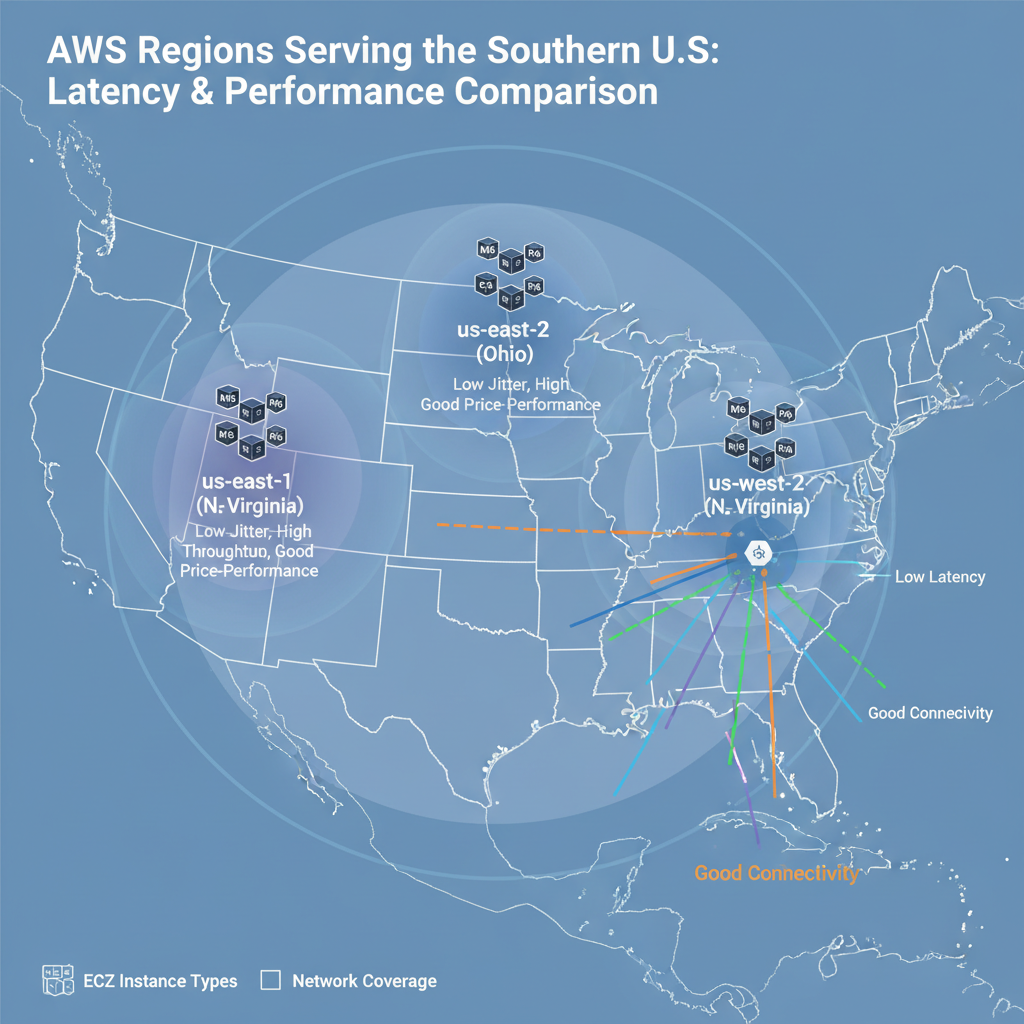
There’s no official AWS region named “South” in the U.S., but when people say “Amazon Nitro South,” they’re usually talking about:
- Serving users physically located in the U.S. South (e.g., Texas, Georgia, Florida, the Carolinas, etc.)
- Selecting AWS regions that perform well for those users, and that now mostly run on Nitro-based EC2 instance families
In practical terms, that usually means you’re choosing between:
- us-east-1 (N. Virginia) – Traditionally the most popular region with tons of services and capacity
- us-east-2 (Ohio) – Often less crowded and still geographically reasonable for the South
- us-west-2 (Oregon) – Sometimes used for DR or multi-region setups, even for southern users
Thanks to Nitro, the newer M5/M6, C5/C6, R5/R6, T3/T4g, etc., instances in these regions give you:
- Lower jitter (more consistent latency)
- Higher network throughput
- Better price/performance vs. non-Nitro instances
Why Nitro matters for southern U.S. workloads
If your users are in Atlanta, Dallas, Houston, Miami, Nashville, Charlotte, or similar hubs, your biggest concerns usually boil down to:
- Latency – How fast does your app respond?
- Throughput – Can your service handle big traffic bursts?
- Cost – Are you paying more than you should for the same performance?
- Security & compliance – Especially for finance, healthcare, and public sector workloads
How Nitro helps
-
More performance for the same money
Nitro minimizes virtualization overhead, so your instance’s CPU is doing more actual work for you instead of managing the hypervisor. For CPU-bound or network-heavy apps (APIs, microservices, real-time dashboards), this is a big win. -
Better network performance
Nitro-based instances can hit higher network bandwidth and packets-per-second. That matters if you’re:- Serving large volumes of small API calls from southern users
- Running microservices architectures in Kubernetes on EKS
- Ingesting data from IoT devices or edge locations in the South
-
Stronger isolation & hardware security
The Nitro Security Chip and dedicated hardware for management tasks reduce the attack surface and help avoid noisy-neighbor problems. That’s a big deal for multi-tenant SaaS and compliance-conscious industries (healthcare in Florida, fintech in Atlanta, oil & gas in Texas, etc.).

Example #1: A SaaS app serving customers across the South
Imagine you’re running a B2B SaaS platform with most of your customers in:
- Atlanta
- Dallas
- Houston
- Miami
You choose us-east-1 (N. Virginia) because:
- It has Nitro-based M6i and C7g instances available
- Latency to southern metros is typically low
- It offers the broadest set of AWS managed services
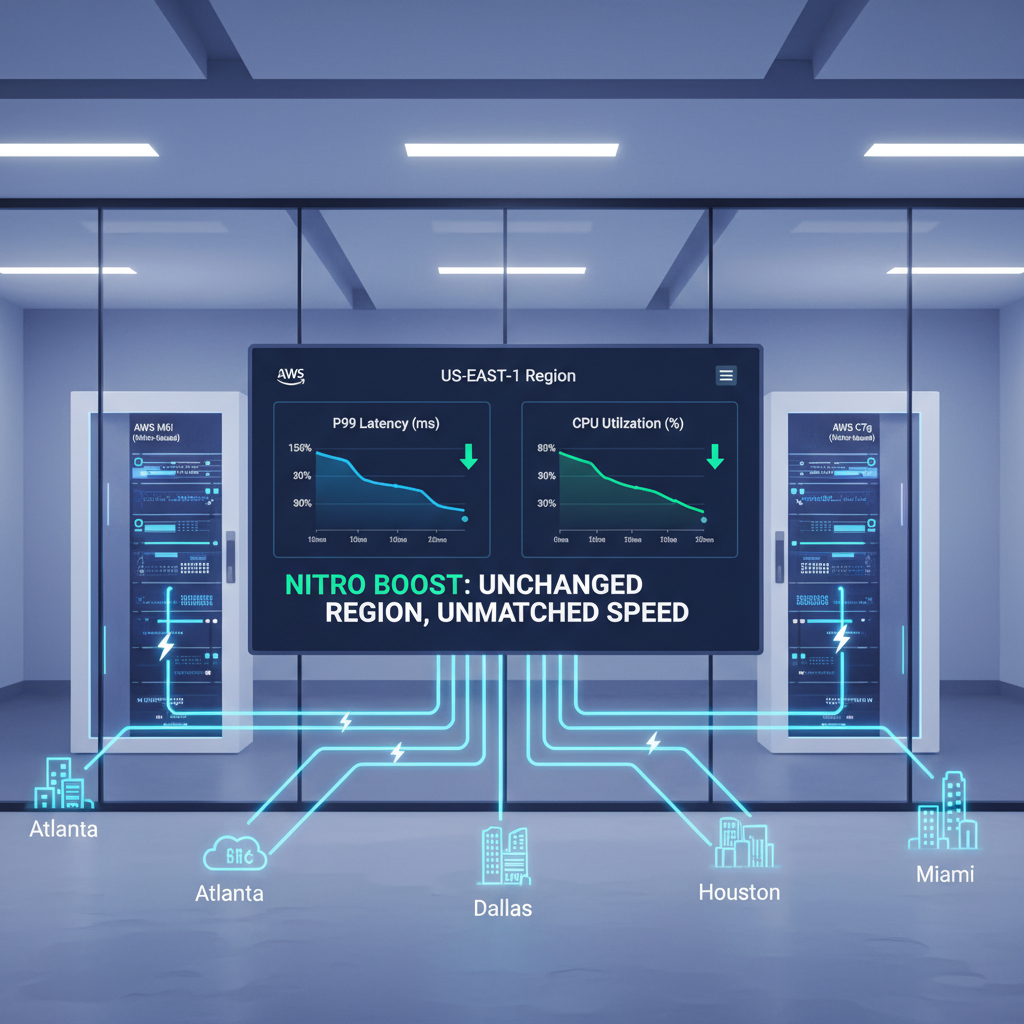
You move from older M4 instances to M6i (Nitro-based) and notice:
- CPU utilization drops for the same throughput
- P99 latency is more stable
- You can safely downsize a little and save money
Result: Users in the South feel like your app “just got faster,” even though you didn’t change regions—just your instance family.
Example #2: Edge-heavy architecture from the southern U.S.
Say you’re streaming content or running a gaming backend where milliseconds matter.
You might:
- Use CloudFront edge locations in or near southern U.S. cities to terminate user traffic
- Route back to Nitro-based EC2 in us-east-1 or us-east-2 for game state, APIs, or metadata
Nitro’s higher network throughput and lower overhead mean:
- Faster processing of each request
- Higher concurrency without needing monster instance sizes
Combined with Global Accelerator or smart routing, you can deliver near-local performance to players sitting in Texas or Georgia—without actually deploying your own hardware in every city.
Example #3: Cost-conscious startup in the southern U.S.
You’re a startup based in Austin with a tight budget (because of course you are).
Your goals:
- Keep response times snappy across the South
- Avoid overpaying for compute
- Stay flexible as traffic grows
A realistic setup:
- Region: us-east-2 (Ohio) for slightly better capacity and similar latency profile
- Instances: T4g or M6g (Nitro-based, Graviton) for cost-effective compute
You benchmark and discover:
- Graviton-based Nitro instances give better price/performance for your language runtime (Node.js, Java, Go often do well here)
- You can serve southern users with acceptable latency while paying less per month than older x86, non-Nitro instances
How to pick the right Nitro instances for “South” use cases
If “Amazon Nitro South” for you means “best Nitro setup for southern U.S. users,” here’s a pragmatic way to choose.
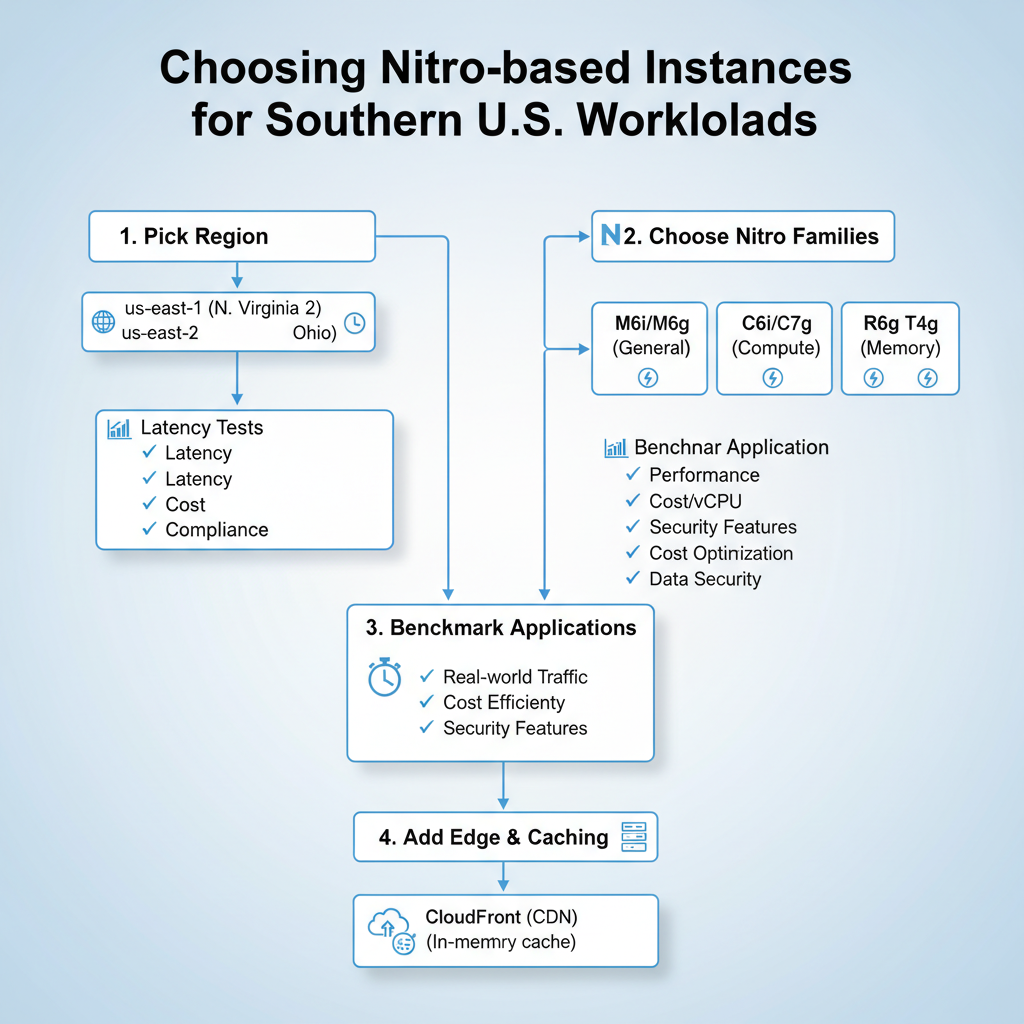
1. Start with region + latency
- Test us-east-1 and us-east-2 from your target cities (Atlanta, Dallas, Miami, etc.) using tools like:
curllatency tests- Synthetic monitors (Pingdom, Datadog Synthetics, etc.)
- Whichever region gives you lower and more stable latency + all services you need wins.
2. Choose a Nitro-based family by workload
- Web/API, microservices: M6i/M7i, C6i/C7g
- General SaaS: M6i/M6g
- Memory-heavy (caches, big responses): R6i/R6g
- Cost-optimized: T4g for bursts, M6g for steady loads
Make sure the instance description explicitly mentions using the Nitro System and supports EBS-optimized by default, high network throughput, etc.
3. Benchmark before you commit
- Run load tests from southern cities
- Measure:
- P50 / P90 / P99 latency
- CPU utilization at peak
- Network throughput
- Try at least two instance families and sizes. You might find a smaller Nitro instance outperforms your older, bigger one.
4. Layer in edge and caching
For truly snappy experiences from the South:
- Use CloudFront to cache static content
- Push dynamic but cacheable data into ElastiCache (Redis/Memcached) on Nitro-backed instances
- Consider API Gateway + Lambda for certain bursty workloads, with backing services on Nitro
Common questions about “Amazon Nitro South”
Is there a dedicated “Nitro South” product or region?
No. Amazon Nitro is a hardware/software system used across many EC2 instance families in multiple regions. “South” is just a shorthand people sometimes use for where their users are (southern U.S.) or how they’re thinking geographically.
Can I force AWS to put my Nitro instances physically in the South?
You can’t pick exact data centers, but you can:
- Choose the region that gives the best latency to your southern users
- Use Local Zones (when available) that are physically closer to southern metros
- Use edge services (CloudFront, Global Accelerator) to route traffic optimally
Are all new instances Nitro-based?
Pretty much all the modern, mainstream EC2 instance families are built on Nitro now. If you’re picking from the latest generations (M6, C6, R6, T4g, Graviton families, etc.), you’re almost certainly on Nitro.
When should you not overthink Nitro vs. South?
Sometimes, the bottleneck isn’t:
- The region
- The Nitro hardware
It’s:
- Bad database schema
- No caching
- Chatty microservices
- Oversized images and payloads
In those cases, moving to Nitro will help a bit, but fixing application-level inefficiencies will move the needle more.
– If you’re on very old instance families, move to Nitro first.
– If you’re already on Nitro and still slow, optimize your app and data flow.
Final thoughts: Making Amazon Nitro work for the South
If you’re building for users in the southern U.S., “Amazon Nitro South” is less about a magical southern data center and more about using:
- Nitro-based EC2 instance families
- In regions with good latency to southern metros
- With smart use of edge, caching, and architecture
Do that, and your users won’t care where your servers are. They’ll just know your app feels fast, reliable, and cheap enough that you can keep your lights on.
And honestly, that’s the real win.
Leave a Reply