Amazon Auctions: What Really Happened
Remember when eBay felt like the wild west and every cool kid was flipping Beanie Babies and old game consoles? Now imagine Amazon quietly trying to crash that party… and then almost nobody noticing.
That’s basically the story of the Amazon auction site.
If you’ve ever wondered, “Did Amazon ever have an auction platform like eBay?” or “Are there Amazon auctions today I can secretly snipe deals from?” — you’re in the right place. Let’s unpack what Amazon Auctions was, what replaced it, and how you can still get auction‑style or liquidation‑level deals on Amazon in 2026.

Amazon quietly tried to join the Beanie Baby bidding wars — but the internet barely blinked.
What Was the Amazon Auction Site, Exactly?
Short answer: Amazon Auctions was Amazon’s attempt to copy eBay’s auction marketplace in the late 1990s and early 2000s.
Longer answer:
- Launched: 1999, during peak dot‑com chaos.
- Goal: Let third‑party sellers auction products, just like eBay.
- Format: Time‑limited listings, bidding, highest bidder wins.
- Reality: It never really took off.
eBay had already locked in the auction = eBay association in people’s minds. Amazon, meanwhile, was slowly becoming known as the place for fixed‑price, fast shipping, and reliability.
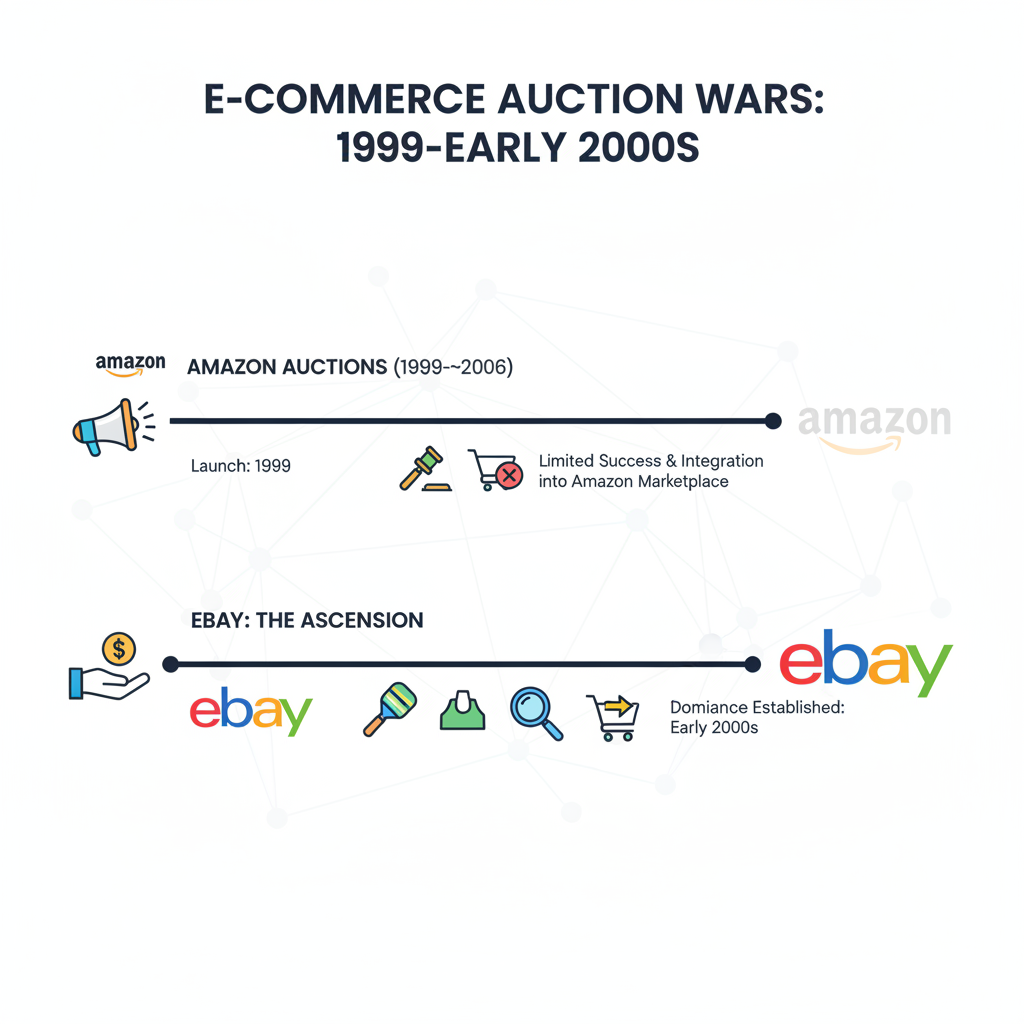
From launch to fade‑out: Amazon Auctions never escaped eBay’s shadow.
Why Amazon Auctions Failed to Catch On
On paper, Amazon Auctions sounded like a smart move. In practice, the timing and strategy were off.
Here’s why it struggled:
1. eBay Already Owned the Auction Mindshare
When you thought “online auction,” you thought eBay.
That’s powerful brand positioning. Amazon showed up late to a party where:
- Buyers already had accounts, feedback, and habits on eBay.
- Sellers already had established ratings and repeat buyers.
- The culture of “bidding wars” was deeply tied to eBay’s identity.
Breaking that kind of habit is hard, even for a giant like Amazon.
2. Amazon’s Superpower Was Fixed‑Price Convenience
Amazon built its brand on:
- One‑click ordering
- Reliable inventory
- Transparent prices
- Fast shipping
Auctions are… the opposite vibe:
- Unpredictable final price
- Uncertain availability
- Waiting for auctions to end
So Amazon’s core promise (fast, easy, predictable) clashed with auction mechanics (slow, variable, uncertain).
3. Sellers Had Little Reason to Move
To attract sellers to a new auction site, you need to offer clear advantages:
- More buyers
- Better fees
- Easier tools
- Less risk
But eBay already had scale and a mature seller ecosystem. For most sellers, learning a new platform and rebuilding feedback ratings wasn’t worth it — especially when buyers themselves weren’t flocking to Amazon Auctions.
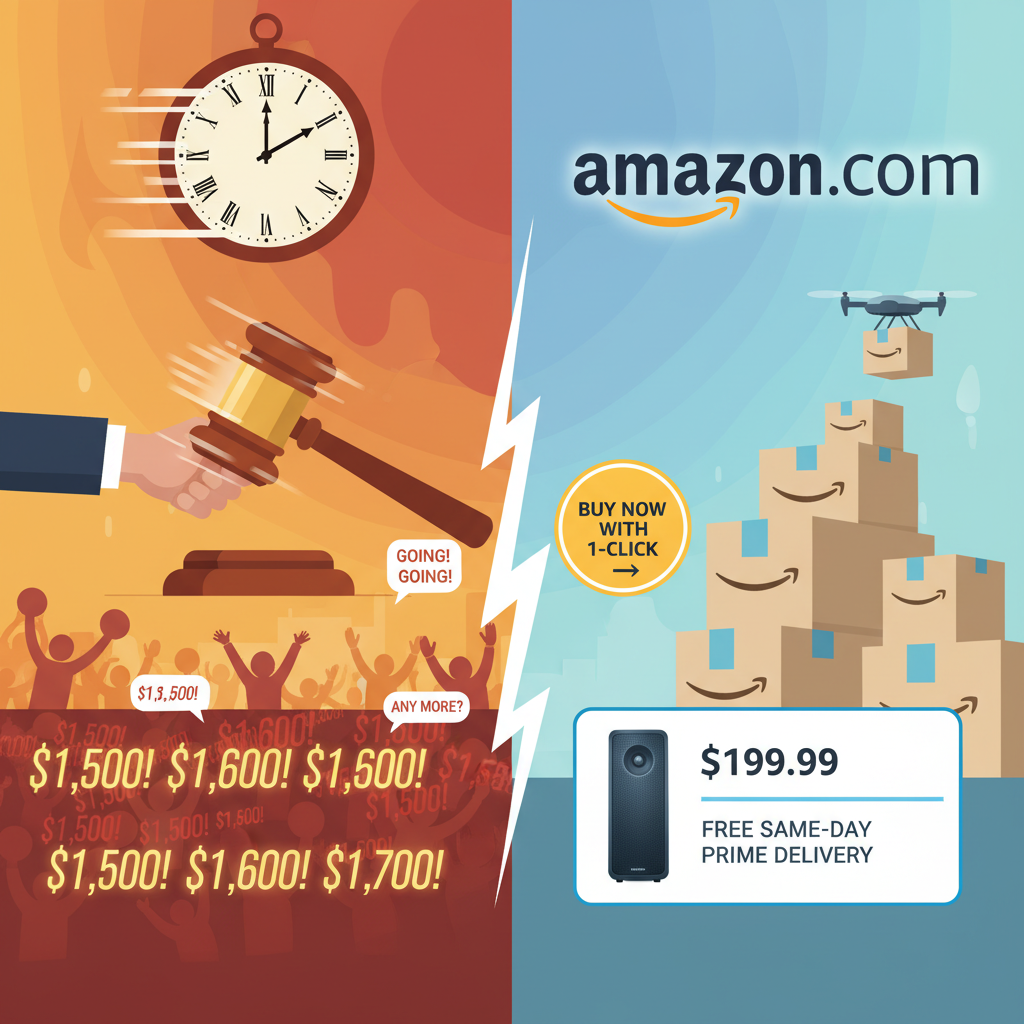
Auctions thrive on chaos and suspense — Amazon thrives on calm, instant gratification.
What Replaced Amazon Auctions?
Amazon didn’t double down on auctions. Instead, it pivoted hard into what it does best.
Over time, auctions quietly faded, and other formats took center stage:
1. Amazon Marketplace (Fixed‑Price Offers)
Third‑party sellers can list products at fixed prices next to Amazon’s own listings.
You see this every time a product page says, “Available from these sellers” or “Sold by [Store Name] and fulfilled by Amazon.”
This approach:
- Keeps pricing simple and immediate
- Lets multiple sellers compete on price, condition, and shipping
- Fits Amazon’s prime directive: Buy now, get it soon
2. Amazon Warehouse Deals (Open‑Box & Used)
Amazon Warehouse is where:
- Returned items
- Open‑box products
- Used or cosmetically imperfect goods
are resold at a discount.
No bidding, but you do see:
- Dynamic pricing (prices can move based on demand and inventory)
- Significant discounts vs. new items
3. Lightning Deals & Limited‑Time Promotions
These aren’t auctions, but they scratch that same “act fast or miss out” itch:
- Time‑limited offers
- Limited stock
- Deep discounts on specific items
They create urgency and scarcity without the complexity of bidding.
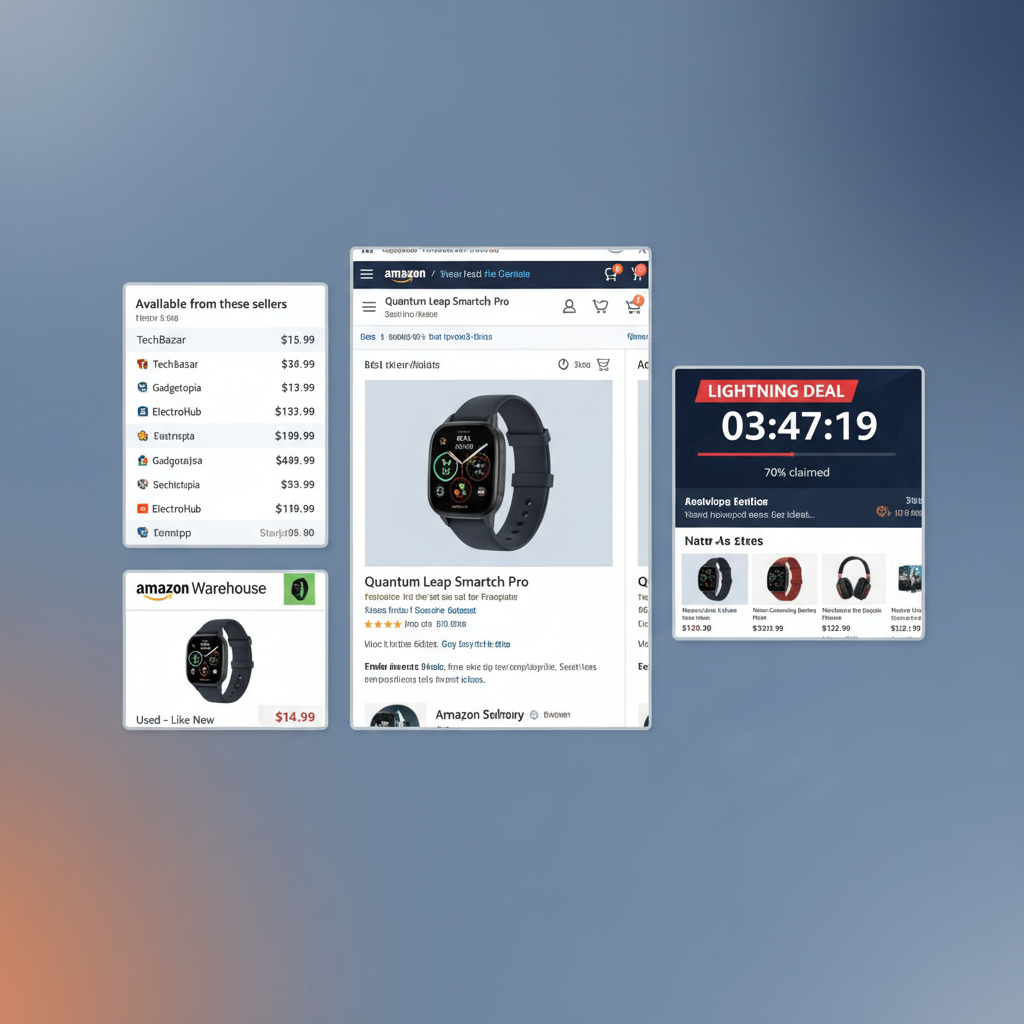
“Available from these sellers,” Warehouse discounts, and Lightning Deals quietly replaced the auction experiment.
Are There Any Amazon Auction‑Style Options in 2026?
The classic, public “Amazon Auctions” platform is gone. But if you’re chasing auction‑style or liquidation deals tied to Amazon’s ecosystem, you still have a few interesting options.
1. Amazon Liquidation & Returns Through Third‑Party Auction Sites
Amazon no longer runs a consumer‑facing auction site like eBay, but its excess and returned inventory often flows into:
- Wholesale liquidators
- B2B auction platforms
- Pallet/flipping marketplaces
In other words: Amazon offloads bulk goods, and those intermediaries run the auctions.
What this looks like in practice:
- Pallets of “Amazon returns” being auctioned off to resellers
- Mixed lots: electronics, home goods, clothing, etc.
- You bid per lot instead of per individual item
This is more of a reseller game than a casual shopper experience, but if you’re looking to flip goods or start a side hustle, it’s very much a thing.
Mini scenario:
You bid on a pallet advertised as “Amazon customer returns – electronics, 70 units.” You might get:
- 20 working headphones
- 10 tablets, 7 good, 3 dead
- Random chargers, smart home devices, Bluetooth speakers
If you’re willing to test, repair, or part out items, you can profit. If you’re not… it can be a brutal lesson.
2. Kindle Vella, Digital & Creator Ecosystem (Not Auctions, But Worth Mentioning)
While not auctions at all, it’s worth noting that Amazon’s digital platforms (Kindle, Audible, etc.) are the opposite of an auction model:
- Highly standardized pricing
- Subscription and credit systems
If you’re a creator dreaming of “auctioning” digital goods on Amazon, that’s not how their ecosystem works. You’ll be playing with fixed prices, promotions, or subscription models instead.
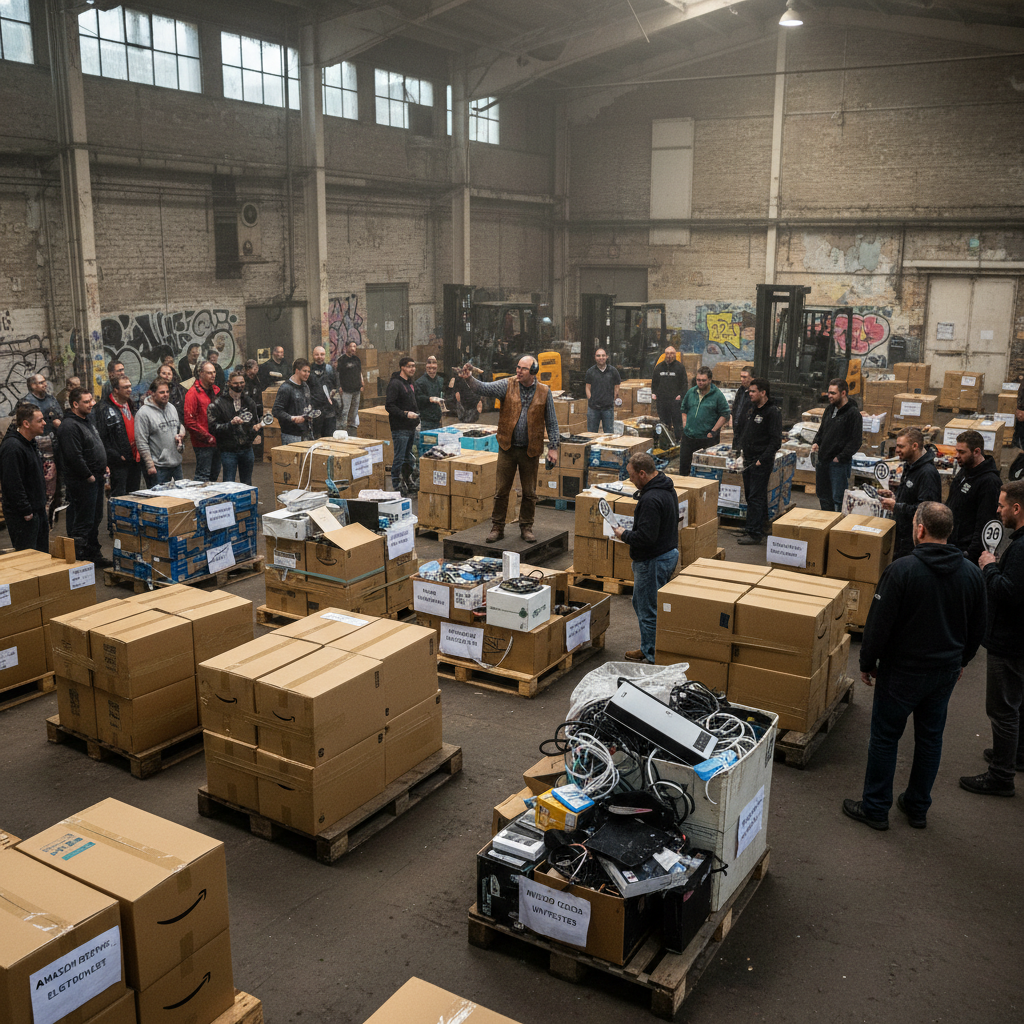
The ghost of Amazon Auctions lives on in liquidation pallets and B2B auction platforms.
Can You Still Do Anything Auction‑Like as a Seller on Amazon?
Not in the traditional “list an item, accept bids, highest bidder wins” sense.
If you’re a seller who likes the auction model, your realistic options are:
-
Use Amazon for fixed‑price, high‑volume products
- FBA (Fulfilled by Amazon)
- Prime‑eligible listings
- Buy Box competition
-
Use eBay or other auction platforms for unique, collectible, or price‑flexible items
- Vintage
- One‑of‑a‑kind finds
- Items with uncertain market value
Many serious sellers do both:
- Amazon for new, replenishable goods
- eBay for collectibles, used items, or anything with volatile pricing
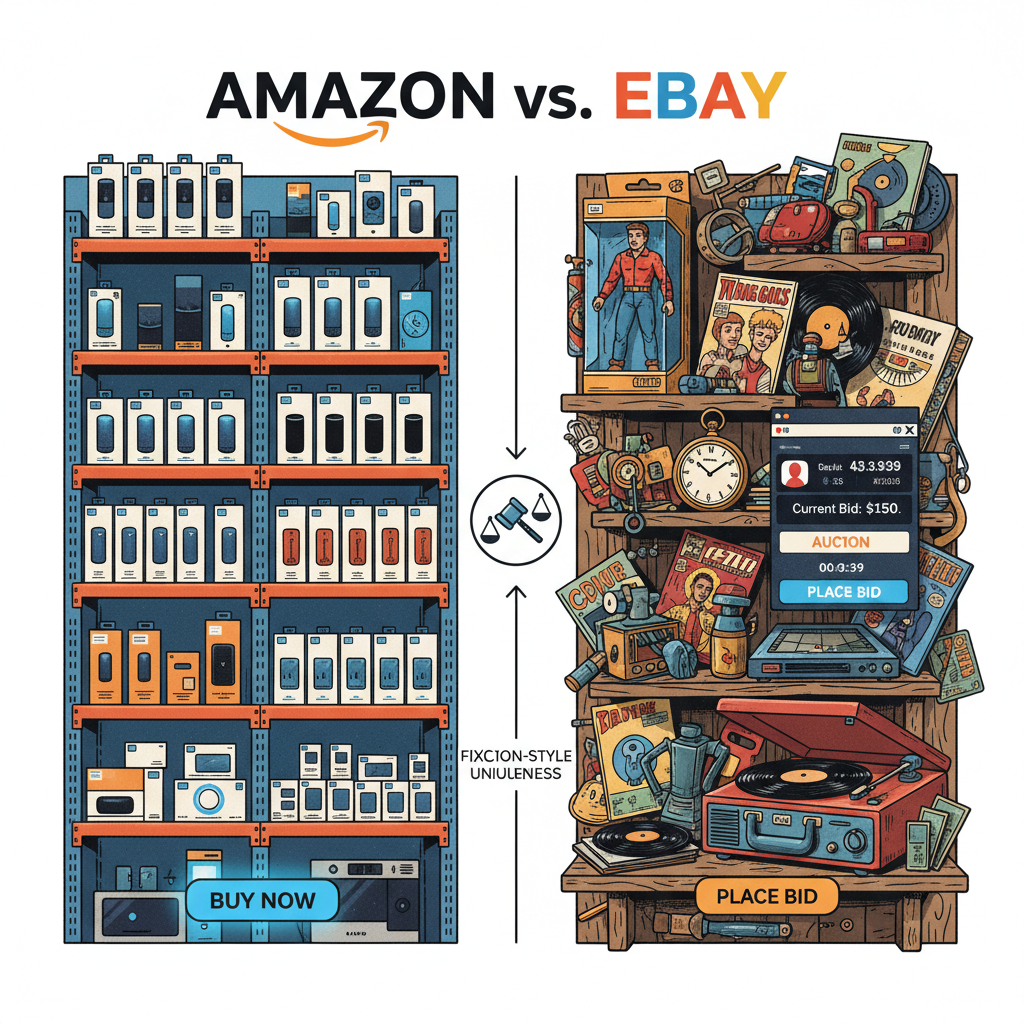
One brand promises “Buy it now.” The other says “Let’s see what it’s worth.”
Amazon vs eBay: Auction vs Fixed‑Price Showdown
If you’re trying to decide where to sell, here’s a quick comparison through the “auction site” lens.
When eBay (Auctions) Makes More Sense
Use eBay if you:
- Sell unique or rare items (collectibles, vintage, discontinued goods)
- Want to let the market decide the price
- Are okay with:
- Variable final prices
- Longer listing times
- Occasional non‑paying bidders
When Amazon (Fixed‑Price) Makes More Sense
Use Amazon if you:
- Sell new, branded, or replenishable products
- Care most about speed and volume
- Compete on:
- Price
- Prime shipping
- Product reviews and listing quality
In 2026, the default reality is:
- Amazon = Buy it now
- eBay = Maybe bid on it
Auctions thrive on suspense; Amazon thrives on certainty.
How to Still “Hack” Auction‑Like Value on Amazon as a Buyer
Even without a live auction site, you can still find auction‑tier deals on Amazon if you’re a bit strategic.
1. Hunt in Amazon Warehouse
Look for:
- “Used – Like New” or “Used – Very Good” options on product pages
- Filters for condition (used, renewed, open‑box)
These items often:
- Are significantly cheaper than new
- Have minor box damage, cosmetic flaws, or were simple returns
- Still come with Amazon’s customer service and (usually) return options
2. Watch Price History and Set Alerts
Third‑party tools can track Amazon price history for many items and alert you when they drop. It’s not bidding, but it gets you the timing advantage auctions used to offer.
3. Time Your Purchases Around Major Sales Events
Think:
- Prime Day
- Black Friday / Cyber Monday
- Seasonal clearance
Amazon’s dynamic pricing engine goes into overdrive then — and some deals can rival or beat typical auction wins, especially once you factor in shipping and buyer protection.
So… Is There an Amazon Auction Site Today?
If by “Amazon auction site” you mean:
A public, consumer‑facing marketplace where you bid in real time on individual items like eBay.
Then: no — that doesn’t exist on Amazon anymore.
What does exist:
- An enormous fixed‑price marketplace (Amazon Marketplace)
- Discount and open‑box inventory (Amazon Warehouse)
- Limited‑time deals (Lightning Deals, major sale events)
- Amazon inventory flowing into third‑party liquidation and auction platforms
If you’re a shopper: use Amazon for speed, reliability, and strategic deal‑hunting, not live bidding.
If you’re a seller: think of Amazon as your fixed‑price, scale platform and eBay or similar as your auction playground.
Leave a Reply