Inside Amazon’s Doppler HQ in Seattle
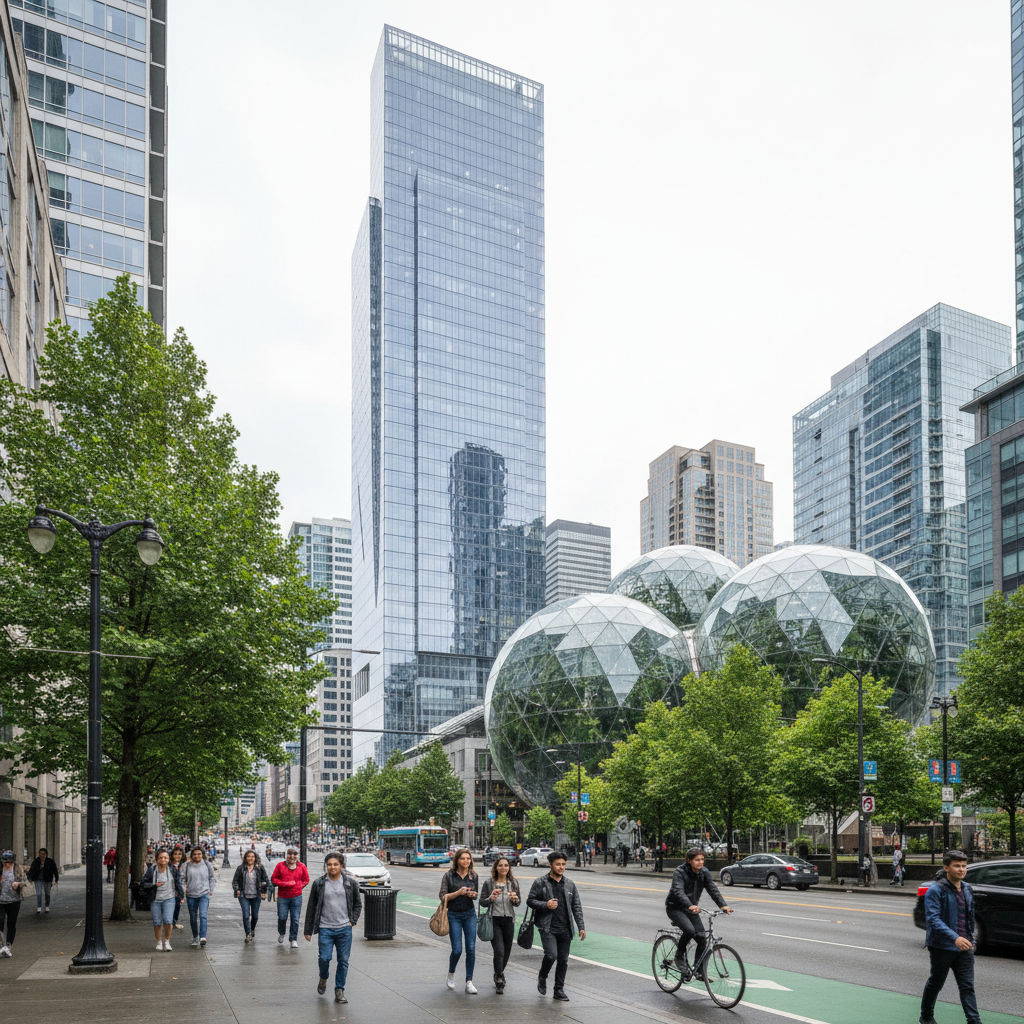
If you’ve ever walked through downtown Seattle and wondered, “What is that glassy Amazon tower next to the Spheres—and why is it called Doppler?”, this one’s for you.
Amazon’s Doppler building isn’t just another corporate high‑rise. It’s a mashup of tech history, clever sustainability, urban design, and yes, an outdoor dog park 17 floors in the air. Let’s unpack it.
What is the Amazon Doppler building?
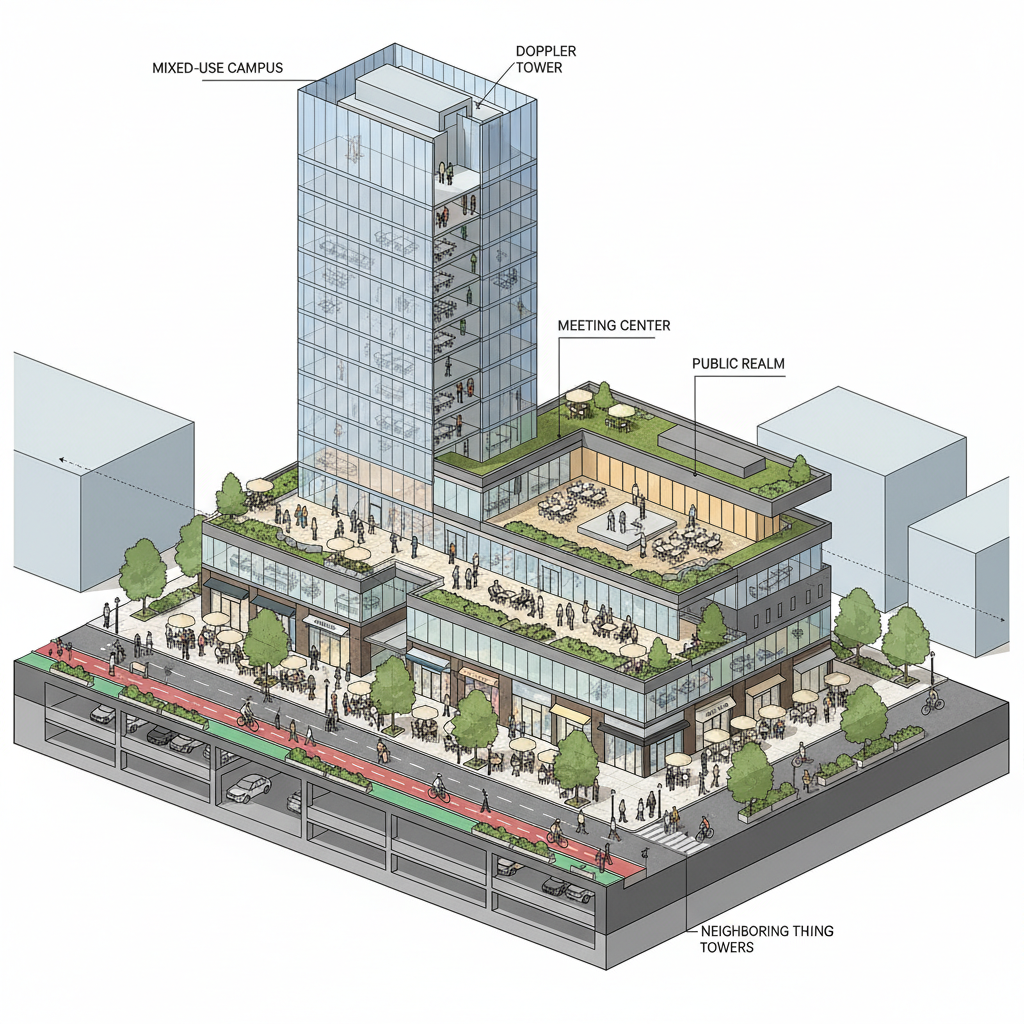
Doppler (also known as Amazon Tower I and Rufus 2.0 Block 14) is a 37‑story office tower that anchors Amazon’s headquarters campus in Seattle’s Denny Triangle neighborhood. It sits at 2021 7th Avenue, near the intersection of Westlake Avenue and 7th, just a short walk from Westlake Center and McGraw Square.
Construction started in 2013, the tower topped out in early 2015, and Amazon employees began moving in that December. The project was developed and managed by Seneca Group, designed by architecture firm NBBJ, and built by Sellen Construction. The building provides roughly 1 million square feet of office space, about 20,000 square feet of retail, a large meeting center, and six levels of underground parking. (en.wikipedia.org)
It’s also part of a three‑tower campus that includes Day 1 and re:Invent, plus the visually iconic Amazon Spheres just across the street. (en.wikipedia.org)
Why is it called “Doppler”?
This is where it gets nerdy in the best way.
Amazon has a habit of naming its buildings after internal product codenames. In this case, “Doppler” was the internal codename for the Amazon Echo smart speaker before it launched publicly in 2014. (aboutamazon.com)
So no, it’s not a physics joke about the Doppler effect (though tech people will absolutely make that joke). It’s a quiet nod to the device that helped kick off the whole Alexa ecosystem.
Inside Doppler, you’ll see this playful naming culture show up everywhere—from artwork and spaces themed around customer reviews to other buildings nearby named Day 1, Fiona, Houdini, and more, each tied to a different Amazon product codename or concept. (aboutamazon.com)
Design and architecture: More than a glass box
On paper, Doppler is a 524‑foot, LEED Gold–certified office building with 37 floors of workspace, a multi‑story meeting center that can seat roughly 1,800 people, and thousands of underground parking stalls. (en.wikipedia.org)
In practice, it’s also a test case for what a dense, urban HQ can look like when a company invests heavily in public realm and amenities.
Key design moves
- Public‑facing ground floor: Doppler’s base is wrapped with retail—about 20,000 square feet of shops, restaurants, and cafés. This helps keep the streets active, rather than walling off the neighborhood with a corporate fortress. (senecagroup.com)
- Urban campus, not a single tower: The building is part of a three‑block development—often referred to as the Rufus 2.0 campus—designed to work as a walkable mini‑district, not just a set of isolated towers. (siteworkshop.net)
- Meeting Center: A connected five‑story meeting center provides large venues for all‑hands, events, and conferences, with stadium‑style seating for up to about 2,000 people. (senecagroup.com)
- Dog‑ and bike‑friendly details: Beyond the famous dog park (we’ll get to that), the site includes one of downtown Seattle’s first grade‑separated cycle tracks, making it easier and safer for cyclists to navigate through Denny Triangle. (siteworkshop.net)
Landscape architecture firm Site Workshop designed the surrounding open spaces, which later became part of what Amazon calls the Urban Arboretum—a campus‑wide network of plant‑rich plazas, stairs, and breezeways that thread between buildings. (seattlespheres.com)
Inside Doppler: What it’s like to work there
If you’re an Amazon employee (“Amazonians,” in company lingo), Doppler is a whole ecosystem.
Everyday spaces
According to Amazon, Doppler includes:
- Multiple eateries and a coffee stand right inside the building, plus a market that sells everything from flowers to frozen foods and kombucha. (aboutamazon.com)
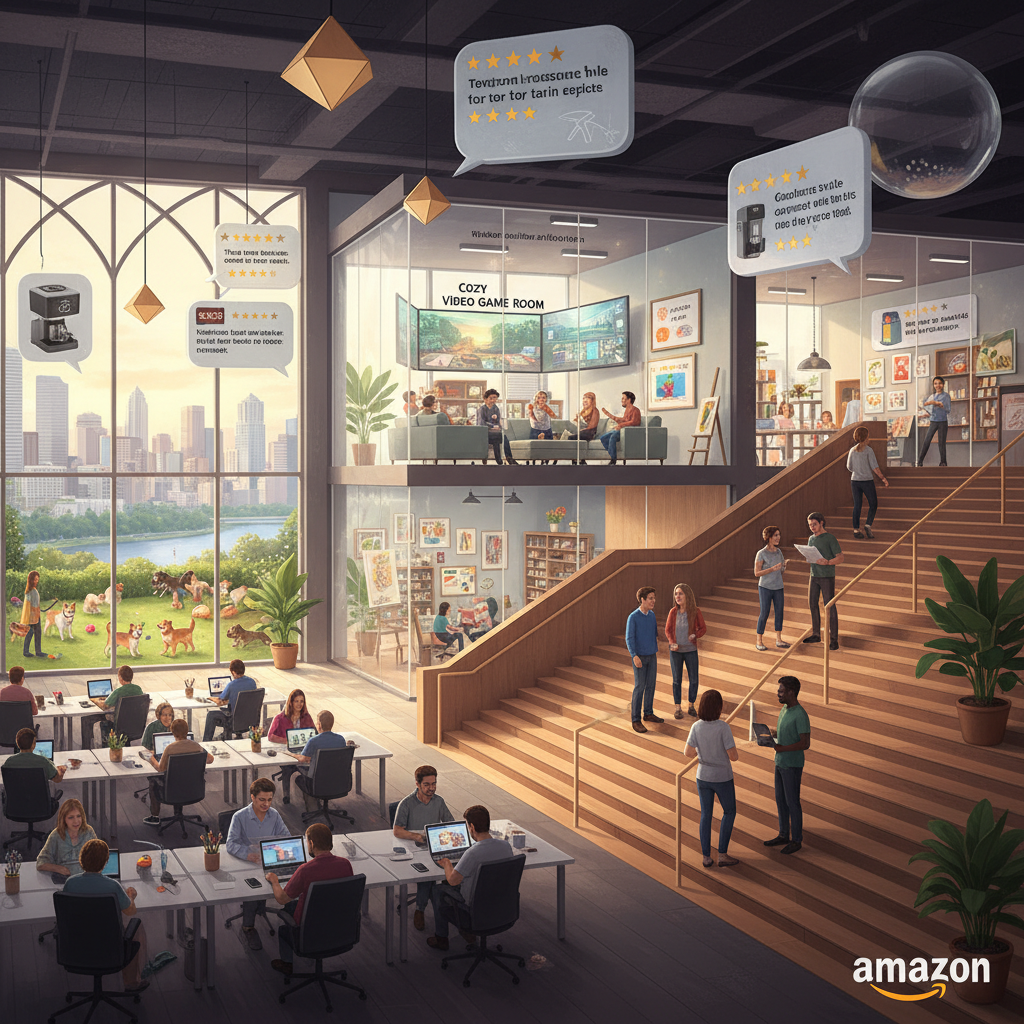
- A video game room and the Expressions Lab, a creative studio meant to give employees a way to decompress and explore art. (aboutamazon.com)
- Community stairs—tiered seating on the second floor that doubles as a hangout, informal meeting area, and event venue. (aboutamazon.com)
Each floor also features blown‑up customer product reviews on the walls—some funny, some heartfelt—as a constant reminder of Amazon’s customer‑obsessed culture. (aboutamazon.com)
The 17th‑floor dog park (yes, really)
One of the most talked‑about features: an outdoor dog park on the 17th floor. Employees can bring their dogs to work, then take them for fresh air and playtime with sweeping views of Seattle. (aboutamazon.com)
It’s not just cute; it’s part of a broader employee‑experience play. Pet‑friendly offices are proven to reduce stress and increase social interaction, and Amazon has leaned hard into being a dog‑friendly workplace across its Seattle campus.
Connection to the Urban Arboretum
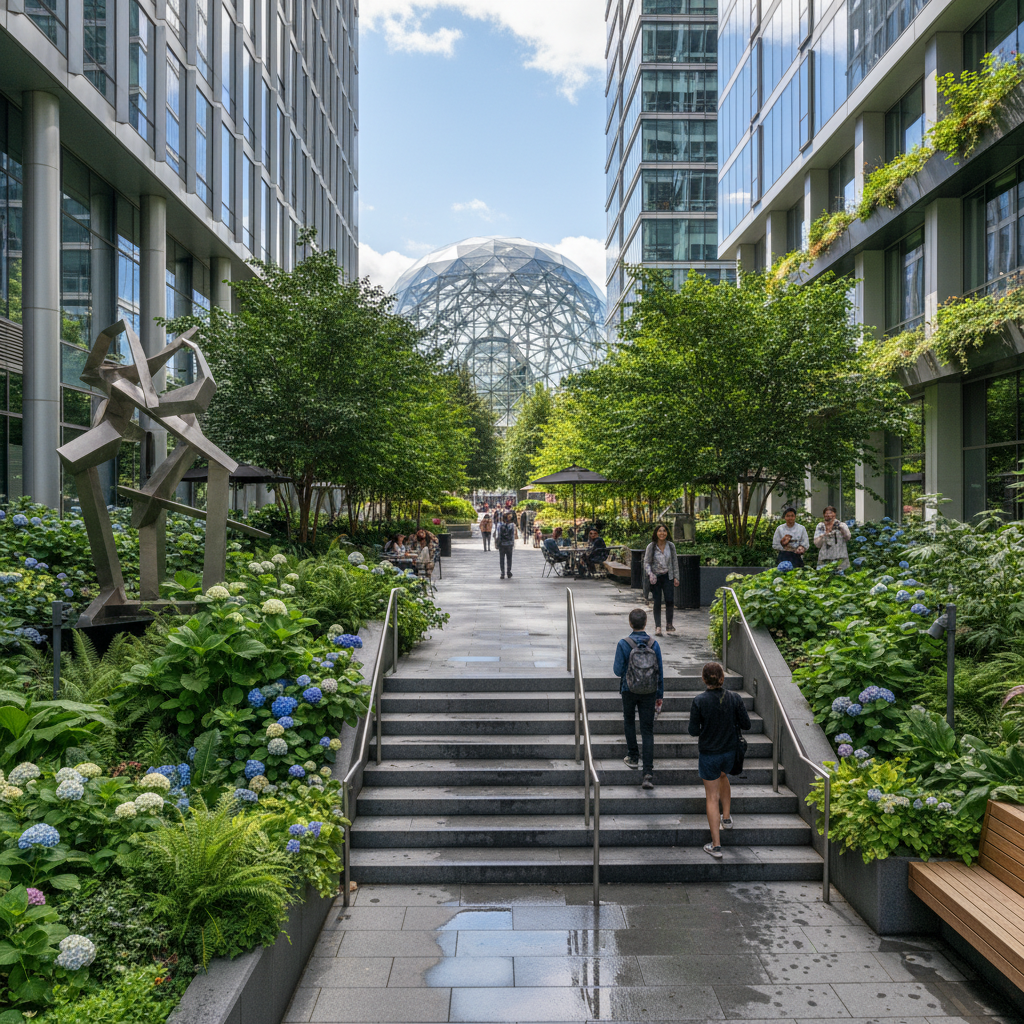
At street level, Doppler’s stairway along 7th Avenue leads you into the Urban Arboretum—lush planting beds with species like evergreen hydrangea (Dichroa febrifuga) and Himalaya cobra lily, plus the Petros sculpture by Pacific Northwest artist Julie Spiedel. (seattlespheres.com)
Walk up the stairway and through the breezeway between Doppler and the Amazon Meeting Center, and you’re in a shaded mid‑block corridor full of ferns and seasonal plant surprises. This space is open to the public, not just employees.
Sustainability: How Doppler uses recycled heat
One of the most innovative aspects of the Amazon Doppler building is something you’ll never see: the heat system.
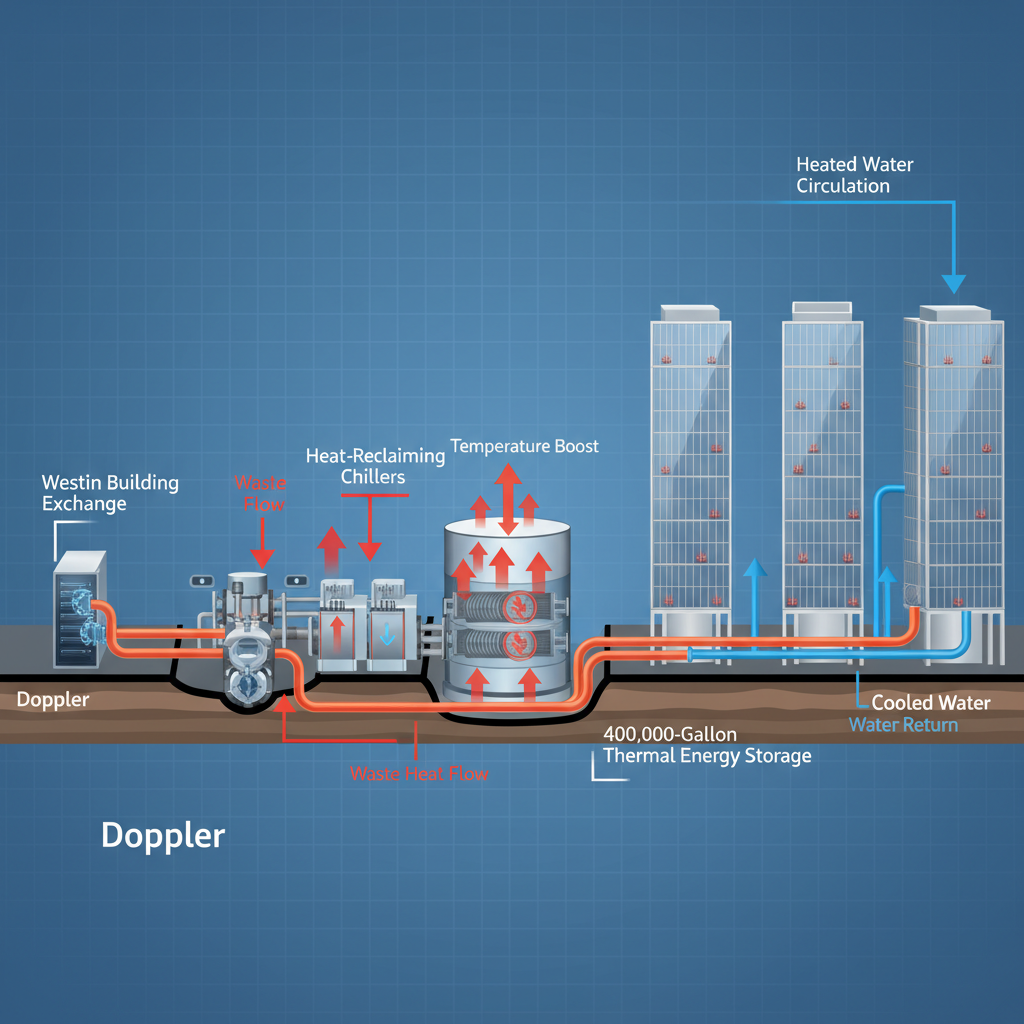
Amazon partnered with the neighboring Westin Building Exchange, a massive telecommunications and data‑center hub, to create a shared district energy system. Instead of venting its excess heat into the sky via cooling towers, the Westin pipes warm water across the street to a central plant housed in Doppler. (aboutamazon.com)
Here’s what happens next:
- Warm water (around 65°F) comes from the Westin Building’s cooling system into Doppler.
- Inside Doppler, a set of heat‑reclaiming chillers concentrate that low‑grade heat, boosting the water temperature to about 130°F—hot enough to heat office spaces across Amazon’s campus.
- A 400,000‑gallon storage tank lets Amazon store that heat and also act as an emergency water backup for the Westin Building.
- If there’s more heat than needed, an enormous cooling stack on Doppler’s roof safely releases the excess. (aboutamazon.com)
The result: Amazon heats large portions of its Denny Triangle campus using recycled waste heat instead of relying solely on traditional boilers or electric systems. It’s a major efficiency win and a showcase project in Amazon’s broader sustainability initiatives.
Doppler’s role in Seattle’s urban evolution
Doppler didn’t just add more office space; it helped kick off a major transformation of the Denny Triangle area.
From hotel site to HQ tower
The tower sits on a relatively small, irregular 0.32‑acre site that used to be home to the Sixth Avenue Inn, a mid‑century hotel demolished as part of the redevelopment. Amazon’s Acorn Development LLC bought the property in 2012 for just over $66 million before starting construction in 2013. (pcad.lib.washington.edu)
Since opening, Doppler and its sister towers have helped anchor a surge of new apartments, restaurants, and transit improvements in the neighborhood—along with the now‑famous Spheres, which serve as a plant‑filled conservatory and workspace. (siteworkshop.net)
Economic ups and downs
Doppler also shows up in regional economic stories. For example, during one recent round of tech‑sector belt‑tightening, state filings showed that Amazon’s Doppler building accounted for more than 350 of the jobs cut in Washington, more than any other site in the state. (axios.com)
It’s a reminder that as visible as Doppler is on the skyline, it’s just as central in conversations about Seattle’s job market, housing pressures, transit planning, and post‑pandemic downtown recovery.
Visiting or experiencing the Doppler area
You can’t just stroll into Doppler’s office floors without an Amazon badge, but you can experience a lot of what surrounds it.
Here’s how:
- Walk the Urban Arboretum: Start at the Doppler Stairway on 7th Avenue, wander up through the lush landscaping and sculpture, then continue via the breezeway toward the Spheres and the rest of the campus. (seattlespheres.com)
- Explore ground‑floor retail: Many of the restaurants and cafés at Doppler’s base are open to the public, adding to the neighborhood’s food scene. (senecagroup.com)
- Join an Amazon HQ tour: Amazon periodically offers campus tours that include views of Doppler, the Spheres, and other nearby buildings—plus a public exhibit space under the Spheres. (en.wikipedia.org)
If you’re an architecture, urban‑design, or sustainability nerd, you’ll get a lot out of just walking the block and noticing how the tower, landscaping, retail, and transit all fit together.
Why the Amazon Doppler building matters
Zooming out, Doppler stands at the intersection of a few big trends:
- Corporate HQs moving into dense downtowns instead of isolated suburban campuses.
- Sustainable infrastructure—like heat‑recovery systems and transit‑friendly design—baked directly into commercial development.
- Workplaces as experiences, where amenities, art, pets, plants, and public realm are as intentional as the floorplate layout.
If you’re researching the Amazon Doppler building for a trip, a design project, or just pure curiosity, it’s a fascinating case study in how a tech giant reshapes a city block—not only with a tall tower, but with a whole ecosystem of spaces above, below, and around it.
And if you ever find yourself walking up that fern‑filled stairway on 7th Avenue, look up. You’re standing at the literal base of Echo’s old codename.
Leave a Reply