Amazon Frontier: The Next Big Digital Battleground
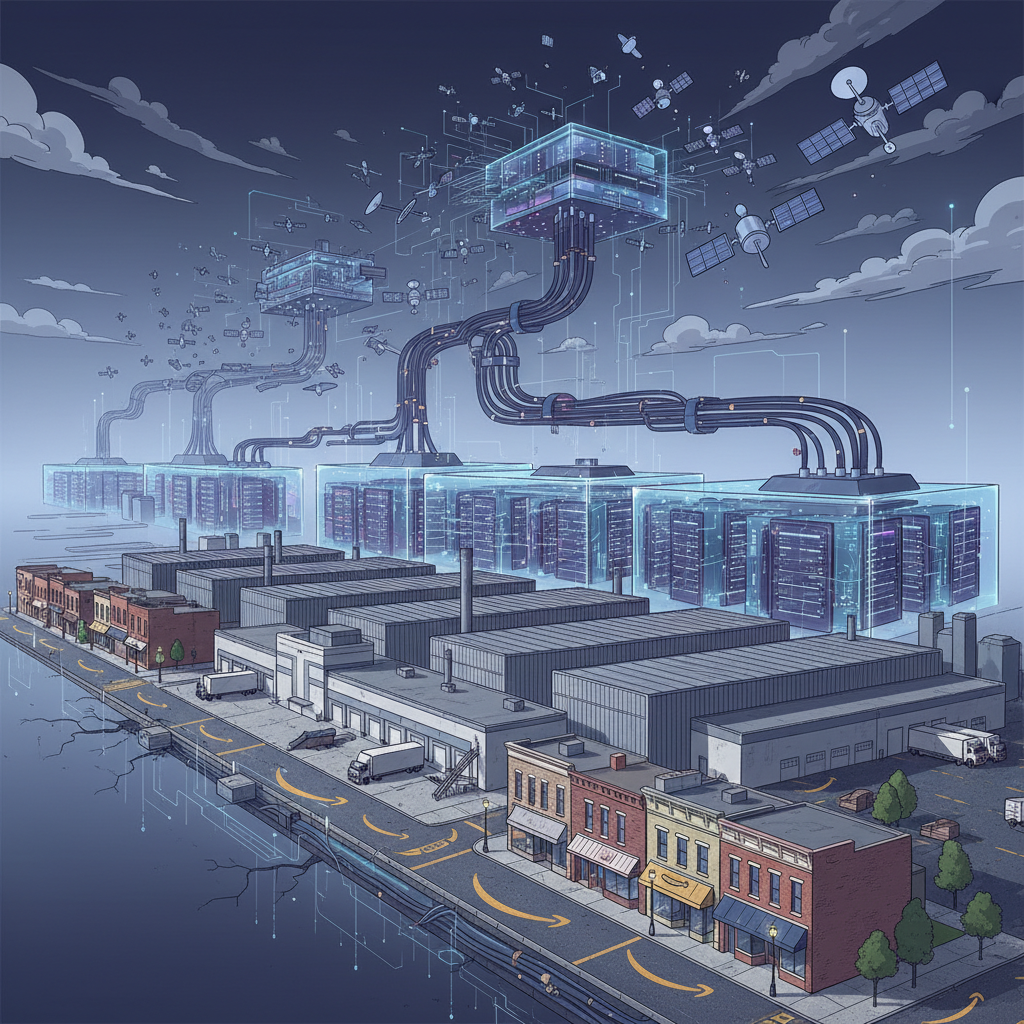
If you think “Amazon frontier” just means a warehouse farther away from your house, buckle up. The real frontier is much bigger — and it’s coming for retail, cloud, logistics, AI, and even how countries think about economic power.
In this post, we’ll unpack what the Amazon frontier really is: not just geography, but the expanding edge of Amazon’s influence — from remote towns to cloud servers, from smart speakers in your kitchen to satellites in low Earth orbit.
Let’s walk that frontier line.
What Do We Mean by the “Amazon Frontier”?

When people say the frontier, they usually mean:
- A boundary where the known meets the unknown
- A place where rules are still forming
- A space full of opportunity — and risk
Apply that to Amazon and you get three overlapping frontiers:
- Geographic frontier – Expanding into new countries, smaller cities, and rural regions.
- Digital frontier – Pushing deeper into cloud, AI, automation, and devices.
- Economic & regulatory frontier – Testing the limits of antitrust law, labor rules, and competition.
Frontier #1: Reaching the Physical Edges of Commerce
Amazon’s first frontier was pretty simple: Can we get this package to you faster than anyone else?
That question has led to:
- Dense fulfillment networks in and around major cities
- Regional sortation centers that break down packages by zip code
- Last‑mile delivery fleets (Amazon vans, gig drivers, even bikes in some cities)
But the new frontier is rural and remote.
Why rural and small-town America matters
For years, same‑day and one‑day delivery were big‑city perks. Now, more small towns are starting to see dramatically faster delivery windows compared to even a few years ago.
That matters because:
- Local retail in these regions is often fragile.
- Big box stores may be far away.
- When online becomes more convenient and fast, buying patterns change permanently.
Imagine a town with:
- One struggling hardware store
- A 45‑minute drive to the nearest big-box chain
- Suddenly, two‑day or next‑day delivery on nearly every tool, appliance part, and household item
Over a few years, Amazon can shift where money leaves or stays in a community.
Frontier #2: The Cloud and AI Powering Everything

If you only think of Amazon as “the place my packages come from,” you’re missing the biggest frontier: AWS (Amazon Web Services).
What is the Amazon frontier in the cloud?
AWS powers huge chunks of the internet: startups, Fortune 500s, government agencies, streaming platforms — you name it. When a company says “we’re moving to the cloud,” AWS is usually on the short list.
This frontier looks like:
- New data center regions in more countries
- Edge computing close to users for super low‑latency apps
- AI and machine learning services that any developer can plug into
So what?
Because as AWS expands, Amazon becomes the quiet backbone of other companies’ growth. Even some of Amazon’s direct competitors run parts of their business on AWS.
AI: From recommendations to full-on copilots
Amazon’s AI frontier used to be mostly:
- “People who bought this also bought…”
- Personalizing your homepage
- Tuning warehouse operations
Now AI is much more central:
- Smarter search and product discovery
- Better demand forecasting and inventory placement
- Developer tools and AI models that others can build on
You might never see it directly, but the Amazon frontier in AI is shaping which products you see, the prices you pay, and how fast things ship.
Frontier #3: Logistics, Drones, and the Race to Zero Friction

If Amazon has a religion, it’s removing friction: fewer clicks, faster shipping, easier returns.
The logistics frontier is where things get really sci‑fi.
Faster, cheaper, closer
To push the frontier of speed and cost, Amazon keeps experimenting with:
- Micro-fulfillment centers close to population centers for same‑day delivery
- Robotics in warehouses to move, sort, and pack more efficiently
- In‑house air cargo fleets to control shipping end‑to‑end
The goal is simple but extreme: make buying on Amazon so fast and predictable that other options feel annoying.
What about drones and futuristic delivery?
You’ve probably seen drone delivery headlines. The reality is still early and heavily regulated, but the direction is clear: Amazon wants to deliver more, faster, with less human involvement per package.
Why it matters:
- Fewer touchpoints can mean lower costs.
- Lower costs can reinforce Amazon’s pricing power.
- That pricing power can pressure smaller competitors — again.
Frontier #4: The Home as an Amazon Territory
Your home is now part of the Amazon frontier.
Think about how many Amazon touchpoints can live inside one household:
- Echo / Alexa devices answering questions and playing music
- Ring doorbells and security cameras
- Kindle readers and Fire TV
- Amazon apps on your phone, TV, and tablet
The strategy here is subtle: the more surfaces Amazon occupies, the more default it becomes.
Data, convenience, and trade‑offs
Devices on this frontier:
- Learn your habits (when you’re home, what you watch, what you reorder)
- Make it easier to buy without thinking (voice ordering, “Buy Now,” subscriptions)
- Can be integrated into smart homes and routines
There are valid concerns too:
- How much data is being collected?
- Who has access to it, and for what purposes?
- What happens if more daily life runs through one ecosystem?
Frontier #5: New Industries Amazon Keeps Testing
Amazon’s not content with just retail + cloud. The frontier mindset shows up every time they enter a new space.
Some examples over the past decade:
- Media & entertainment – Prime Video, live sports rights, original content
- Grocery – Whole Foods acquisition, Amazon Fresh
- Health-related services – Subscription meds, virtual care efforts, devices like Halo (now discontinued)
- Advertising – Sponsored products, video ads, and more
Not every experiment works. Amazon has shut down or scaled back plenty of frontier projects. But the pattern is consistent:
- Identify a huge market.
- Use Amazon’s existing strengths (logistics, cloud, data, Prime membership).
- Test, iterate, and either double down or walk away.
The Regulatory and Social Frontier: How Big Is Too Big?
Wherever Amazon pushes the frontier, regulators and communities eventually follow.
Key tensions on this frontier:
- Antitrust and competition – Does Amazon’s role as both marketplace and seller create unfair advantages over third‑party sellers?
- Labor and working conditions – What happens to warehouse workers, drivers, and small business owners as Amazon optimizes for speed and cost?
- Local economies – How do small retailers, malls, and main streets adapt when more spending flows online through one platform?
Different countries and regions are already experimenting with:
- Stricter marketplace rules
- Data and privacy protections
- Worker protections and unionization efforts
We’re still early here. The “rules of the game” on the Amazon frontier are not fully written yet.
So… Is the Amazon Frontier Good or Bad?
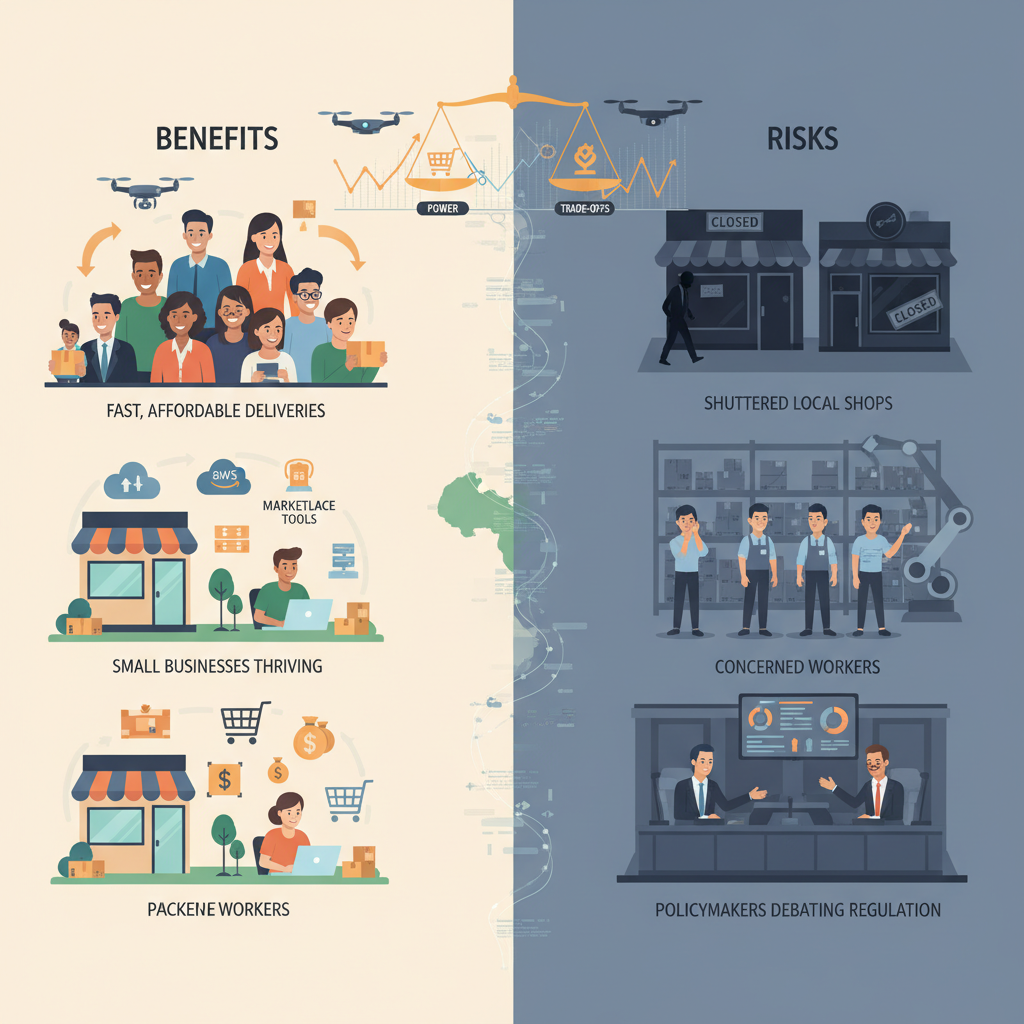
The honest answer: it’s both, depending on where you stand.
Upsides
- Unmatched convenience – Fast delivery, broad selection, easy returns.
- Lower prices (for now) – Intense competition that can benefit consumers.
- New business opportunities – Third‑party sellers, AWS‑powered startups, app developers, and logistics partners.
Downsides
- Pressure on small businesses – Harder to compete on price and convenience.
- Concentration of power – More economic and digital infrastructure controlled by one company.
- Data and privacy concerns – More of your life routed through Amazon products and services.
How to Navigate the Amazon Frontier (as a Person or a Business)
You can’t control the frontier, but you can choose how you participate in it.
As a consumer
- Be intentional: Use Amazon for what it’s best at, not for literally everything.
- Support alternatives when it matters: Local stores, direct‑to‑consumer brands, indie bookstores.
- Watch your defaults: One‑click and subscriptions are great — until they’re not.
As a small business or creator
- Treat Amazon as a channel, not your whole business.
- Sell on Amazon to reach customers, but keep building your own brand and email list.
- Leverage AWS and tools — strategically
- Use the cloud to move faster, but avoid locking yourself into one provider if it’s risky.
- Differentiate on what Amazon can’t easily copy
- Deep community, unique storytelling, niche expertise, or truly custom experiences.
As a policymaker or community leader
- Pay attention to local impacts
- Jobs created vs. jobs displaced.
- Tax structures vs. public services.
- Encourage digital literacy and entrepreneurship
- Help residents and small businesses not just survive but use the frontier to their advantage.
Final Thought: The Frontier Keeps Moving
Frontiers are never fixed. Once a region or sector becomes “normal,” the frontier jumps to the next edge.
With Amazon, that might mean:
- New types of AI‑driven shopping
- Deeper integration of physical stores and online logistics
- More global expansion into under‑served markets
- New devices and services inside your home
You don’t need to track every Amazon press release to stay sane. But understanding the Amazon frontier — where it’s pushing next, and what that means for your choices — is one of the quiet skills of modern life.
Because whether you love Amazon, hate it, or feel vaguely guilty while clicking “Buy Now,” you’re already living on its frontier.
Leave a Reply