Amazon Operations Manager Salary Breakdown
So you’re wondering what an Operations Manager at Amazon actually makes—and whether all those yellow vests, metrics dashboards, and late-night shifts are worth it.
Let’s pull back the curtain.
In this post, we’ll walk through Amazon Operations Manager salary ranges, bonuses, stock, location differences, and what really moves the needle on pay.

What is an Operations Manager at Amazon?
At Amazon, an Operations Manager (often called an Area/Operations Manager at different levels) is the person responsible for running a chunk of a fulfillment center or delivery operation.
Typical responsibilities include:
- Managing a team of associates (sometimes 30–100+ people)
- Hitting targets for safety, quality, speed, and cost
- Coordinating with HR, finance, and senior ops leaders
- Solving daily chaos: equipment issues, volume spikes, staffing gaps
If you like process, data, and firefighting with a smile, this role sits right in the middle of Amazon’s engine room.
Operations Managers keep the “Prime in two days” promise from completely falling apart.
How much does an Amazon Operations Manager make?
Let’s talk numbers.
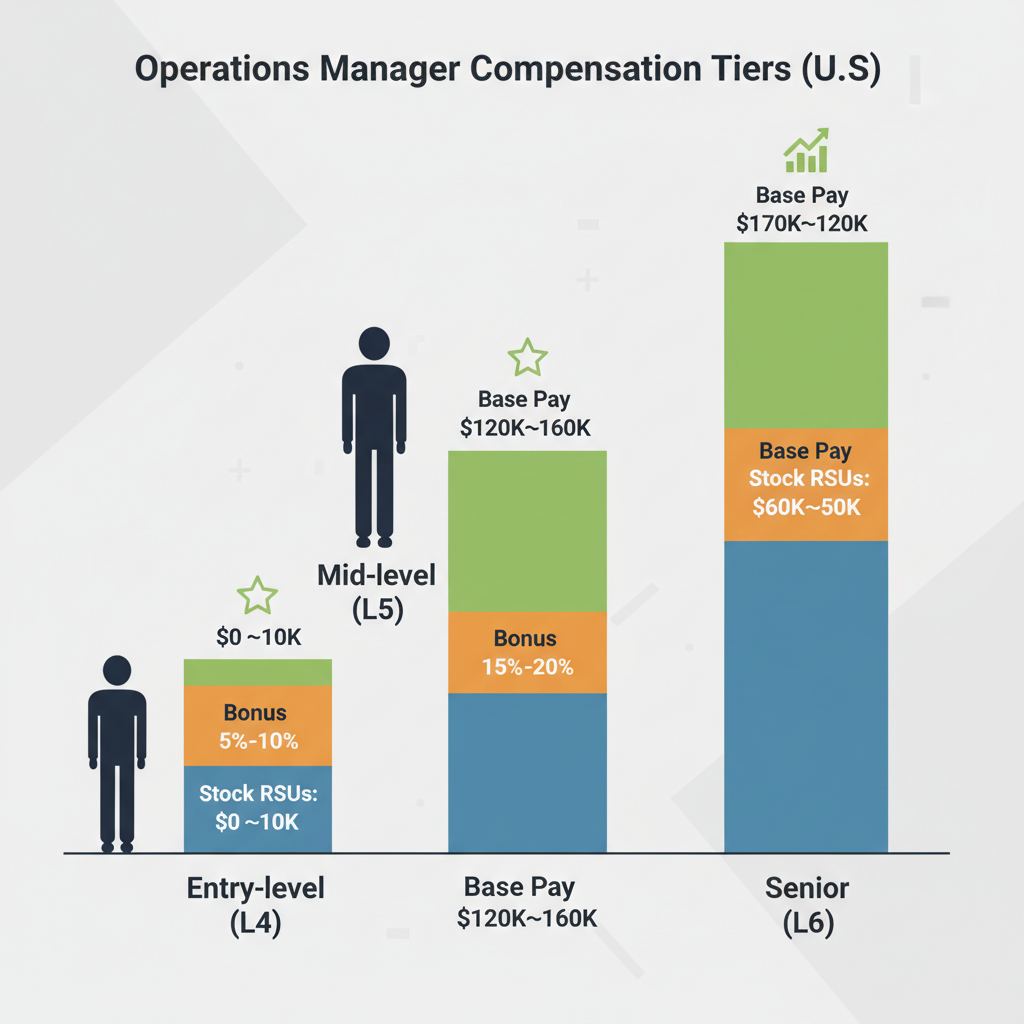
Exactly compensation varies by level, location, and business unit, but for U.S. roles, here’s a grounded, realistic snapshot of total compensation (base + bonus + stock) ranges many Ops Managers report seeing:
Approximate total compensation ranges (U.S.)
For typical operations/area manager levels in fulfillment or logistics, you’ll generally see something like:
Entry-level / junior Ops or Area Manager (L4-ish range)
- Base salary: ~$60,000–$85,000
- Total comp with bonus/stock: ~$65,000–$95,000+
Mid-level Operations Manager (L5-ish range)
- Base salary: ~$80,000–$115,000
- Total comp with bonus/stock: ~$95,000–$140,000+
Senior Operations Manager / larger scope (L6-ish range)
- Base salary: ~$110,000–$150,000+
- Total comp with bonus/stock: can push into $160,000–$220,000+, especially in high-cost markets
You’ll find plenty of public data points on sites like Glassdoor, Blind, and Levels.fyi that line up with these ranges—and they all tell the same story: base is solid, stock is where it gets interesting, and level/location matter a lot.
If you’re thinking long-term, don’t just ask, “What’s the base?” Ask, “What level am I at, and what’s the stock refresh policy?”
Breaking down the Amazon Ops Manager pay package
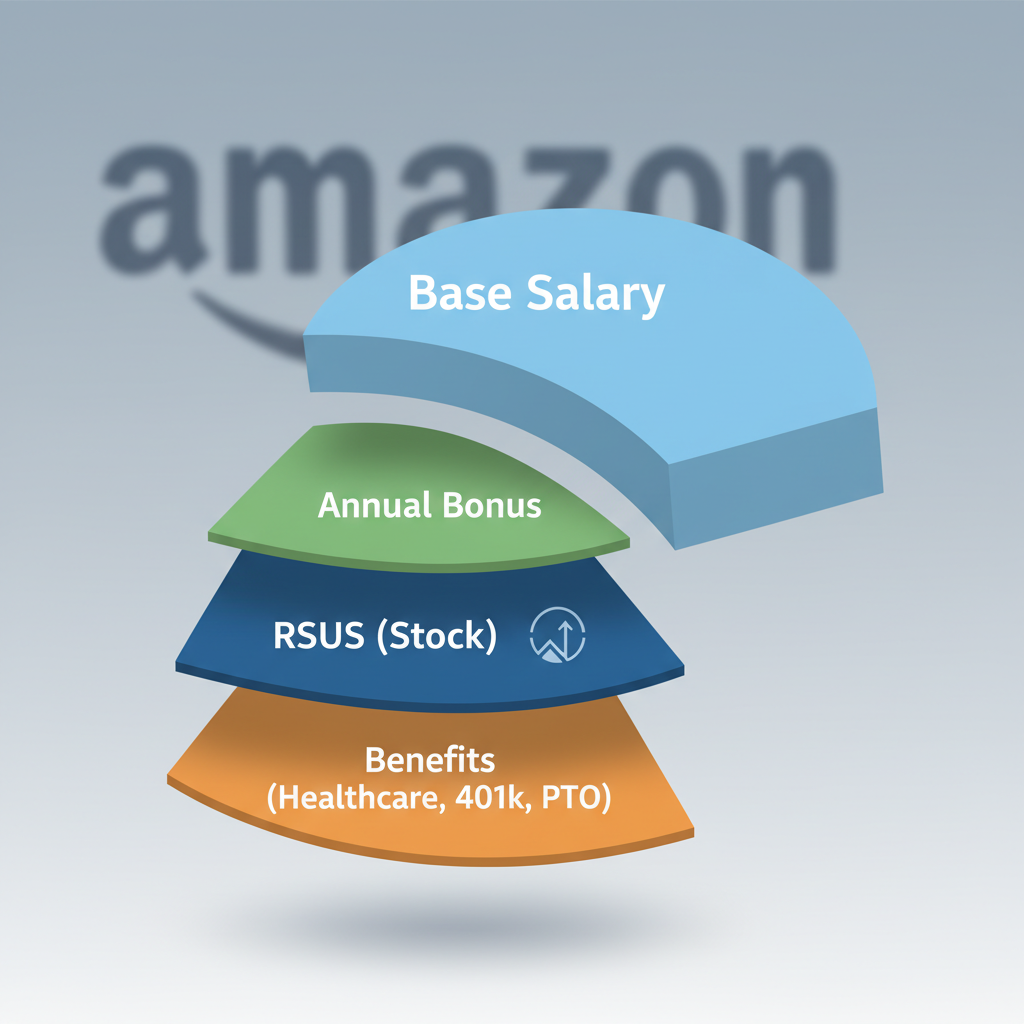
An Amazon Operations Manager salary is really a package with multiple parts:
1. Base salary
This is your fixed annual pay. For most Ops Managers in the U.S., base tends to sit roughly in that $70K–$140K band depending on level and market.
Factors that push base salary up:
- Higher internal level (L5 vs L4, L6 vs L5)
- High-cost cities (Seattle, NYC, Bay Area, some major metros)
- Strong, directly relevant experience in operations or people management
2. Annual bonus
Amazon typically includes a modest cash bonus portion for Ops leaders. It’s usually performance-based and can be a certain percentage of your base (the exact structure can vary by level and org).
What affects your bonus:
- Site performance (hitting volume, quality, and safety targets)
- Your individual performance rating
- Business unit performance (some years are better than others)
3. Restricted Stock Units (RSUs)
This is the quiet lever that can make total compensation jump.
- You’re often granted a number of Amazon RSUs that vest over several years.
- The vesting schedule is typically heavily back‑weighted (less in year 1, more in years 3–4), designed to keep you around.
- If the stock performs well, your total comp can look much higher than your base salary alone.
Real talk: This is why two Ops Managers with the same base may be making very different total comp depending on when they were hired and at what stock price.
4. Benefits and extras
Non-cash items matter too, especially if you’re comparing offers:
- Health, dental, vision insurance
- 401(k) with company match (varies by plan/year)
- Employee discount (handy if you basically live on Amazon already)
- Paid time off + paid holidays (note: operations often work holidays with differential pay)
For Amazon Operations Manager roles, salary is just the headline. Stock + level + vesting schedule are the plot twist.
How much does location change Amazon Ops Manager pay?
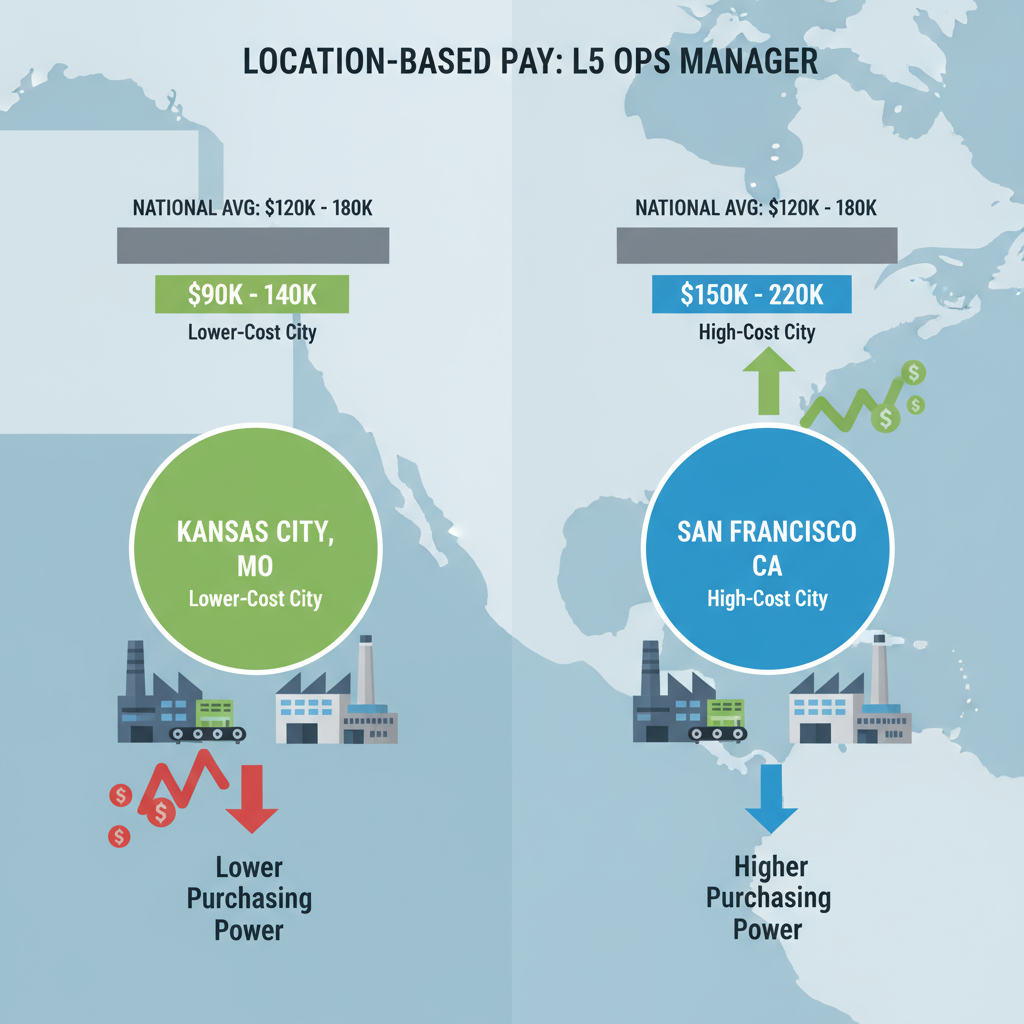
Location is a huge driver of Amazon Operations Manager salary.
Things that typically bump compensation up:
- High cost of living markets: Major metros and tech hubs typically pay at the higher end of the range.
- Strategic sites: Large, complex fulfillment centers or high-volume sort centers can be compensated more aggressively.
Conversely, smaller or lower-cost markets might land offers toward the lower-to-middle part of the ranges mentioned earlier.
Example scenario:
- An L5 Operations Manager in a lower-cost Midwest city might see base around $85K–$95K.
- The same level in a high-cost coastal city could be more like $100K–$115K+ base, with higher total comp due to stock and local banding.
Always ask recruiters which pay band your role sits in and how it compares to the same level in other locations.
Amazon Operations Manager levels: why they matter for salary
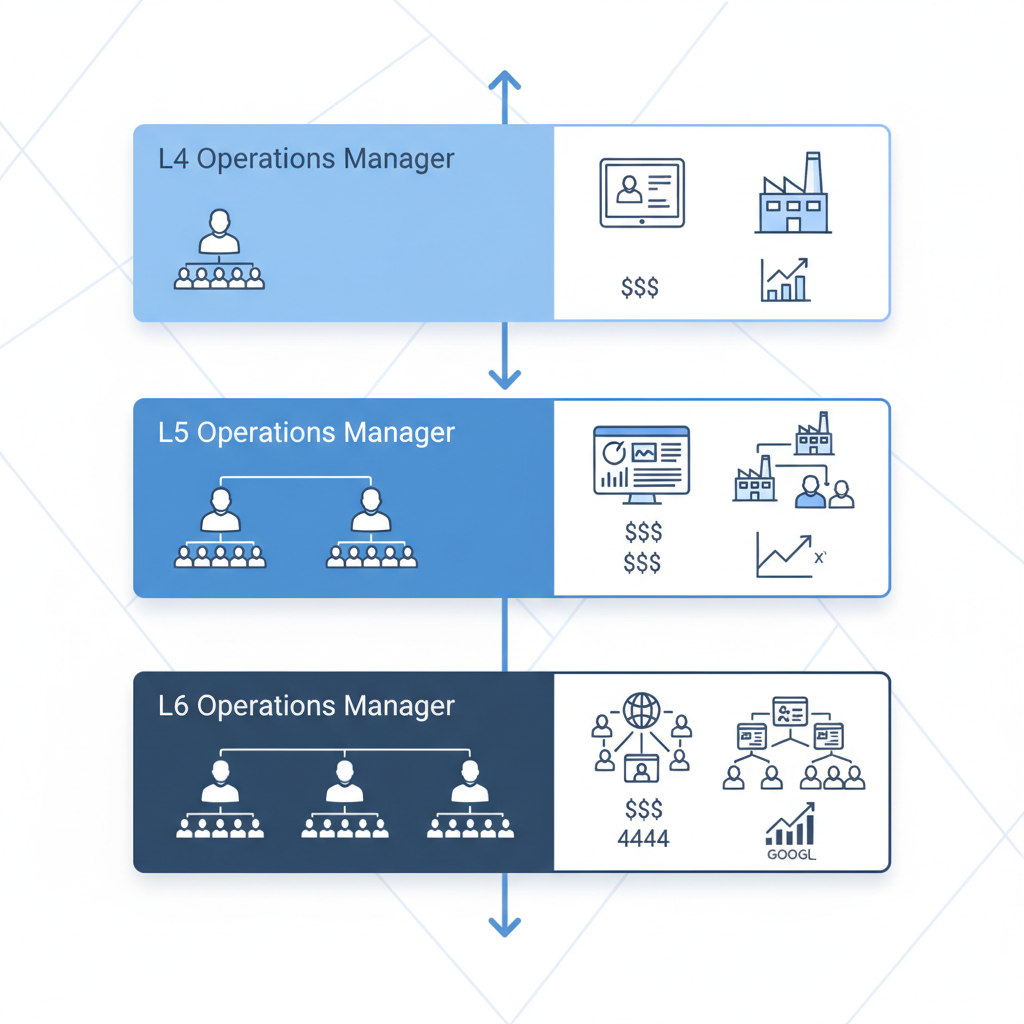
You’ll hear people talk in levels: L4, L5, L6, etc. Your level determines your:
- Salary band
- Bonus target
- Stock grant size
- Scope of responsibility
Roughly:
- L4 – Often early-career / first-time managers, sometimes fresh out of university or with limited leadership experience. Smaller scope, closer to front-line.
- L5 – More established Operations/Area Managers, running larger teams, owning big chunks of a building. This is a common “career Ops Manager” level.
- L6 – Senior Operations Managers or leaders running whole departments or entire shifts, with multiple managers reporting to them.
If you’re coming from outside Amazon, you might be surprised to find you’re targeted at L4 vs L5 or L5 vs L6 depending on how they calibrate your previous experience.
The single biggest lever on your Amazon Operations Manager salary is not your negotiation script—it’s the level you’re hired at.

What experience helps you land the higher end of the range?
If you want to be closer to the top of the Amazon Operations Manager salary band, here’s what tends to help:
1. Real people‑management experience
Amazon cares a lot about whether you’ve actually managed people, not just “influenced stakeholders.”
High‑value experience:
- Running teams in warehouses, logistics, retail, manufacturing, or military units
- Handling scheduling, performance reviews, and difficult conversations
- Leading across multiple shifts or departments
2. Operations or industrial background
You’ll stand out if you’ve worked in:
- Distribution centers / 3PLs
- Manufacturing plants
- Transportation / last‑mile delivery networks
- High-volume retail store management
This reduces ramp‑up time, which makes Amazon more comfortable giving you a higher level and better comp.
3. Data and process skills
Amazon is extremely metrics‑driven. You’ll get bonus points (and potentially better roles) if you can talk about:
- Kaizen / continuous improvement projects
- Reducing defects or improving throughput using data
- Using KPIs and dashboards to manage teams
To earn more, don’t just say you “worked on operations.” Show that you owned teams, owned results, and improved metrics.
Work hours, shifts, and how they relate to pay
Let’s be honest: Ops work is not a 9–5 desk job.
Amazon Operations Managers often:
- Work 10–12 hour shifts during peak periods
- Cover nights or weekends (especially in 24/7 fulfillment centers)
- Rotate shifts or own a specific fixed shift (days, nights, weekends)
Sometimes, higher‑paying roles come with:
- Less-desirable shifts (overnights, weekends)
- More complex buildings or business lines
- Higher performance pressure
Example:
- A night-shift Ops Manager in a high-volume fulfillment center might get slightly better comp or faster promotion opportunities—but will also live a more brutal schedule.
Higher Amazon Operations Manager salary often comes bundled with harder shifts and more pressure. Run the math not just on money, but on lifestyle.
How to negotiate your Amazon Operations Manager offer
You won’t completely rewrite Amazon’s pay bands, but you do have room to influence where you land within them—and even the level.
Here’s how:
1. Research your level and market
Check multiple sources (Glassdoor, Levels.fyi, Blind, LinkedIn salary data) for your city + level. Don’t just look at generic U.S. numbers.
2. Clarify your level early
Before deep into interviews, ask:
- “What level is this role scoped as?”
- “What’s the typical base and total comp range for this level in this location?”
3. Highlight people-leadership stories
When negotiating:
- Emphasize team size you’ve led
- Complex operations you’ve run
- Quantifiable improvements (e.g., reduced defects 15%, improved throughput 20%, cut overtime 10%)
4. Negotiate the whole package
You can ask about:
- Base salary within band
- Upfront or sign-on bonuses
- Stock grant size (and how it vests)
- Relocation support if you’re moving
5. Use competing offers (carefully)
If you have other roles in logistics, manufacturing, or tech, share them strategically to justify being pushed to the top of the band—but keep it professional, not ultimatum‑y.
You won’t blow past Amazon’s internal limits, but you can often move from the middle to the top of the band with the right data and stories.
Is an Amazon Operations Manager salary “worth it”?
This depends on what you value.
Pros:
- Competitive salary and strong upside with stock, especially at higher levels
- Big-company name that plays well on your resume
- Rapid exposure to high-volume, high-pressure operations
- Clear metrics and promotion pathways if you perform well
Cons:
- Long, sometimes unpredictable hours
- Physically and mentally demanding environment
- High expectations and intense performance culture
Think of it as a career accelerator: You might work harder than at a slower-paced company, but you’ll also learn faster and have options to move into higher-level ops roles, consulting, or other leadership positions later.
If you’re early or mid-career and serious about operations leadership, the Amazon Operations Manager salary plus experience can be a strong trade—even if it’s not always comfortable.
Quick recap: Amazon Operations Manager salary in plain English
Here’s the whole thing, simplified:
- Entry-level Ops/Area Manager: Roughly $60K–$95K total depending on location and level.
- Mid-level Ops Manager: Roughly $95K–$140K+ total.
- Senior Ops Manager (larger scope): Often $160K–$220K+ total, particularly in major markets.
- Your level, location, and stock grant are the big levers.
- The job pays well for operations—but it’s not an easy 40-hour week.
If you tell me your years of experience, city, and whether you’ve managed people before, I can help you estimate where you might land within those ranges and how to position yourself for the higher end.
Leave a Reply