Amazon’s New Pasco Delivery Station Speeds Tri-Cities Shipping
If it feels like your Amazon orders in the Tri-Cities are suddenly showing up almost too fast, don’t worry — you’re not stuck in a time warp.
Amazon has opened a new delivery station in Pasco, and it’s quietly transforming how quickly packages land on doorsteps across the region.
Let’s walk through what’s happening, why Amazon chose Pasco, and what it means for shoppers, workers, and local businesses in the Tri-Cities.
What exactly did Amazon just open in Pasco?
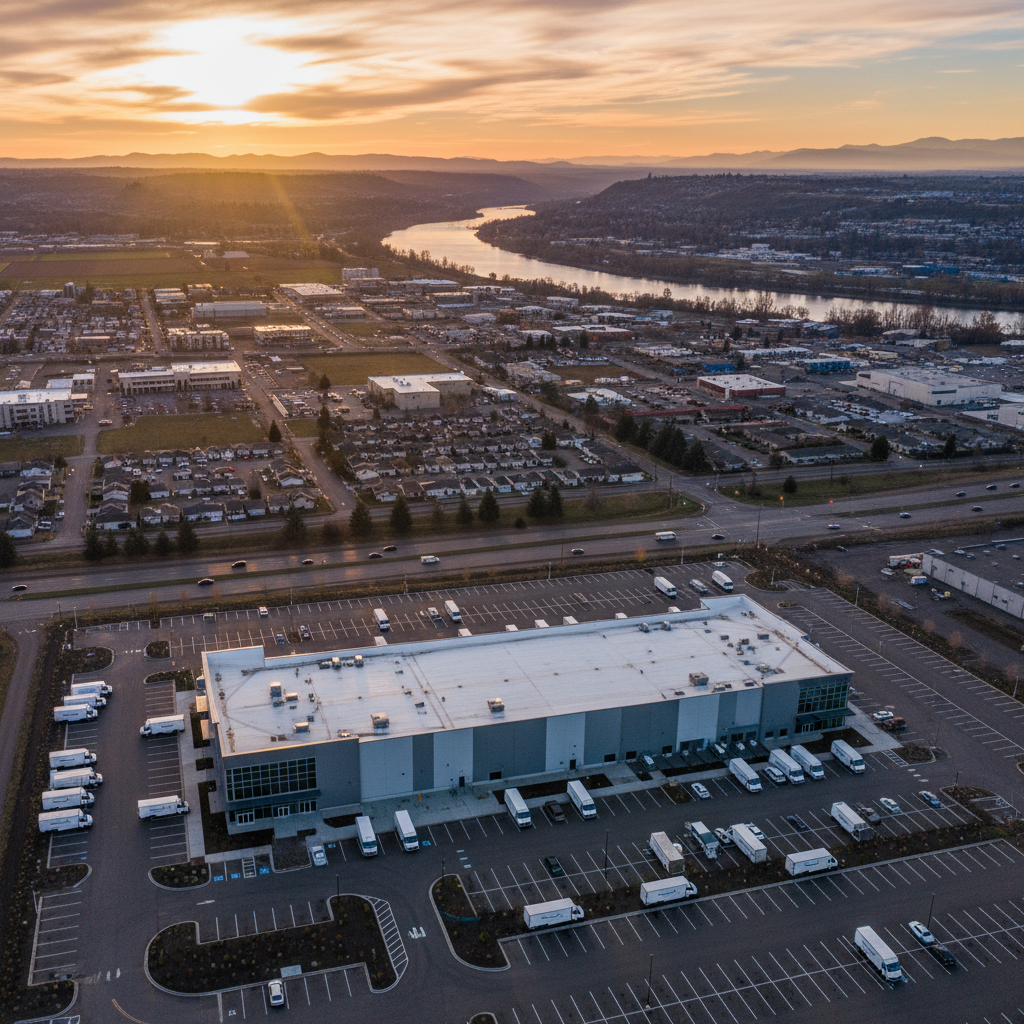
Amazon’s new Pasco delivery station is what the company calls a “last-mile” facility — the final stop in Amazon’s logistics chain before a package reaches you.
Here’s the basic flow:
- Vendors ship products to Amazon.
- Products move through big regional hubs like fulfillment centers and sortation centers.
- Finally, they arrive at a delivery station like the new one in north Pasco.
- From there, drivers load up vans and deliver within a roughly 50‑mile radius.
According to local business reports, Amazon’s Pasco delivery station handles about 12,000 packages a day now, with the ability to scale up to 35,000–40,000 packages daily, and even as high as 45,000 during peak seasons like Prime events and the holidays. That’s a lot of cardboard moving through north Pasco every single day.
This isn’t a retail store — it’s the behind‑the‑scenes engine that makes your 1–2 day shipping promise possible.
Why did Amazon put a delivery station in the Tri-Cities?
Short answer: customer demand and geography.
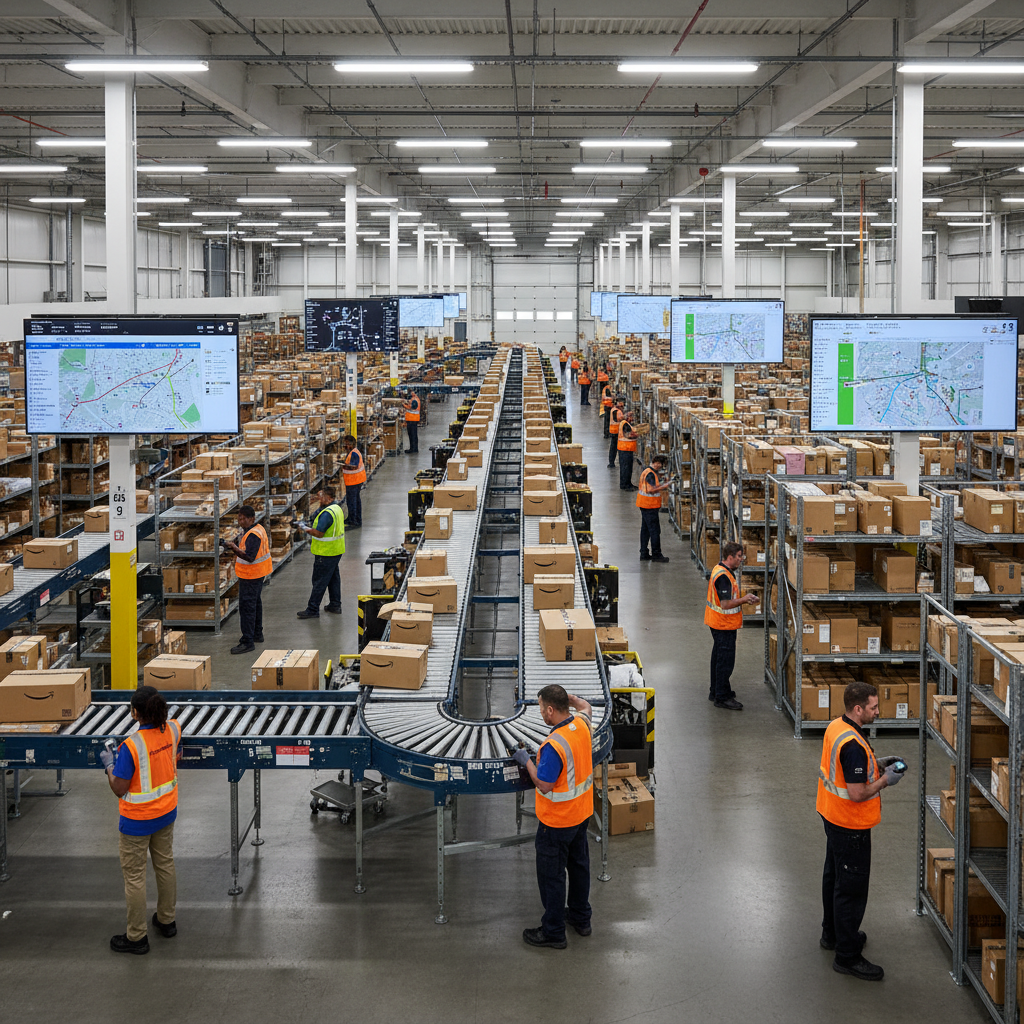
Until recently, Amazon orders headed to the Tri-Cities didn’t go through a local Amazon delivery station at all. Instead, they were handed off to third‑party carriers like UPS, FedEx, or the U.S. Postal Service for the last leg. That worked — but it wasn’t always the fastest or most flexible setup for Amazon’s signature quick delivery expectations.
By opening a dedicated delivery station in Pasco, Amazon can:
- Shorten the distance between its facilities and local doorsteps.
- Control more of the logistics chain instead of relying as heavily on external carriers.
- Fine‑tune routes in and around the Tri-Cities, including surrounding communities.
Company reps have been pretty blunt about it: Amazon follows the data. When they see a dense cluster of customers — like those in Richland, Kennewick, Pasco, and nearby cities — who are ordering a lot, they invest in infrastructure closer to them so they can hit that familiar two‑day (and sometimes faster) delivery promise.
Tri-Cities residents shop enough on Amazon that the company built a whole new facility just to serve you faster.
How the Pasco delivery station speeds up Tri-Cities deliveries
1. A true “last-mile” hub in Pasco
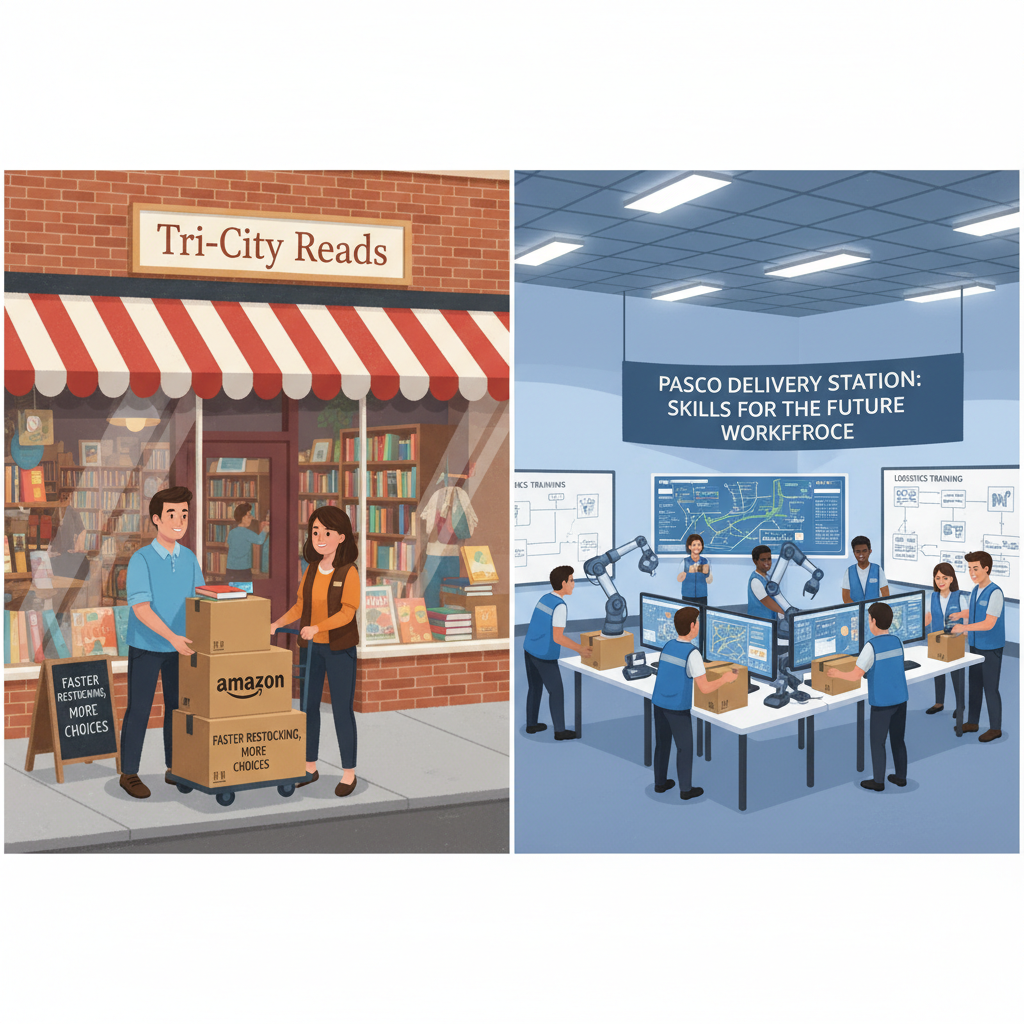
The Pasco delivery station is designed specifically for that final handoff to drivers. Packages come in during the early morning hours — typically between about 2–6 a.m. — on long‑haul trucks from Amazon sort centers.
Inside the 87,000‑square‑foot building, boxes move along conveyor belts, get scanned, sorted, and placed onto shelving. From there, teams stage them for loading into delivery vans.
The goal is speed. Packages aren’t meant to linger in the facility; the internal target is for them to spend less than six hours inside the station before they’re rolling back out toward homes and businesses.
2. A growing service area
The new Pasco station already serves 15 ZIP codes and is expanding to about 30 ZIP codes, reaching communities such as Moses Lake, Hermiston, Prosser, Grandview, and Walla Walla.
That wider but still tightly managed radius is important. Amazon carefully draws service areas so routes stay efficient — close enough that drivers can complete a full day of deliveries without spending all their time on the highway.
3. Working alongside other Amazon facilities
The delivery station is part of a broader logistics ecosystem Amazon is building in Pasco:
- A massive inbound cross dock (over a million square feet) opened in 2024 on South Road 40 East. It receives huge volumes of merchandise directly from vendors and redistributes it to regional centers around the country.
- The delivery station in north Pasco, which opened afterward, is where those items finally get staged for local “doorstep” delivery.
The inbound cross dock optimizes where inventory lives in the national network; the delivery station is what makes those optimizations show up at your house faster.
Your package’s journey might start across the country, but the final decisions about how and when it reaches you now happen just up the road in Pasco.
Jobs, wages, and local economic impact
This isn’t just a convenience play for shoppers — it’s also a significant jobs and investment story for the Tri-Cities.
New jobs (and more coming)
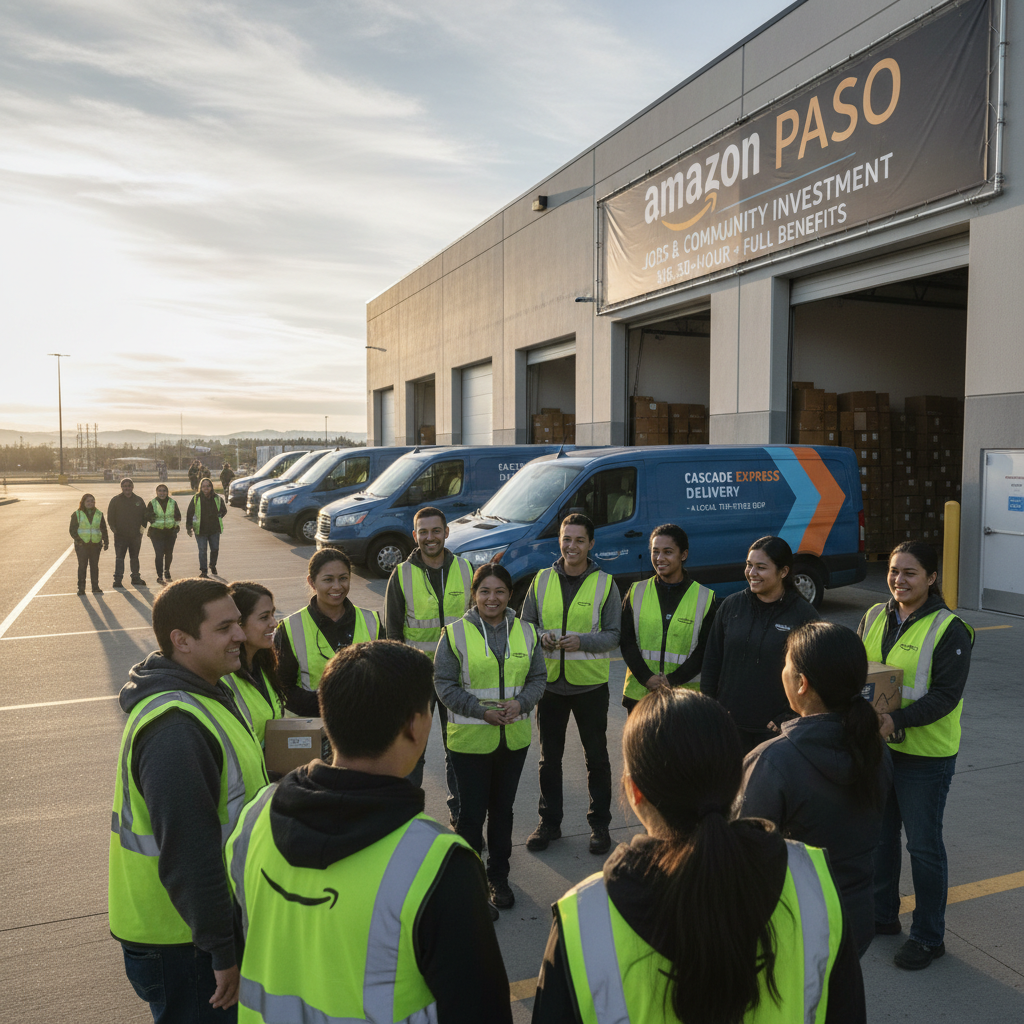
The Pasco delivery station is ramping up toward 250–300 employees working inside the building, plus well over a hundred delivery drivers.
Pay at the station starts at around $20.25 an hour, with benefits (health, dental, vision, retirement) kicking in from day one. Amazon also touts programs like Career Choice, which can help workers pay for certain education and training programs.
On top of that, Amazon operates through Delivery Service Partners (DSPs) — locally owned companies that run Amazon‑branded fleets. One example in the Tri-Cities, Apcore Logistics, already moves more than half of the Pasco station’s daily volume, handling roughly 20,000 packages a day with its drivers.
So when you see an Amazon‑branded van in Kennewick or Richland, there’s a good chance it’s being driven by someone working for a local small business that contracts with Amazon, not Amazon itself.
Bigger regional investment
Amazon’s footprint in Pasco isn’t limited to this single building. Between the huge inbound cross dock, the delivery station, and related infrastructure, the company’s construction investment in the area runs into the hundreds of millions of dollars and supports thousands of direct and indirect jobs across Eastern Washington.
That kind of investment matters for:
- Property and sales tax bases that help fund local services.
- Secondary employment — everything from maintenance and security to food services and fuel suppliers.
- Future business attraction, since high‑profile logistics operations can make a region more attractive to other employers.
Local officials have been quick to point out that having Amazon choose Pasco reinforces the Tri-Cities’ position as a growing logistics hub for the Northwest.
Faster packages are the visible perk. The less obvious benefit is a growing cluster of logistics jobs and small businesses anchored around Amazon’s new facilities.
What Tri-Cities residents will actually notice
All of this is interesting if you’re into supply chain strategy, but let’s talk about what regular people will feel day‑to‑day.
1. More reliable 1–2 day delivery
If you’ve ever had an order bounce between multiple cities, sit in a sorting center, and then take an extra day to arrive, you know how fragile the last mile can be.
With a Pasco delivery station in place, many orders destined for the Tri-Cities and surrounding ZIP codes:
- Arrive closer to home, earlier in the process.
- Spend less time bouncing between third‑party carriers.
- Can be consolidated onto routes that are built specifically around local neighborhoods.
Result: packages are more likely to land on your doorstep within that promised window — and less likely to detour through half the state first.
2. Later order cutoffs for next‑day delivery (in some cases)
While Amazon hasn’t promised universal same‑day shipping for the Tri-Cities, having a local last‑mile facility and a major cross dock nearby can make it easier to:
- Offer later same‑ or next‑day order cutoffs on certain items.
- Move high‑demand products into nearby facilities pre‑positioned for fast turnarounds.
You might notice that some items now show “Get it tomorrow” or even “Get it today” more often than before, especially during non‑peak seasons when there’s extra capacity in the system.
3. More Amazon‑branded vans and local drivers
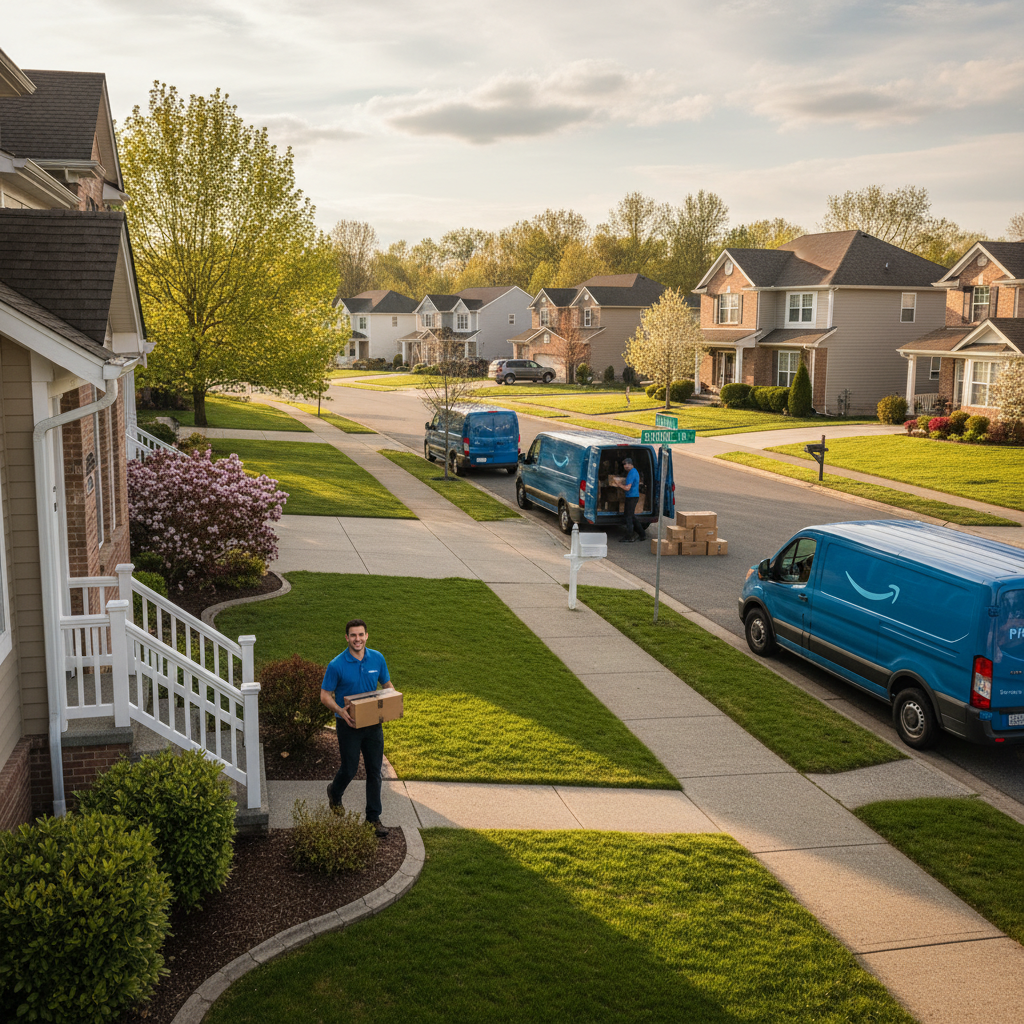
Expect to see more blue Amazon vans cruising around Pasco, Kennewick, Richland, and the outlying communities as routes grow to cover the expanded ZIP‑code footprint.
Behind the wheel, you’ll find:
- DSP drivers working for local companies under contract with Amazon.
- Flex drivers picking up shifts via Amazon’s app‑based program.
For residents, this means:
- More local job options in driving and operations.
- Greater visibility into just how much volume moves through the region every day.
Expect faster and more predictable shipping times for a wider range of orders — and a lot more blue vans in your rear‑view mirror.
What this means for local businesses
It’s not just online shoppers who benefit. Local retailers and small businesses have a few interesting angles here too.
Faster restocking and B2B orders
Many local shops rely on Amazon not just to sell to customers, but also to source their own supplies, parts, and tools.
With quicker and more reliable last‑mile delivery:
- A small shop in downtown Kennewick can get replacement equipment or office supplies faster.
- Service businesses — think electricians, contractors, or IT providers — can minimize downtime waiting on critical parts.
That kind of responsiveness can be the difference between landing a job and losing it to a competitor who can respond faster.
A proving ground for logistics talent
Pasco’s Amazon delivery station, combined with its massive cross dock, essentially turns the Tri-Cities into a live training ground for modern logistics skills:
- Warehouse operations and automation
- Route optimization and dispatch
- Fleet management and safety
Workers who start at Amazon or a DSP in Pasco can build highly portable skills that are attractive to other employers in transportation, distribution, and manufacturing.
The new delivery station doesn’t just ship packages — it helps build a local talent pool in one of the region’s fastest‑growing industries.
What’s next for Amazon and the Tri-Cities?
Amazon rarely builds just one facility and calls it a day. In Pasco, the company has already:
- Reimagined one million‑plus‑square‑foot warehouse into a strategic national inbound cross dock.
- Opened the new last‑mile delivery station to serve the Tri-Cities and beyond.
As operations ramp up, expect to see:
- More delivery routes and ZIP codes added.
- Additional hiring waves, especially ahead of peak shopping seasons.
- Tighter integration between Pasco’s facilities and regional hubs in the Northwest.
For local residents, that translates to a simple but meaningful shift: you’re no longer on the edge of Amazon’s network. You’re sitting right on top of a growing logistics node that the company is betting heavily on.
Amazon’s new Pasco delivery station is about more than convenience. It’s a sign that the Tri-Cities have graduated from “we’ll get to you” territory to a core stop on the company’s Western U.S. logistics map — with faster deliveries, new jobs, and a bigger role in the region’s economic future.
Leave a Reply