Does Amazon Drug Test? What To Know
How Amazon handles drug testing in 2025-ish terms—what’s changed, what hasn’t, and what it means for applicants, warehouse workers, and drivers in the U.S.
So you’re thinking about working at Amazon and you’re wondering: does Amazon drug test… or are they too busy shipping packages to care what’s in your system?
Let’s walk through how Amazon handles drug testing in 2025-ish terms: what’s changed, what hasn’t, and what it means for applicants, warehouse workers, and drivers in the U.S.

Quick answer: Does Amazon drug test?
Yes, Amazon does drug test — but not every role, and not for everything.
In the United States:
- Many warehouse/fulfillment center jobs involve a drug test (usually after a conditional job offer).
- Delivery drivers (especially Amazon DSP drivers and DOT-regulated roles) are very likely to be tested.
- Corporate/office roles generally are not tested, except in certain safety‑sensitive or regulated positions.
- Amazon has changed how it treats marijuana/THC, but that doesn’t mean it’s a free‑for‑all.
Takeaway: Amazon drug tests, but how and for what depends heavily on role, location, and whether the job is safety‑sensitive.
Amazon and marijuana: What changed?
For years, a positive marijuana test could knock you out of hiring consideration at Amazon, just like most other drugs.
In 2021, Amazon publicly announced that it would:
- Stop testing for marijuana for most positions that are not regulated by the Department of Transportation (DOT).
- Treat marijuana use more like alcohol use for many roles — focusing on on-the-job impairment rather than off-duty use.
However:
- DOT-regulated roles (like certain commercial driving jobs) are still under federal rules, where marijuana is illegal and absolutely tested for.
- Amazon still expects workers to be sober on the job. Showing up impaired can still get you fired, even if weed is legal in your state and you’re not being routinely screened for it.
Takeaway: For many non-driving roles, marijuana is no longer a pre-employment dealbreaker, but being impaired at work still is.
Which Amazon jobs usually require a drug test?
Policies can vary by warehouse, region, and third-party contractors, but here’s the general pattern in the U.S.:
1. Fulfillment center & warehouse workers (associate roles)
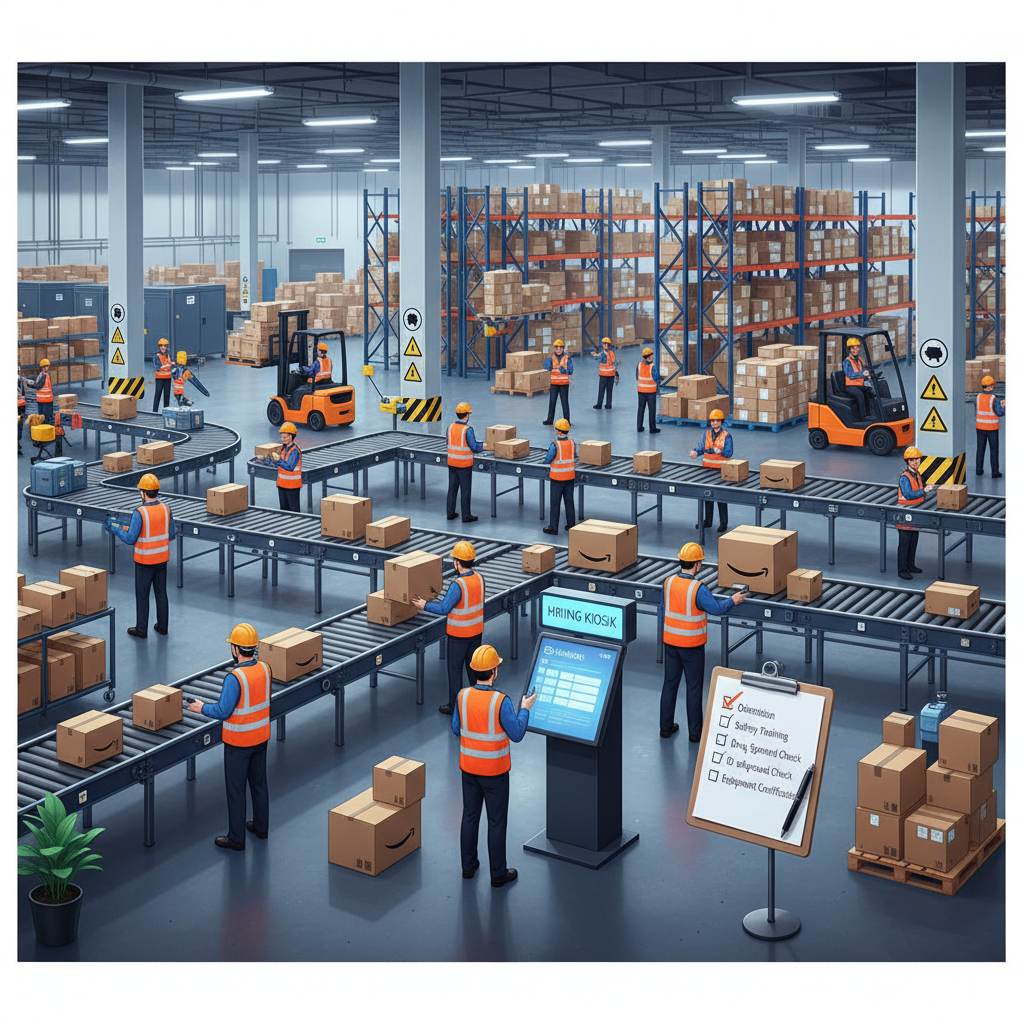
These are the classic Amazon warehouse jobs: picking, packing, stowing, lifting, operating equipment.
- Historically, these roles have often included a pre-employment drug test, typically after a conditional offer.
- Testing is usually for a standard panel of drugs (excluding marijuana in many locations for non-DOT roles), but that panel can vary by vendor and state.
- Because the work involves heavy machinery, conveyor belts, forklifts, ladders, and lots of physical activity, Amazon treats many of these jobs as safety-sensitive.
What to expect:
You apply → get a conditional offer → complete background check → possibly go for a drug test (often same day or within a few days) → start date.
Takeaway: If the job involves physical labor in a warehouse, assume there may be a drug test unless the hiring materials clearly say otherwise.
2. Delivery drivers (DSP, Amazon-branded vans, etc.)
This is where testing is most strict and most consistent.
- Many Amazon packages are delivered by Delivery Service Partners (DSPs) — independent companies that contract with Amazon.
- DSPs almost always require pre-employment drug testing, often including marijuana.
-
If the role is CDL/DOT-regulated (commercial driver, larger trucks in some operations), expect:
- Pre-employment testing
- Random testing
- Post-accident testing
- Return-to-duty testing if there has been a prior issue
Even where marijuana is legal, federal DOT rules still treat it as illegal, and a positive test can disqualify you from those roles.
Takeaway: If you’re driving for Amazon in any serious capacity, assume yes, you will be drug tested, and marijuana is not safe to rely on.
3. Amazon Flex drivers
Amazon Flex drivers are gig workers who use their own cars and deliver packages, similar to rideshare:
- Drug testing for Flex is less standardized than for DSP drivers, because you’re essentially an independent contractor.
- Amazon still has the right to act if there are reports of impairment, accidents, or safety issues.
- Background checks are normal; drug tests are possible if there’s a safety investigation or incident.
Takeaway: Flex is generally less strict than full-time DSP driver roles, but it’s not a no-rules situation. If there’s an incident, testing can come into play.
4. Corporate, tech, and office roles
Software engineers, product managers, HR, marketing, finance, etc. have a much lower chance of being drug tested.
Typically:
- No routine pre-employment drug test for standard office roles.
-
Exceptions may exist for roles that are:
- Tied to safety-sensitive operations
- Governed by federal contracts or specific regulations
Even where there’s no drug test, the usual policy still applies: no being impaired at work, period.
Takeaway: For many white-collar roles, drug testing isn’t standard, but don’t assume that means there are zero substance policies.

When does Amazon drug test? (Timing and scenarios)
Different testing situations you might encounter:
1. Pre-employment testing
The most common scenario for warehouse and driver jobs.
- You receive a conditional offer: “We’d like to hire you, pending background check and drug screen.”
- You’re sent to a third-party collection site (clinic or lab partner).
- You may have a deadline to complete the test (often within 24–72 hours).
If you miss the window or refuse the test, the offer can be withdrawn.
2. Post-accident / incident testing
If there’s a workplace accident, injury, or serious safety incident, Amazon (or a DSP) may require drug/alcohol testing as part of the investigation. This is especially common for:
- Forklift or machinery accidents
- Vehicle collisions while on the job
- Any incident that could involve OSHA or insurance review
3. Reasonable suspicion testing
If a supervisor believes someone may be impaired at work (slurred speech, odor, bizarre behavior, unsafe actions), they may send the person for reasonable suspicion testing.
This is about on-the-job behavior, not what you do on the weekend.
4. Random testing (select roles)
- Some driver and DOT-regulated positions are subject to random drug testing, as required by federal law and/or company policy.
- For typical warehouse associates, ongoing random testing is less common, but not impossible depending on the site and role.
Takeaway: Most people encounter testing at the pre-employment stage, but safety incidents and suspicion can trigger tests later.
What kind of drug test does Amazon use?
Testing methods can vary by location and vendor, but commonly used ones include:
-
Urine tests
Frequently used for pre-employment. Detects a range of substances within a typical recent-use window.
-
Oral fluid (saliva) tests
Sometimes used because they’re fast and harder to tamper with.
The exact panel of substances (which drugs they test for) can differ based on:
- State laws
- Role (safety-sensitive vs not)
- Vendor or program (DOT vs non-DOT)
In many non-DOT roles, marijuana has been removed from the standard panel, but again, that is not universal and can depend heavily on the job type and jurisdiction.
Takeaway: Expect urine or saliva testing; don’t assume marijuana is always excluded unless it’s explicitly stated.
Does Amazon drug test for weed in legal states?
Here’s where people get tripped up.
- State legalization (medical or recreational) does not override federal law or an employer’s internal policies.
-
Amazon has voluntarily relaxed marijuana testing for many non-safety-sensitive roles, but:
- DSPs and other third-party employers delivering for Amazon may still test for it.
- DOT roles must still treat marijuana as illegal.
So yes, you can absolutely lose out on some Amazon-adjacent jobs in a legal state over marijuana — especially driving and heavy-equipment roles.
Takeaway: Legal in your state ≠ safe for every Amazon job. Always check the specific job and employer policy.
Will Amazon tell me up front if there’s a drug test?
Most of the time, yes, at least for U.S. roles.
Typical signals:
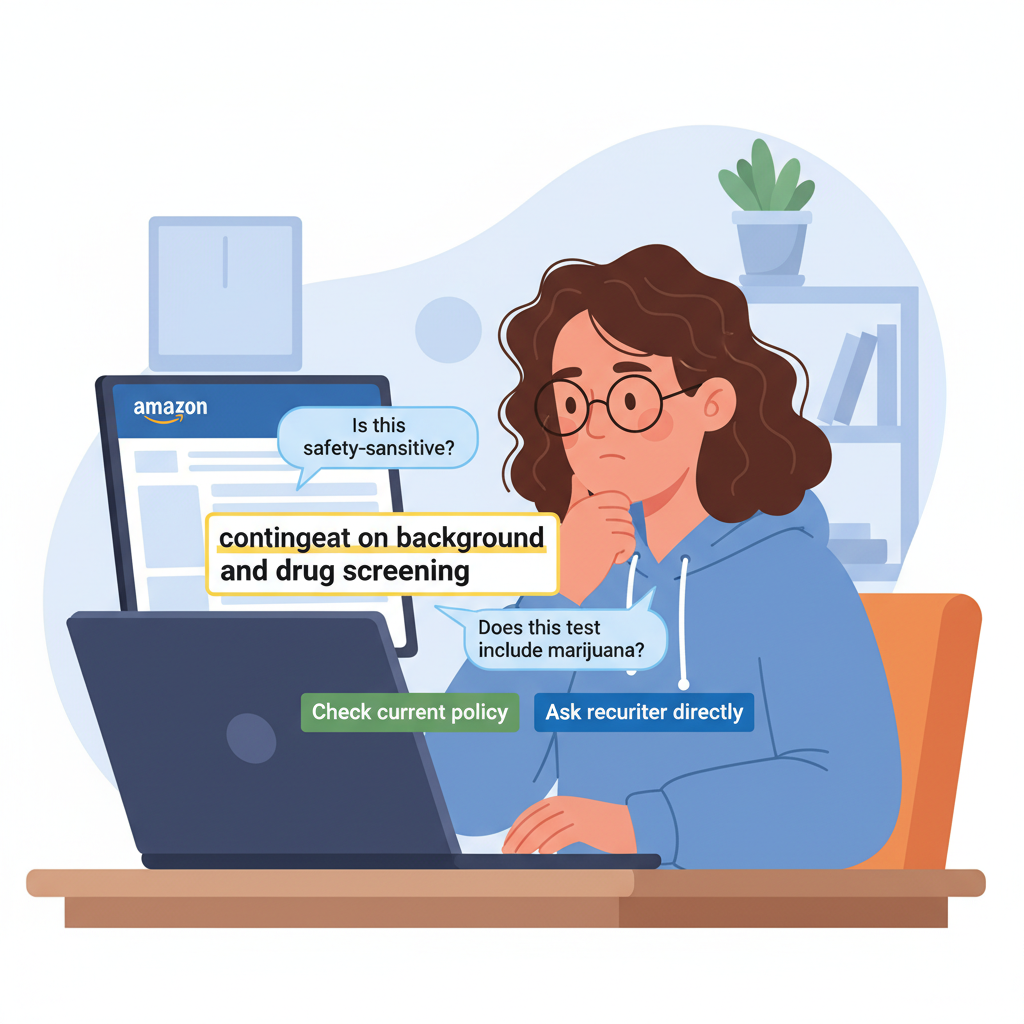
- Job postings or hiring emails mention “contingent on passing a drug screen and background check.”
- At hiring events or on the Amazon Jobs portal, you’ll often see testing requirements specified for warehouse and delivery roles.
- For DSP jobs, the third-party company’s listing will usually spell it out.
If you’re unsure:
- Ask the recruiter or hiring manager directly: “Does this role require a pre-employment drug test? Does the panel include marijuana?”
- There is nothing unprofessional about asking; it’s a normal policy question.
Takeaway: Don’t guess — just ask. Policy can differ even between buildings in the same city.
What happens if you fail an Amazon drug test?
Again, the details can vary, but common outcomes:
Pre-employment test (before you start):
- Conditional offer is usually rescinded.
- You may need to wait a period (or indefinitely) before reapplying, depending on role and region.
On-the-job test (post-accident or suspicion):
- You may be removed from duty immediately.
- Could be termination, especially in safety-sensitive roles.
- For DOT positions, results are typically reported to the appropriate systems, which can affect your ability to work for other employers as a driver.
There’s typically no “do-over” for a failed test in the hiring process.
Takeaway: For roles that test, a positive result is usually a hard stop, especially for drivers and safety-sensitive positions.
How to check the current policy for your exact role
Because these policies evolve and differ by role, here’s how to get the most accurate, up-to-date info for your situation:
-
Read the job description carefully.
Look for language like “contingent on successful completion of a drug screening.”
-
Watch your email after applying.
Amazon will often spell out background check and drug test steps in the hiring flow.
-
Ask directly during the hiring process:
“Is this considered a safety-sensitive role?”
“Is there a pre-employment drug test? Does it include marijuana?”
-
Clarify who the employer is.
Amazon corporate vs Amazon Warehouse vs a DSP or contractor. Third-party employers may have stricter or different testing policies than Amazon itself.
-
Stay aware of legal changes.
As laws shift (especially around marijuana), large employers sometimes adjust their testing policies.
Takeaway: The smartest move is to treat online info as general guidance, then verify the specifics with the actual recruiter or hiring portal for your role and location.
Bottom line: Does Amazon drug test?
- Yes, Amazon drug tests many workers, especially in warehouse and delivery roles.
- Drivers and DOT-regulated jobs face the strictest and most frequent testing.
- Many corporate roles do not have routine pre-employment drug tests.
- Marijuana testing has been scaled back for a lot of non-safety-sensitive positions, but it’s very much still a factor for driving and safety-critical jobs.
If you’re applying, your best move is simple:
- Assume there could be testing for any role involving vehicles, machinery, or physical safety.
- Confirm the current policy with your recruiter or in the official hiring materials.
That way, you’re not guessing based on old rumors or someone else’s experience at a different site — you’re working with the actual rules that apply to you.
Leave a Reply