Does Amazon Pay Weekly? (And What Your Paycheck Actually Looks Like)
You’ve seen the ads:
“Start this week. Get paid fast.”
“Warehouse jobs with great pay and benefits.”
Cool marketing, Amazon. But when does the money actually hit your account?
If you’re thinking about working at Amazon (or you just got hired and don’t want any direct-deposit surprises), this guide breaks down how often Amazon pays, how Amazon Anytime Pay works, and what to expect for full-time, part-time, and seasonal roles in the United States.
Let’s answer the big question first.

Does Amazon Pay Weekly?
In most of the U.S., Amazon pays employees every two weeks (biweekly), not weekly.
However, the real answer is: it depends on your role, location, and program.
Broadly, here’s how Amazon pay frequency tends to shake out in the U.S.:
- Most full-time and part-time warehouse / fulfillment center roles: Paid biweekly.
- Some roles (especially in certain states or specific facilities) may be on a weekly schedule, but that is not universal.
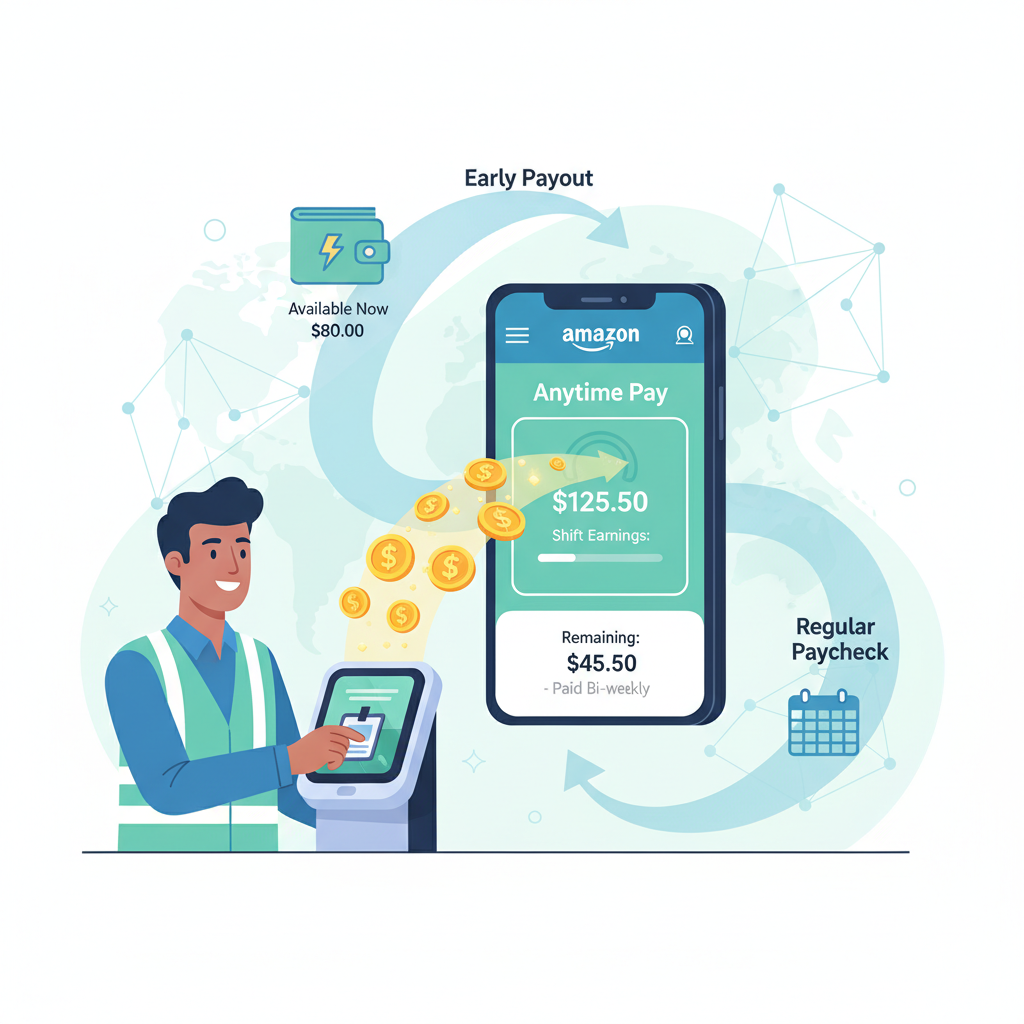
- In many locations, Amazon offers Anytime Pay, which lets you access a portion of your earnings on demand, so it can feel like getting paid weekly—or even daily.
Translation: Don’t assume weekly pay unless your offer letter, onboarding portal, or recruiter explicitly says so.
How Often Does Amazon Pay in the U.S. (By Role Type)?
Let’s break it down by the kind of job you might have with Amazon.
1. Warehouse, Fulfillment Center, and Sortation Center Roles
These are your classic hourly jobs: picking, packing, stowing, sorting, problem-solving, etc.
- Standard pay schedule: Usually every two weeks.
- Payday: Often on Friday for the prior pay period (this can vary by site).
- Overtime: Paid with your regular paycheck for that pay period.
- Anytime Pay: In many locations, you can cash out part of your pay early (more on this below).
Reality check: Some people online will say, “I get paid weekly at Amazon,” and they’re not lying—it’s just location-specific and can change when Amazon updates policies.
2. Seasonal / Peak Roles
During peak shopping seasons (think holidays), Amazon hires tons of seasonal workers.
- These roles typically follow the same schedule as the facility they’re in.
- So if your building is biweekly, your seasonal job is almost certainly biweekly too.
- Again, Anytime Pay may still be available if your site supports it.
3. Corporate, Tech, and Office Roles
If you’re in a salaried position (corporate, tech, management, etc.):
- You’ll generally be paid on a biweekly schedule as well.
- Equity/RSUs, bonuses, and sign-on bonuses follow separate schedules (e.g., vesting over years, annual bonuses, etc.).
What Is Amazon Anytime Pay?
Here’s where it gets interesting.
Amazon Anytime Pay is a program that lets eligible hourly employees get fast access to their earnings.
Think of it like this:
You work a shift → A portion of that pay becomes available almost immediately → You can transfer it to your bank or debit card before the official payday.
How Anytime Pay Typically Works (Conceptually)
Exact details can vary, but the general idea is:
- You work hours as usual.
- A percentage of your earned wages (not future hours) becomes available through Amazon’s payment partner (often via an app).
- You can withdraw that portion before the official pay date.
- The amount you’ve already withdrawn shows up as already paid on your regular paycheck.
So even if your facility is biweekly, Anytime Pay can make it feel like:
- “I got paid today for the shift I just worked,” or
- “I’m basically getting paid a few times a week when I need it.”
Important: Anytime Pay doesn’t give you more money—it just changes when you get access to money you already earned.
How to Confirm If Your Amazon Job Pays Weekly or Biweekly
This is the part that actually matters: your specific offer.
Amazon is huge, and different states, facilities, and job types can follow slightly different rules. Don’t rely on what a friend in another city said.
Here’s how to double-check:
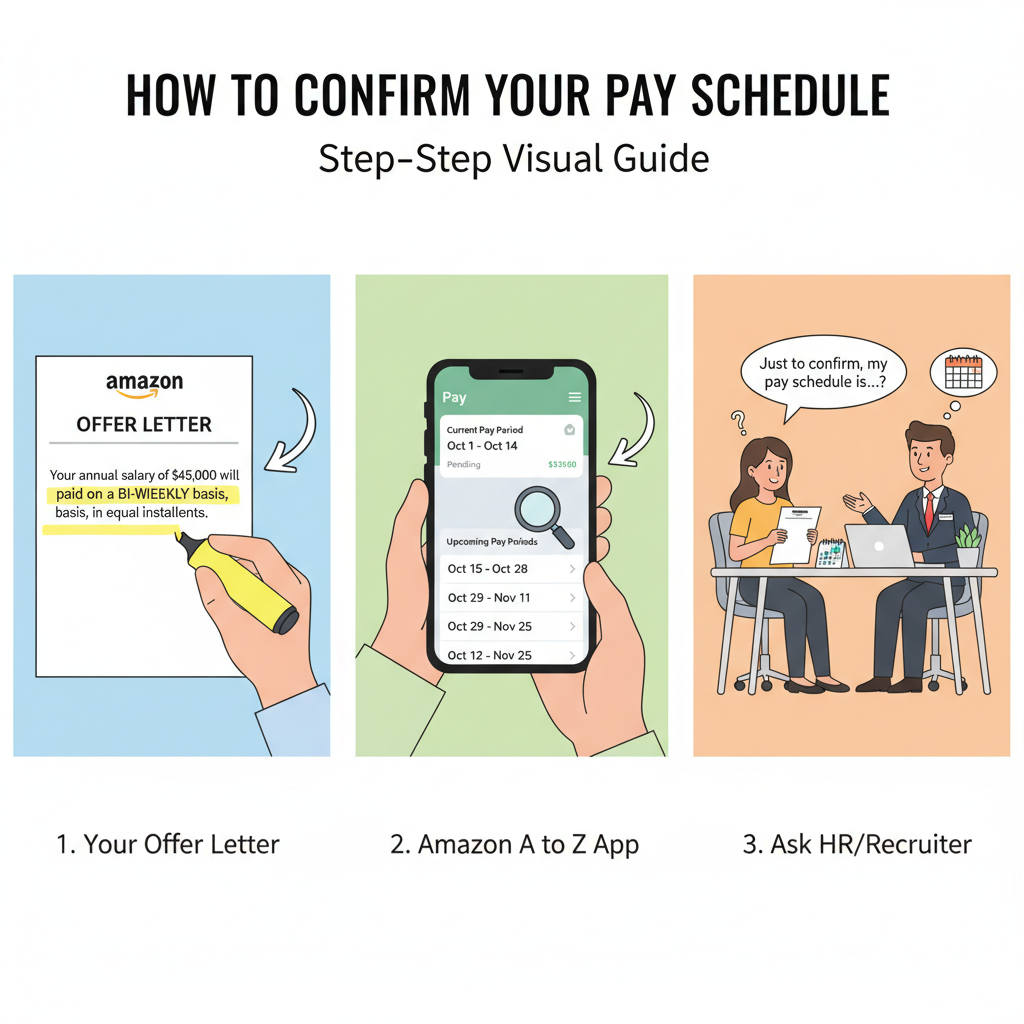
- Read your offer letter carefully
There will usually be a section labeled something like “Compensation and Pay Schedule” that says if pay is weekly or biweekly. - Check the onboarding portal (Amazon Hire / A to Z app)
Once you’re onboarded, you’ll see your pay schedule and pay statements there. - Ask your recruiter or HR at your site
A simple: “Hey, is this role on a weekly or biweekly pay schedule?” is completely normal. - Ask other employees—but don’t stop there
Coworkers can give you a quick sense of what to expect, but policies can change, and different roles at the same site can be set up differently.
If you’re already hired:
- Look at your first pay stub in the A to Z app and check the pay period start and end dates—you’ll know instantly if it’s one week or two.

When Do You Get Your First Paycheck at Amazon?
Even if it’s biweekly, you might be wondering: “How long before I see my first payment?”
Here’s the typical pattern for new hires:
- You start in the middle of a pay period.
Example: The pay period runs Sunday–Saturday, and you start on a Wednesday. - Those days get counted in that open pay period.
So Wednesday–Saturday go into that current cycle. - You’re paid on the next scheduled payday after that pay period closes.
Which means your first check may feel delayed, depending on when you started. - If Anytime Pay is active at your site, you may be able to withdraw some earnings before your first official paycheck.
Important: There’s almost always a lag between your first day and your first full paycheck. That’s normal for most large employers, not just Amazon.

Example Scenarios: What Your Pay Might Look Like
Concrete examples help, so let’s walk through a few.
Scenario 1: Full-Time Warehouse, Biweekly, No Anytime Pay
- You start: Monday, March 2
- Pay period: March 1–March 14
- Payday: Friday, March 20
You work 40 hours each week. Your first paycheck on March 20 covers March 2–March 14 (80 hours, plus any overtime).
Scenario 2: Part-Time with Anytime Pay
- You work 4-hour shifts, 5 days a week (20 hours/week).
- Your site is biweekly, but you’re enrolled in Anytime Pay.
What happens:
- After each shift, part of your pay becomes available.
- You withdraw $80 midweek to cover gas and groceries.
- On the official payday, your paycheck is reduced by the $80 you already pulled—but total earnings are the same.
Scenario 3: Seasonal Role at Peak
- You pick up a seasonal position in November.
- Your facility is on a biweekly pay schedule.
- You start mid-period and wonder why your first check is smaller.
Likely explanation: Your first paycheck only covers the days you worked in that partial period, so it’s smaller than a full pay period. Your second paycheck is the first one that shows a “normal” full-period amount.
Other Money Questions People Ask About Working at Amazon
1. Does Amazon pay overtime?
Yes. For eligible hourly roles, Amazon typically pays time-and-a-half (1.5x your regular rate) for hours worked over 40 per week, in line with U.S. labor laws. Exact rules depend on your state and your role classification.
2. Does Amazon offer shift differentials?
Many locations offer extra pay for:
- Night shifts
- Weekend shifts
- Certain high-demand shifts or departments
These are sometimes called shift differentials or premium pay and are added on top of your base hourly rate.
3. What about bonuses or sign-on bonuses?
Amazon often advertises sign-on bonuses or peak-season bonuses, which can vary a lot by region, role, and timing.
- Some are paid as a lump sum after you’ve worked a certain number of days or weeks.
- Others may be split across multiple paychecks.
Always read the fine print: How much, when it’s paid out, and what happens if you leave early.
4. Does Amazon pay weekly anywhere?
There have been locations and periods where:
- Certain Amazon facilities or job types were on a weekly pay schedule.
- Amazon has adjusted pay schedules over time.
But this is not guaranteed for all roles or states. Again, your official documentation wins.
How to Plan Your Budget Around Amazon’s Pay Schedule
Once you know whether you’re getting paid weekly, biweekly, or using Anytime Pay, make it work for you instead of stressing you out.
1. Align Bills With Your Paychecks
- List your major bills: rent, car payment, insurance, phone, etc.
- Note due dates and which paycheck they’ll come out of.
- If needed, call some providers and ask to move due dates closer to payday.
2. Treat Anytime Pay as a Safety Valve, Not a Default
Yes, it’s cool that you can cash out quickly. But:
- Using it constantly can make the official paycheck feel tiny.
- Try to reserve Anytime Pay for emergencies or truly tight moments, not daily habits.
3. Use a Simple System: Two Accounts
- Account A (Bills): Your direct deposit lands here. You keep enough for rent, utilities, and non-negotiables.
- Account B (Spending): You transfer a set amount each pay period for food, gas, and fun.
This way, when you look at Account B, you know: “This is what I can spend,” without accidentally dipping into rent money.
So… Does Amazon Pay Weekly? Final Answer
- No, Amazon does not universally pay weekly in the U.S.
- Most employees are paid biweekly, especially in warehouse, fulfillment, and corporate roles.
- Depending on your site and role, you may get access to Anytime Pay, which lets you pull part of your earnings early—making it feel almost like weekly or even daily pay.
- A few locations or positions may use a weekly schedule, but this is not guaranteed and can change.
If you’re about to start or just received an offer, do this:
- Check your offer letter for pay frequency.
- Confirm with your recruiter or HR if it’s not clear.
- Ask whether Anytime Pay is available at your site.
Once you know your exact setup, you can plan your budget, use Anytime Pay wisely, and avoid that “Wait, where’s my money?” moment.
Leave a Reply