Lilac-Crowned Amazon: The Violet-Topped Parrot
If you’ve ever seen a bright green parrot with a violet “helmet” and thought, that bird looks like it’s wearing a tiny royal crown, you’ve probably just met the lilac-crowned amazon.
And if you haven’t met one yet? Buckle up. This is one of the most fascinating—and most threatened—parrots in the Americas.
In this post, we’ll unpack what makes the lilac-crowned amazon special, where it lives, how it behaves, why it’s endangered, and what that means if you’re thinking about seeing (or keeping) one.

What is a lilac-crowned amazon?
The lilac-crowned amazon (Amazona finschi), sometimes called the lilac-fronted amazon, is a medium-sized parrot native to western Mexico.
- Size: About 12–13 inches tall (30–33 cm)
- Weight: Roughly 10–12 ounces
- Look: Mostly bright green body; pale lilac or blue-violet crown and nape; reddish forehead and lores; yellowish highlights on wings and tail that really show in flight (audubon.org)
- Lifespan: ~20–30 years in the wild, often 40–50+ years in human care with good husbandry (raptorhallow.org)
If you’re used to the red-crowned amazon, the lilac-crowned looks like its more pastel, subtly glamorous cousin—less fire-engine red, more soft violet on top.
Think “medium-sized, long-lived, vividly green parrot with a lilac tiara.”
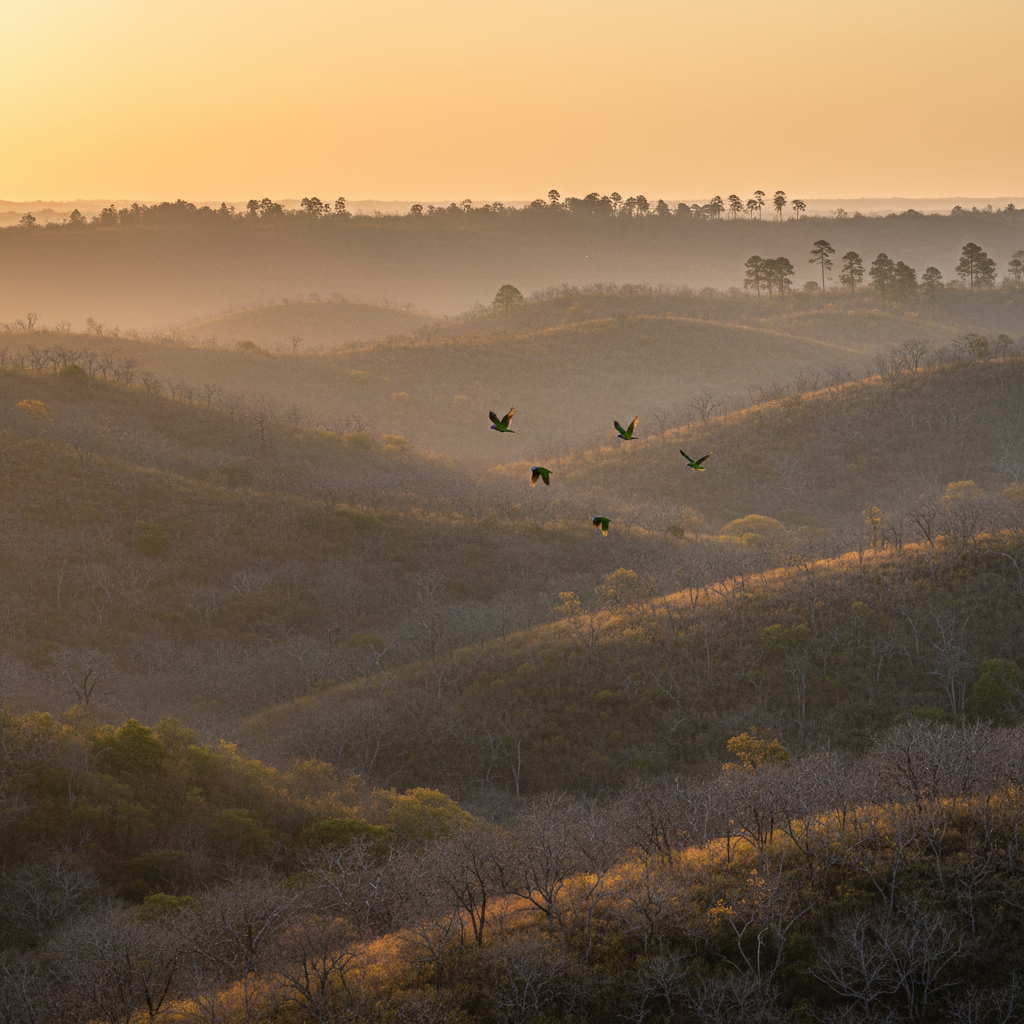
Where do lilac-crowned amazons live in the wild?
Native range
Lilac-crowned amazons are native to the Pacific slopes of western Mexico, from southern Sonora down through Sinaloa, Nayarit, Jalisco, Michoacán, Guerrero and into Oaxaca. (raptorhallow.org)
They’re strongly associated with:
- Dry deciduous and semi-deciduous forests
- Pine–oak forests in foothills
- Forest edges and wooded valleys, often around 600–1,000 m elevation during nesting season (audubon.org)
In recent decades, some lilac-crowned amazons (or hybrids) have shown up in urban and suburban areas in the U.S., especially parts of California and Florida, mostly as a result of escaped or released pets. They can adapt to city trees and neighborhoods surprisingly well, though they’re not common anywhere outside their native range. (audubon.org)
- Wild flocks in Jalisco have been seen leaving communal roosts at dawn, fanning out across tropical dry forests to forage and returning noisily to roosting cliffs or tall trees at dusk. (parrots.org)
This is a bird of Mexico’s Pacific forests first, with small, scattered city-slicker populations where pet birds have taken up feral life.

How do lilac-crowned amazons behave?
Social life: flocks, families, and drama
Lilac-crowned amazons are highly social parrots. In the wild, they’re usually seen:
- In pairs or family groups during much of the year
- In flocks of 10–30+ birds when feeding or moving between feeding and roosting sites (parrots.org)
They gather at communal roosts at night. These roosts can host dozens or even over a hundred birds, all yelling over each other like a crowded café right before closing time.
Their calls? Think:
- Squeaky, up-slurred “kree, kree”
- Rolling “krreeeih”
- Harsh, croaky notes compared to some other Amazons (audubon.org)
These sounds are how they:
- Keep the flock together in dense forest
- Signal danger
- Coordinate flight and feeding
In captivity, this translates to loud, frequent vocalizing—chatter, whistles, calls, and sometimes words. Quiet apartment bird? Not so much.
They’re flock animals—expect noise, interaction, and constant commentary on everything.

What do lilac-crowned amazons eat in the wild?
Professional seed predators (with gourmet tastes)
In the wild, lilac-crowned amazons are mainly granivorous and frugivorous:
- About 80+% of their diet is seeds, with the rest mostly fruits, plus small amounts of insect larvae and bromeliad tissues. (grokipedia.com)
- They feed on at least 30+ tree species, especially in tropical dry forests.
Studies from western Mexico show:
- They track food availability between semi-deciduous forest (important in the dry season) and deciduous forest (more important in the rainy season).
- They switch food sources seasonally and adjust how specialized or generalized their diet is based on what’s available. (academic.oup.com)
They’re also pre-dispersal seed predators: they often eat immature seeds straight out of fruits, sometimes discarding the rest. In some tree species, this can mean they destroy over 40% of the seeds before they ever hit the ground. (grokipedia.com)
And yes, they will raid crops like corn or cultivated fruits when forests are fragmented or wild food is scarce, which can create conflict with farmers. (parrots.org)
They’re clever, mobile seed specialists, constantly chasing the next seasonal boom in fruits and seeds.

Breeding and family life
Lilac-crowned amazons are cavity nesters:
- They use tree hollows (often in large, mature trees) for nesting.
- Breeding typically runs from about February through June, with incubation around 26–28 days and clutches of about 2–4 eggs, commonly 2–3 chicks. (safarimallorca.es)
- Both parents participate in feeding and caring for the chicks.
Young birds stay with their parents and often form family groups that later mingle with other small flocks. This extended family time is when juveniles learn vital skills: what to eat, where to go, and how to navigate the social chaos of flock life. (turtlecozynest.com)
Strong pair bonds and family groups define their social structure—break the tree cavities, and you break their ability to raise young.
Why is the lilac-crowned amazon endangered?
Here’s where things get serious.
The IUCN Red List classifies the lilac-crowned amazon as Endangered, with an estimated 4,700–6,700 mature individuals left in the wild and a continuing rapid decline. (parrots.org)
Main threats:
-
Habitat loss and degradation
- Large swaths of tropical dry forest and pine–oak forest have been cleared or degraded for agriculture, cattle ranching, and urban expansion.
- Their historical range along Mexico’s Pacific coast has shrunk dramatically; estimates suggest they’ve disappeared from over 70% of their former distribution. (grokipedia.com)
-
Trapping for the pet trade
- Demand for wild-caught parrots has been a major driver of population declines.
- Despite being listed in CITES Appendix I, which bans international commercial trade, illegal capture and domestic trade still occur and can devastate local populations. (parrots.org)
-
Human–wildlife conflict
- In some areas, farmers view them as crop pests (especially in corn fields or orchards) and may persecute them to prevent damage. (parrots.org)
Combined with their reliance on mature trees for nesting, these pressures make it hard for populations to rebound.
Gorgeous, intelligent, charismatic—and on a steep decline due to our land use and our desire to keep them as pets.
Conservation efforts: what’s being done?
Conservation groups in Mexico and internationally are trying to turn the tide.
A few key efforts:
-
Field research and monitoring
- Projects in regions like the Sierra de Atoyac, Guerrero are mapping roosts, nesting trees, and movement patterns to identify critical habitat and threats.
- One study in that area tracked a population of 100+ individuals and highlighted the links between trapping, crop conflict, and declines. (parrots.org)
-
Legal protection
- The species is listed as Endangered by IUCN and on CITES Appendix I, raising the bar for trade controls and international cooperation. (grokipedia.com)
-
Education and sanctuaries
- Sanctuaries and rehab centers (like Raptor Hallow Sanctuary’s ambassador bird “Clack Clack”) use lilac-crowned amazons in educational programs to talk about proper parrot care and why wild parrots shouldn’t be impulse pets. (raptorhallow.org)
There’s still a long way to go, but these efforts are building the knowledge and public awareness needed for better policy and on-the-ground protection.
Research, law, and education are the current three pillars keeping this species from slipping further toward extinction.
Are lilac-crowned amazons good pets?
Short answer: they can be incredible companions for the right person—but they’re not beginner birds, and wild populations are in trouble.
Personality and behavior in captivity
Lilac-crowned amazons are known for being:
- Intelligent and social
- Playful and often affectionate with trusted people
- Capable talkers and mimics (though not always as famous as some other Amazons)
But also:
- Very loud at times—think flock calls at dawn and dusk, and “commentary” throughout the day
- Potentially territorial and nippy at sexual maturity, especially during breeding season, like many Amazon parrots. This phase can be intense enough that they’re often recommended for experienced bird keepers, not first-time owners. (lafeber.com)
Care requirements
Owning a lilac-crowned amazon means committing to:
-
Diet:
- Base diet of high-quality formulated pellets, plus daily fresh vegetables and some fruits.
- Seeds (especially sunflower/safflower) should be limited or avoided due to obesity risk. (lafeber.com)
-
Space & enrichment:
- A roomy cage plus daily out-of-cage time for flight or vigorous exercise.
- Chewable toys, foraging setups, and varied perches are non-negotiable.
-
Noise & social time:
- They need daily interaction and mental stimulation; chronically ignored Amazons can develop behavioral problems (screaming, plucking, biting).
-
Lifespan & vet care:
- With proper care, they can live 40–50+ years, so this is basically a long-term, “outlive-your-dog-several-times-over” relationship. (raptorhallow.org)
- Regular checkups with an avian vet to watch for obesity, vitamin A deficiency, infections, and other common parrot issues. (grokipedia.com)
Ethically, many conservation and welfare groups emphasize adopting or rehoming existing birds rather than increasing demand that could fuel illegal trade. If you’re considering one, working with reputable rescues or sanctuaries is a strong, conservation-minded move.
Wonderful birds, heavy responsibility. If your ideal pet is quiet, low-maintenance, and short-lived, this is not it.

How you can help lilac-crowned amazons (even if you never own one)
You don’t have to share your living room with a violet-crowned parrot to be part of the solution.
Here are concrete ways to support them:
-
Support reputable conservation organizations
- Groups working directly on lilac-crowned amazon conservation and research in Mexico deserve financial and public support. Look for organizations that fund habitat protection, field studies, and anti-trapping initiatives. (parrots.org)
-
Never buy wild-caught parrots
- If you do choose to live with a parrot, work with rescues, sanctuaries, or ethical breeders.
- Ask hard questions about sourcing—if a seller can’t clearly show legal, captive-bred origins, walk away.
-
Amplify awareness
- Share information about the species’ Endangered status and the realities of long-term parrot care.
- Use birds like the lilac-crowned amazon as a story to talk about tropical dry forest conservation, which often gets less attention than rainforests.
-
Be a responsible neighbor to wild parrots
- If you live in an area with feral Amazons, enjoy them without feeding junk food or trying to capture them.
The lilac-crowned amazon is a walking (well, flying) contradiction:
- Wild forest specialist that can adapt to cities.
- Sweet, social companion that can also be loud, moody, and destructive.
- Strikingly beautiful, yet quietly slipping away in much of its native range.
If we treat it as a wild bird first and a pet second, there’s still time to make sure future generations get to look up and spot that flash of lilac and green against a Mexican forest sky.
Leave a Reply