What Is Amazon Logistics, Really?
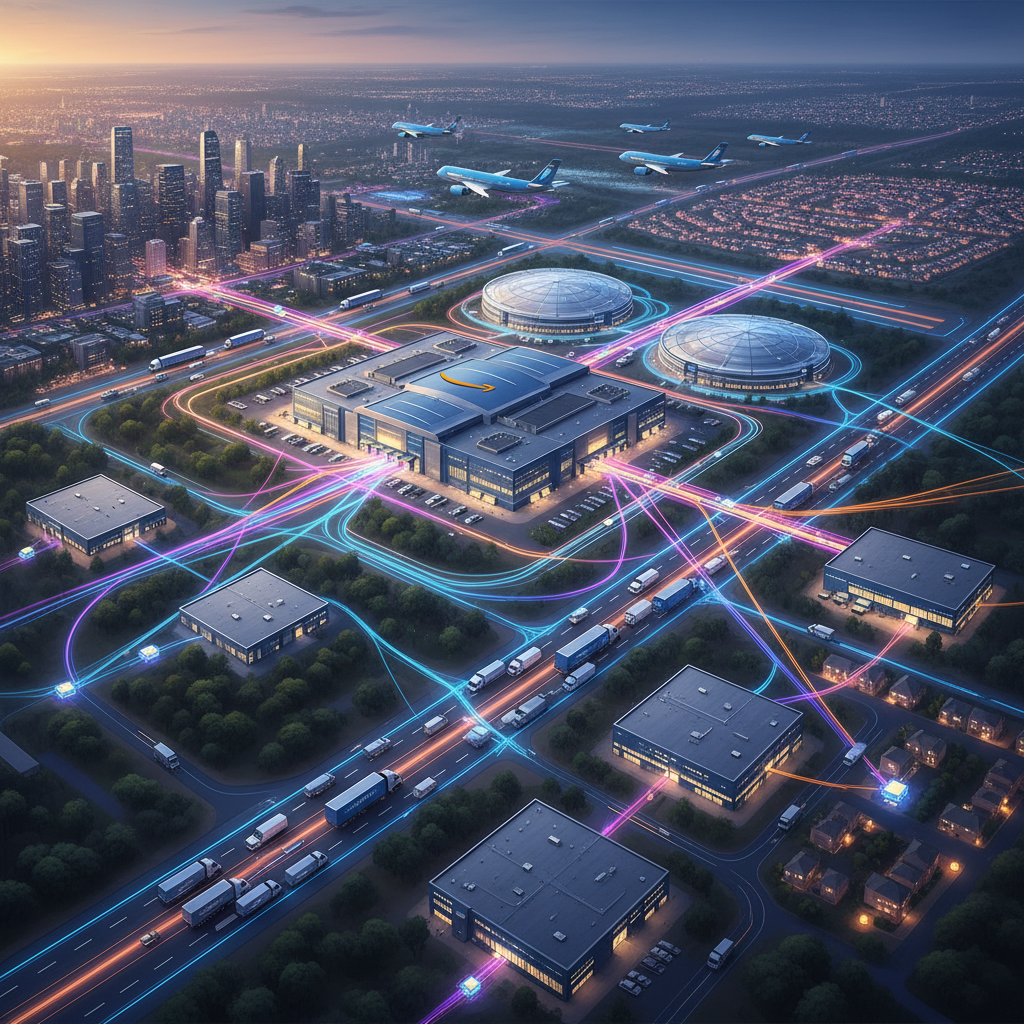
Ever order something on Amazon and think, “How on earth did this show up at my door in 24 hours… on a Sunday… during a snowstorm?”
That behind-the-scenes magic is often Amazon Logistics.
If you’ve seen mysterious gray vans, drivers with a blue Amazon vest, or packages dropped off by “Amazon” instead of UPS or USPS — that’s it in action.
In this post, we’ll break down what Amazon Logistics is, how it works, why it matters for shoppers and sellers, and where it’s different from traditional carriers.
What Is Amazon Logistics?
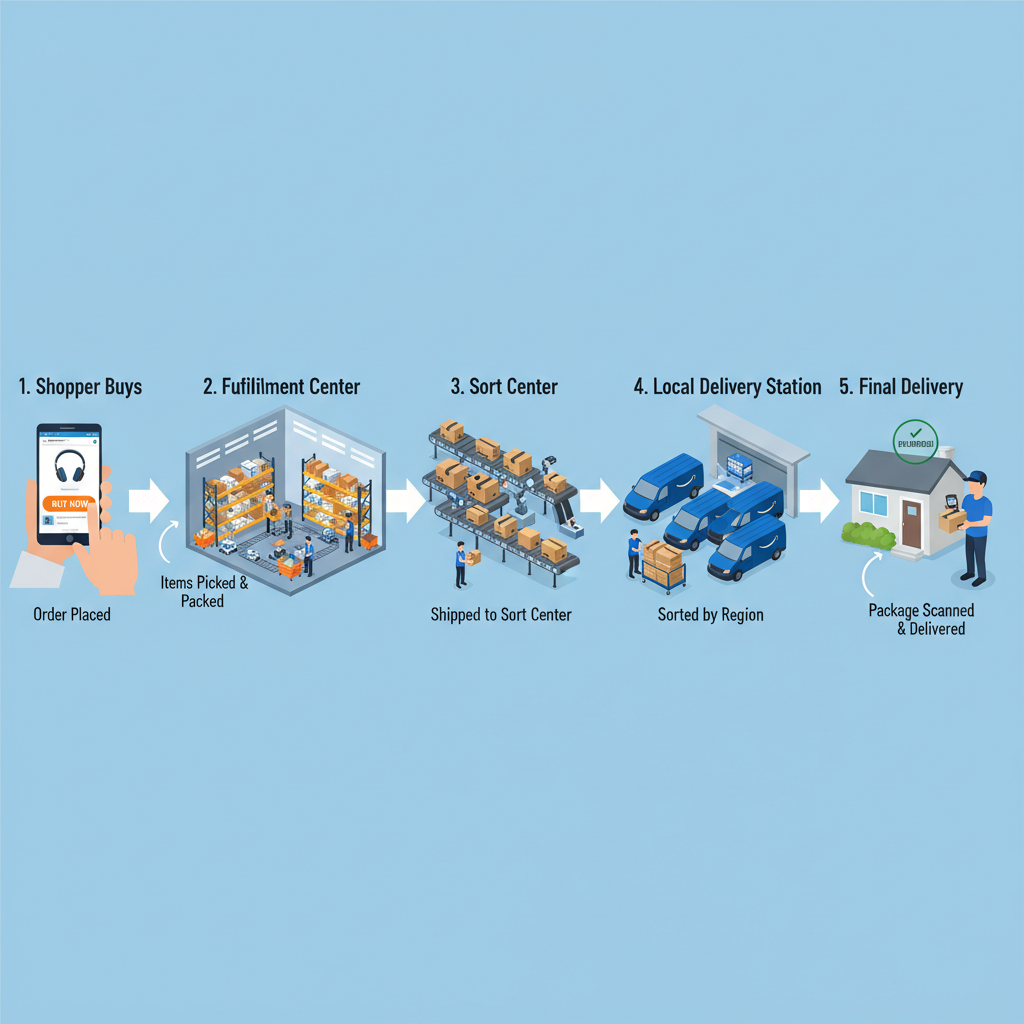
Amazon Logistics is Amazon’s own delivery and shipping network. Instead of relying only on third-party carriers like UPS, FedEx, or the postal service, Amazon built its in-house last‑mile delivery system to get packages from local facilities to your door.
Think of it as Amazon saying, “You know what, we’ll just do it ourselves.”
It includes:
- Delivery Service Partners (DSPs) – independent local companies that run fleets of Amazon-branded vans.
- Amazon Flex drivers – gig-economy drivers using their own cars to deliver packages, similar to rideshare but for boxes instead of people.
- Amazon facilities – sort centers, delivery stations, and micro-warehouses that get packages closer to customers.
How Does Amazon Logistics Work (In Plain English)?
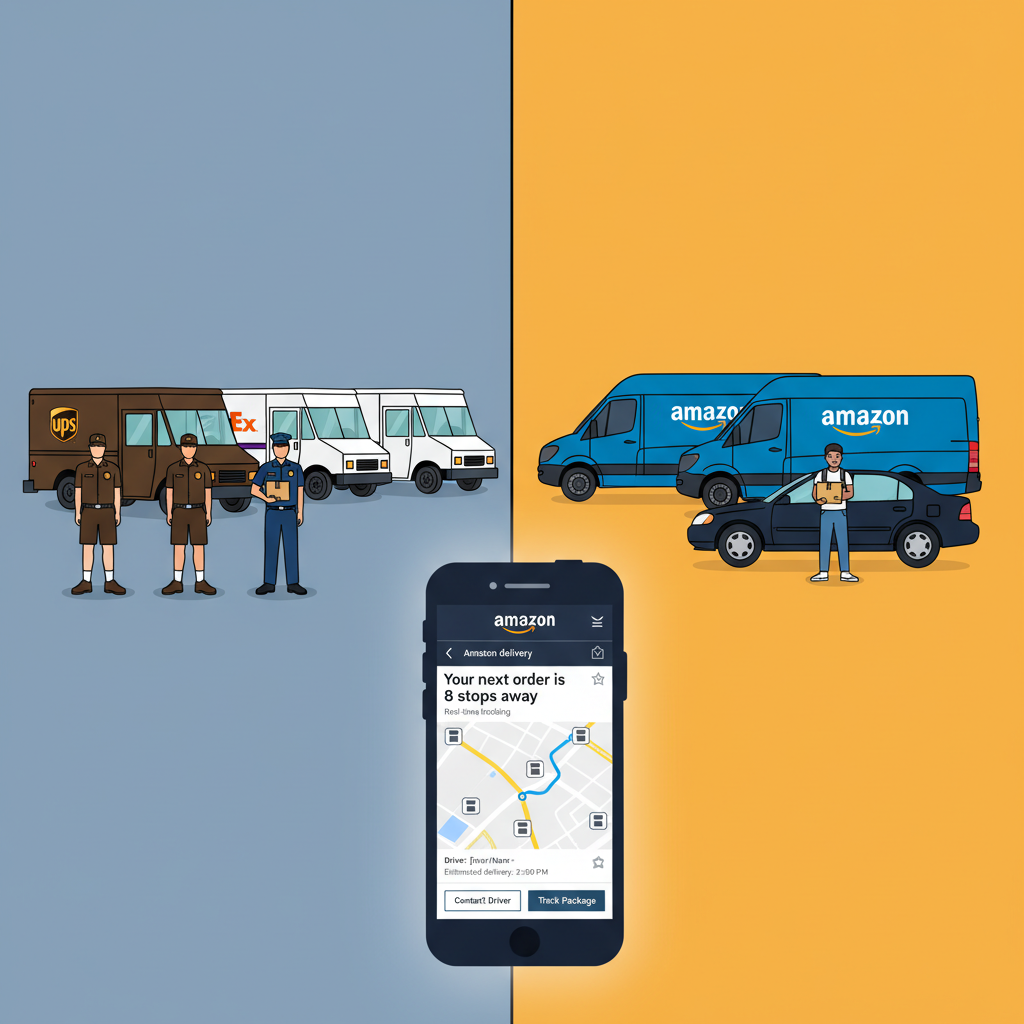
Let’s walk through a typical order step by step.
1. You place an order
You click “Buy Now.” The product is either:
- Stored in an Amazon warehouse (Fulfilled by Amazon / FBA), or
- Shipped from a third-party seller’s location.
2. Your package moves through Amazon’s network
If Amazon is handling fulfillment, your order usually goes through:
- Fulfillment center – items are picked, packed, and labeled.
- Sort center – packages are grouped by region/destination.
- Delivery station – local hub where drivers pick up routes.
At this point, Amazon decides who will deliver it:
- Amazon Logistics driver (DSP or Flex), or
- A traditional carrier (UPS, USPS, regional carrier, etc.).
3. A route is created for a driver
For Amazon Logistics deliveries:
- Algorithms map out a route for drivers.
- Packages are loaded into Amazon-branded vans or personal vehicles (Flex).
- The Amazon app guides drivers with navigation and delivery instructions.
4. You get your “Out for delivery” notification
From here you’ll often see messaging like:
- “Arriving today by 9 PM”
- “Your package is 8 stops away”
This is usually Amazon Logistics at work.
Amazon Logistics vs UPS, FedEx, and USPS
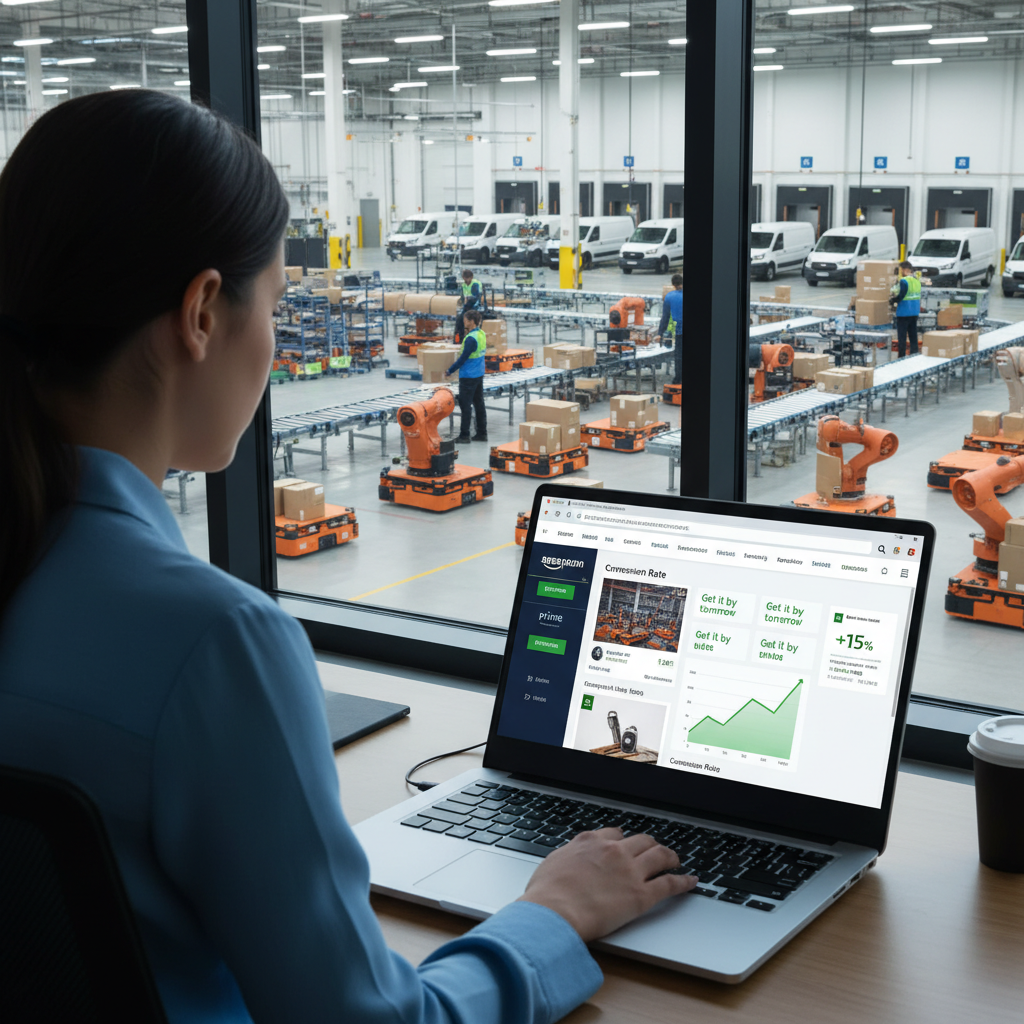
So what’s the difference between Amazon Logistics and traditional carriers?
1. Ownership & control
- Traditional carriers: Independent companies (UPS, FedEx) or government-run postal services.
- Amazon Logistics: Built and controlled by Amazon, tailored around Amazon’s orders and delivery promises.
Because it’s Amazon’s own system, it can:
- Experiment with same-day or next-day delivery more aggressively.
- Optimize delivery routes based on Amazon’s real-time order data.
- Offer Sunday deliveries and late-night drops in many areas.
2. Who delivers your package?
- UPS/FedEx/USPS: Their own employees or contractors.
- Amazon Logistics: Independent Delivery Service Partners (small businesses) plus Amazon Flex drivers, all using Amazon’s routing and delivery app.
3. Tracking & notifications
Amazon Logistics often gives more granular tracking inside the Amazon app:
- Live map views in some regions
- “X stops away” countdowns
- Photos of where your package was left
Traditional carriers have tracking too, but Amazon deeply integrates it into your order history and push notifications.
What Services Fall Under Amazon Logistics?
Amazon doesn’t always call them out by name on the checkout page, but under the hood, Amazon Logistics covers several types of delivery.
1. Standard & Prime deliveries
For many Prime and standard orders, especially in metro or suburban areas, Amazon Logistics handles the:
- Same-day delivery
- One-day or two-day delivery
- Scheduled delivery windows in some regions
If you’re getting scary-fast shipping, odds are good Amazon’s network — not UPS — is involved somewhere.
2. Amazon Flex
Amazon Flex is Amazon’s gig-driver program.
- Drivers use their own vehicles.
- They sign up for delivery blocks (2–4 hour segments).
- They pick up packages from local delivery stations and deliver them using a special app.
This lets Amazon flex (pun intended) its capacity during peak times like holidays, Prime Day, or weekends.
3. Delivery Service Partners (DSPs)
These are small independent businesses that operate fleets of Amazon-branded vans.
- Amazon provides the vehicle branding, tech, and volume.
- The local business recruits and manages drivers.
- They handle dense routes in urban/suburban areas.
From a customer’s POV, it just looks like “an Amazon van showed up.”
4. Specialty and oversized deliveries
For large items (furniture, TVs, equipment), Amazon may use:
- Specialized carriers
- White-glove services (in-home delivery, setup, or room-of-choice)
Some of these fall under Amazon’s broader logistics and transportation ecosystem, separate from the typical van delivery model — but all are part of Amazon’s larger mission: owning more of its logistics chain.
Why Did Amazon Build Its Own Logistics Network?
Short answer: control, speed, and cost.
Long answer:
1. Control over the customer experience
If your package is late, you usually blame Amazon, not UPS.
By building Amazon Logistics, Amazon can:
- Decide how fast to promise delivery in different areas.
- Collect detailed data about delivery performance.
- Test new ideas like photo proof of delivery or delivery instructions (gate codes, safe spots, etc.).
2. Speed and flexibility
To offer Prime one‑day and same‑day delivery at scale, Amazon needed a network that:
- Can quickly ramp up during big sales or holidays.
- Supports localized same‑day hubs close to dense populations.
- Isn’t constrained by another carrier’s route planning.
3. Cost and redundancy
Third‑party carriers charge per package, and as Amazon’s volume exploded, those costs were huge.
By handling more deliveries itself, Amazon can:
- Negotiate better deals with carriers by having options.
- Shift volume between its own network and partners based on cost, speed, and capacity.
- Build long‑term efficiency instead of paying middlemen for every shipment.
What Does Amazon Logistics Mean for Shoppers?
From a customer’s perspective, here’s how Amazon Logistics shows up in daily life.
Pros
- Faster delivery windows in many areas (same‑day, next‑day).
- Weekend and evening deliveries, including Sundays in many U.S. locations.
- More detailed tracking and delivery notifications inside the Amazon app.
- Photo proof of delivery, which helps solve “Where is my package?” mysteries.
Possible downsides
- Inconsistent experiences depending on your local DSP or Flex driver quality.
- Packages might be left in odd spots if drivers are rushed or newer to the area.
- Fewer familiar carriers (like UPS) if you prefer their handling or pickup options.
Example: Two neighbors both order the same product. One gets it via UPS, the other via an Amazon Logistics van. UPS might drop at the front porch with a door tag; Amazon’s driver might tuck it behind a planter and upload a photo. Same outcome (package delivered), different style.
What Does Amazon Logistics Mean for Sellers?
If you’re an Amazon seller, this is where things get interesting.
1. Faster delivery can boost conversions
Listings eligible for Prime, one‑day, or same‑day delivery tend to convert better because:
- Customers trust faster delivery.
- The “Get it by tomorrow” badge is powerful.
Amazon Logistics is a key enabler of those Prime promises.
2. More control through FBA
If you use Fulfilled by Amazon (FBA), Amazon handles storage, packing, and shipping — often via its own logistics network.
Benefits include:
- Prime badges
- Faster and more competitive delivery times
- Potentially higher search ranking due to better customer experience
3. Fewer shipping headaches, different dependencies
You don’t have to negotiate your own shipping contracts, but you are now deeply tied to Amazon’s systems, fees, and performance metrics.
If Amazon’s logistics network is strained (holidays, weather events), sellers may feel the impact in delays or higher fees — even if they aren’t directly managing shipping.
Is Amazon Logistics a Separate Shipping Option You Can Choose?
For customers: not really.
When you check out, you see choices like:
- Same‑day delivery
- One‑day or two‑day delivery
- Standard shipping
You don’t usually see: “UPS vs Amazon Logistics vs USPS.”
Amazon decides behind the scenes which carrier will handle your package based on:
- Your location
- The item’s location
- Capacity and cost
- Delivery promises (e.g., Prime windows)
Sometimes Amazon will still use UPS, FedEx, USPS, or a regional carrier — especially in rural areas or where it lacks dense coverage.
Real‑World Scenarios: Spotting Amazon Logistics in Action
A few everyday examples:
Scenario 1: The Sunday surprise
You order headphones on Friday night with Prime one‑day shipping.
- Saturday: “Shipped”
- Sunday morning: “Out for delivery by 9 PM”
At 4 PM, an Amazon‑branded van pulls up. That’s Amazon Logistics.
Scenario 2: The gig driver drop‑off
You get a text: “Your package is 4 stops away.” A regular car (not a van) pulls up, someone in a vest drops off a small envelope, takes a photo, and leaves.
That’s likely an Amazon Flex driver working a delivery block through Amazon Logistics.
Scenario 3: Mixed‑carrier neighborhood
Your neighbor’s big bulky item shows up in a UPS truck. Your smaller Prime item shows up in an Amazon van. Same street, different carriers.
Amazon is dynamically sending packages through different networks based on what makes the most sense.
Key Takeaways: What Is Amazon Logistics?
Let’s wrap it up.
- Amazon Logistics is Amazon’s own shipping and last‑mile delivery network.
- It uses Delivery Service Partners, Amazon Flex drivers, and Amazon facilities to move packages.
- It powers Prime, same‑day, one‑day, weekend, and late‑evening deliveries in many areas.
- For shoppers, it means faster, more flexible delivery, plus better tracking — with some variability by region.
- For sellers, it’s a major engine behind Prime eligibility, faster shipping, and higher conversions, especially via FBA.
So the next time a gray van or a random sedan shows up with your package at 8:47 PM on a Sunday… now you know: that’s Amazon Logistics quietly doing its thing behind the “Buy Now” button.
Leave a Reply