What Time Does Amazon Start Delivering?
Wondering if that 6 a.m. van outside is your package? Here’s exactly how Amazon’s delivery start times really work.
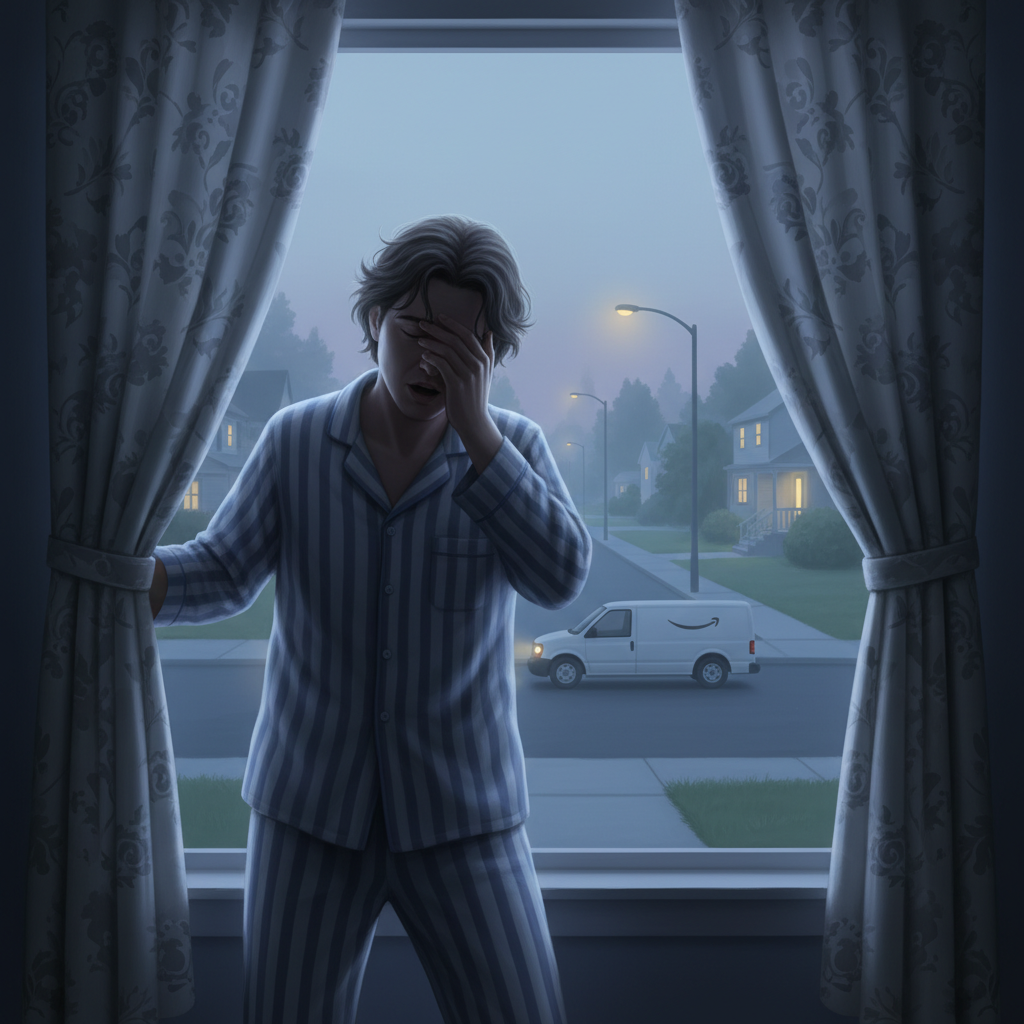
If you’ve ever stared out the window at 6 a.m. wondering, “Is that delivery truck for me?”, you’re in the right place.
Let’s decode what time Amazon actually starts delivering, how early is too early, and why your neighbor gets their packages at dawn while yours show up at dinner.

Quick Answer: What Time Does Amazon Start Delivering?
In the U.S., Amazon delivery typically starts as early as 4:00–5:00 a.m. in some areas, but more commonly you’ll see drivers out from around 6:00–8:00 a.m. local time, and they can keep delivering up to 8:00–10:00 p.m., depending on your region and the service level (standard vs. Same-Day, etc.).
Key points:
- Earliest deliveries: around 4–6 a.m. in select busy metros.
- Typical delivery window: 8 a.m. – 8 p.m. for standard residential deliveries.
- Latest delivery: up to 10 p.m. in many U.S. locations for Prime and Same-Day orders.
Amazon’s help pages say most packages are delivered between morning and 8–10 p.m., and they specifically note that delivery times vary by service, address type, and volume on a given day.
Takeaway: Yes, that 7 a.m. doorbell might be Amazon. No, 2 a.m. probably isn’t.

Why Delivery Start Times Vary So Much
So why does your friend get packages at 7 a.m., and yours consistently arrive at 5:30 p.m. when you’re in the same city?
1. Your Location (Urban, Suburban, or Rural)
Amazon plans delivery routes around density:
- Dense urban areas: More early-morning routes because drivers can hit a lot of stops quickly.
- Suburbs: Often mid-morning to late afternoon.
- Rural areas: Usually fewer trips per day, so times can skew later.
If you live in an apartment-heavy neighborhood near an Amazon delivery station, you’re more likely to see very early vans.
Mini takeaway: Closer to a delivery station = earlier potential drop-offs.
2. Type of Delivery Service
Not all Amazon deliveries are created equal. Delivery start times can depend on which service is fulfilling your order:
- Standard Prime / Free Shipping: Usually within the normal 8 a.m. – 8 p.m. window.
- Same-Day / One-Day / Two-Day: These can be prioritized earlier in the day, but also sometimes arrive later if your package is bundled with an evening route.
- Amazon Fresh / Whole Foods deliveries: Often have specific selectable time slots, including early morning windows.
- Amazon Locker / Hub deliveries: These may be delivered earlier in the day before home routes.
Mini takeaway: Faster shipping doesn’t always mean earlier in the day—it means earlier overall.
3. Day of the Week & Volume
Peak times (like Prime Day, Black Friday, Cyber Monday, December holidays) mean:
- More routes
- Earlier starts
- Later endings
During these high-volume periods, it’s more common to see deliveries start earlier and continue right up to 10 p.m. so Amazon can clear the backlog.
Mini takeaway: Big sale = big chaos = more extreme delivery hours.
4. Third-Party Carriers vs. Amazon’s Own Drivers
Your package might be delivered by:
- Amazon Logistics (Amazon-branded vans / Flex drivers)
- USPS
- UPS, FedEx, or regional carriers
USPS and other carriers typically stick to something like a 9 a.m. – 5/6 p.m. style window, with some flexibility. Amazon’s own delivery network is what tends to push the very early mornings and late evenings.
Mini takeaway: If tracking shows “Delivered by Amazon,” your hours are likely wider.
What Time Does Amazon Start Delivering in the Morning, Really?
Let’s break it down more practically.
Typical Morning Start by Service
While it varies by exact address, a general rule of thumb in the U.S.:
- Amazon Logistics residential routes: Commonly start around 6–8 a.m., though internal logistics and driver anecdotes show routes can be loaded and heading out as early as 4–5 a.m. in some areas.
- USPS / UPS / FedEx delivering Amazon packages: More like 8–9 a.m. starts.
- Amazon Fresh / groceries: Depending on your city, you can often pick early time slots starting as early as 7–8 a.m., sometimes earlier.
If you consistently see your orders show up before 9 a.m., your area likely has a route that launches early from a nearby delivery station.
Mini takeaway: For most people, expecting Amazon anytime after 8 a.m. is realistic; before that is a bonus.
How Late Will Amazon Deliver at Night?
Morning is only half the story. The other question: How late is too late?
In many U.S. locations:
- Amazon says deliveries can occur up to 8–10 p.m. local time.
- During peak seasons or heavy volume days, many customers report packages arriving as late as 9:30–10 p.m.
Amazon usually tries not to ring the doorbell or knock late at night unless signature is required, especially in residential neighborhoods. Instead, they may:
- Leave the package at the door quietly
- Take a photo
- Send an app / email notification
Mini takeaway: If it’s after 10 p.m., your package is probably coming tomorrow.

Can You Control What Time Amazon Delivers?
Short answer: Not precisely, but you can influence it.
1. Use Amazon’s Delivery Instructions
In your Amazon account, under Your Addresses, you can:
- Add a gate code or apartment instructions
- Indicate where to leave packages (front door, side gate, leasing office, etc.)
While this doesn’t lock in a specific time, it can make your address easier to service, which sometimes keeps you off the “problem stops” that get pushed later.
2. Choose Amazon Day Delivery (Where Available)
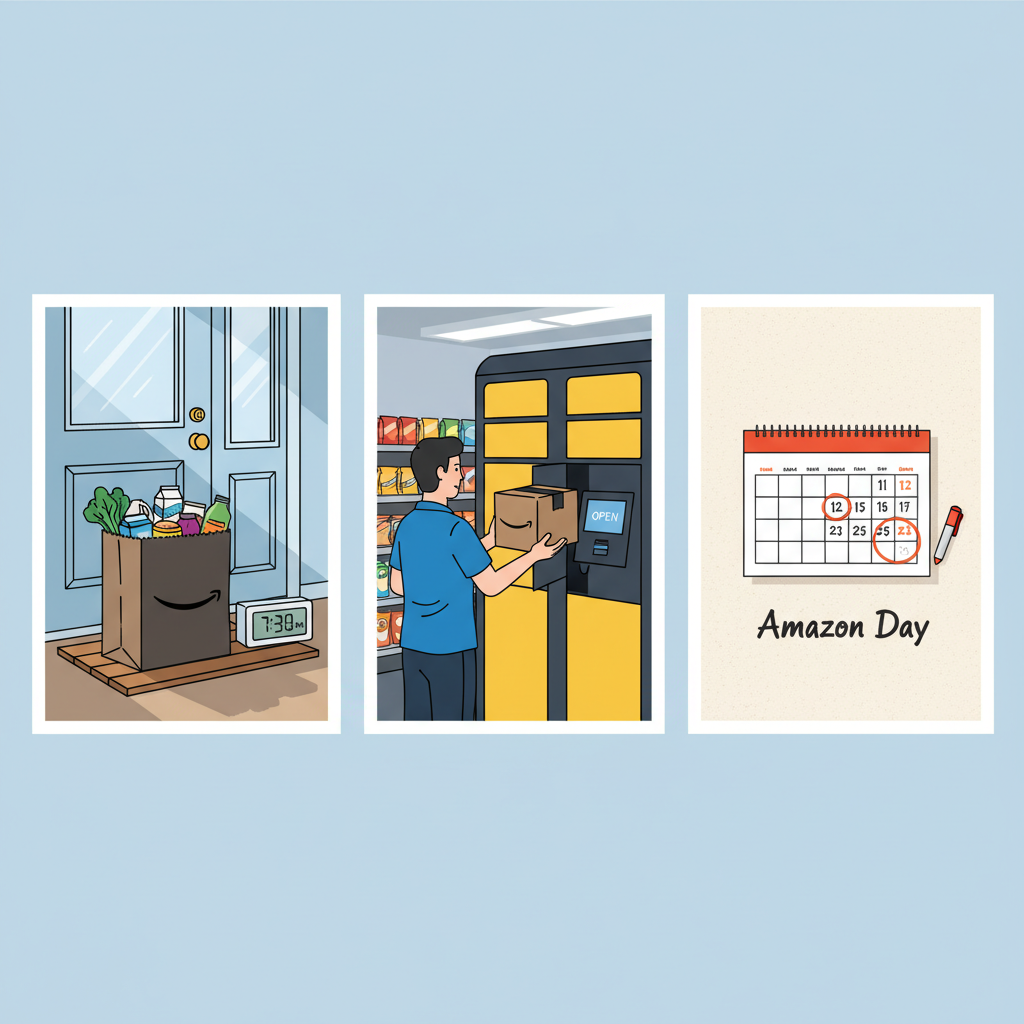
Some Prime members can pick an “Amazon Day”—a specific day of the week when most packages arrive together.
Pros:
- Fewer random days to worry about
- Often arrives at a similar time window week-to-week
Cons:
- It’s about which day, not what hour.
3. Pick a Time Slot for Groceries & Some Same-Day Orders
For Amazon Fresh, Whole Foods delivery, and some Same-Day options, you can often select time windows like:
- 7–9 a.m.
- 8–10 a.m.
- 6–8 p.m.
Those are much more predictable because the driver’s route is designed around those windows.
4. Use an Amazon Locker or Hub
If your building, workplace, or nearby store has an Amazon Locker or Hub, you can ship there.
Benefits:
- Packages often arrive earlier in the day since lockers are pre-loaded from a central route.
- No stress about being home or hearing the door.
Mini takeaway: For most packages, you can’t say, “Deliver at 9:17 a.m.” But with grocery windows, lockers, and Amazon Day, you can tame the chaos.
Why Your Amazon Package Sometimes Comes Very Early (Or Very Late)
If your normal pattern suddenly changes—say you usually get stuff at 2 p.m., but this time it shows up at 8 a.m.—a few things may be happening:
- Your package got put on a different route. A different driver, different sequence.
- Delivery volume shifted. Heavy day? Your stop might move earlier or later.
- Weather or traffic issues. Drivers might re-route in real time.
- New delivery station or staffing changes. When Amazon opens a new facility or adjusts routes, areas can suddenly see different windows.
Mini takeaway: One weird delivery time doesn’t mean your entire life schedule has changed—yet.
How to Check Today’s Expected Delivery Time
If you want to know when Amazon is likely to show up today, here’s what to do:
Step 1: Go to “Your Orders”
On the Amazon website or app:
- Open Your Orders.
- Find the order in question.
- Look for the delivery estimate.
You’ll often see:
- A date (e.g., “Arriving today”) and
- A time range (e.g., “by 10 p.m.” or “between 2 p.m. – 6 p.m.”)
Step 2: Watch for the “Out for Delivery” Update
When the status changes to Out for delivery, Amazon has assigned it to a route.
At that point, you may see a narrower time window, like:
- “Arriving between 1 p.m. – 4 p.m.”
Later in the day, you might even see something like:
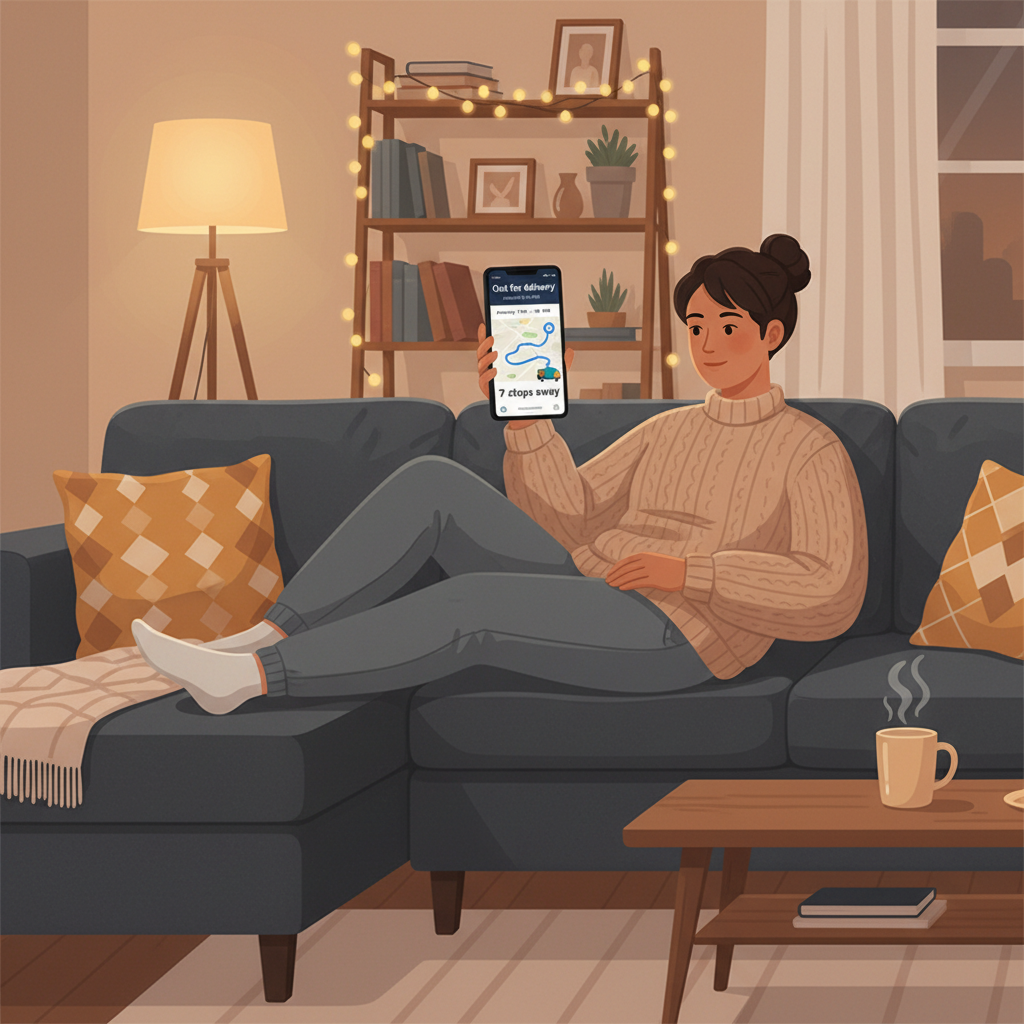
- “Stops away: 7”
That’s your best near-real-time clue on timing.
Step 3: Check the Map (When Available)
Sometimes, especially in the app, you’ll get a live map showing the driver’s location and how many stops remain.
If you see your driver a few streets away at 8 a.m., your personal Amazon “start time” for the day is about to be now.
Mini takeaway: Don’t guess—use the app. It’s way more accurate than your neighbor’s delivery stories.
FAQs About Amazon Delivery Start Times
Does Amazon deliver at 5 a.m.?
In some busy metro areas with heavy volume, yes, drivers may start very early, and it’s possible (though not super common) to see packages show up around 5–6 a.m. Most people, however, won’t see deliveries that early.
Does Amazon deliver before 8 a.m.?
Yes, it’s possible—especially for:
- Large cities
- High-volume days
- Grocery orders with early windows
But for many suburban and rural locations, most deliveries start closer to 8–9 a.m.
Does Amazon deliver on Sundays and holidays?
In many U.S. regions, Amazon does deliver on Sundays, often starting in the same morning window as other days. Major federal holidays are more limited and depend on the specific carrier and service.
Can I ask Amazon not to deliver too early or too late?
There’s no universal “no earlier than” / “no later than” toggle for regular packages. However, you can:
- Use delivery instructions (“Please do not ring the bell,” where appropriate).
- Choose time windows for grocery deliveries.
- Ship to a Locker or Hub to avoid late-night door visits.
Practical Summary: What Time Does Amazon Start Delivering?
- Typical daily window: Roughly 8 a.m. – 8 p.m., with possible extensions to 10 p.m. in many places.
- Earliest realistic deliveries: Around 4–6 a.m. in some high-demand or urban areas, though this is less common.
- Most common start time for most people: About 8–9 a.m.
- You can’t set an exact time, but you can:
- Use Amazon Day for consistent weekly delivery days.
- Choose time slots for Fresh / grocery orders.
- Ship to Lockers/Hubs for more predictable daytime delivery.
- Track live in the Amazon app to see your real-time window.
Bottom line: Amazon can start delivering surprisingly early—but for most households, planning around 8 a.m. to late evening is the safest bet. If you really care about precise timing, use grocery time slots or a locker, and let the app be your crystal ball instead of guesswork.
Leave a Reply