Inside Amazon’s RFD2 Fulfillment Hub
If you’ve ever watched an Amazon package detour through “RFD2” on its way across the Midwest and wondered what’s actually going on in Huntley, Illinois, this is the tour you were missing.
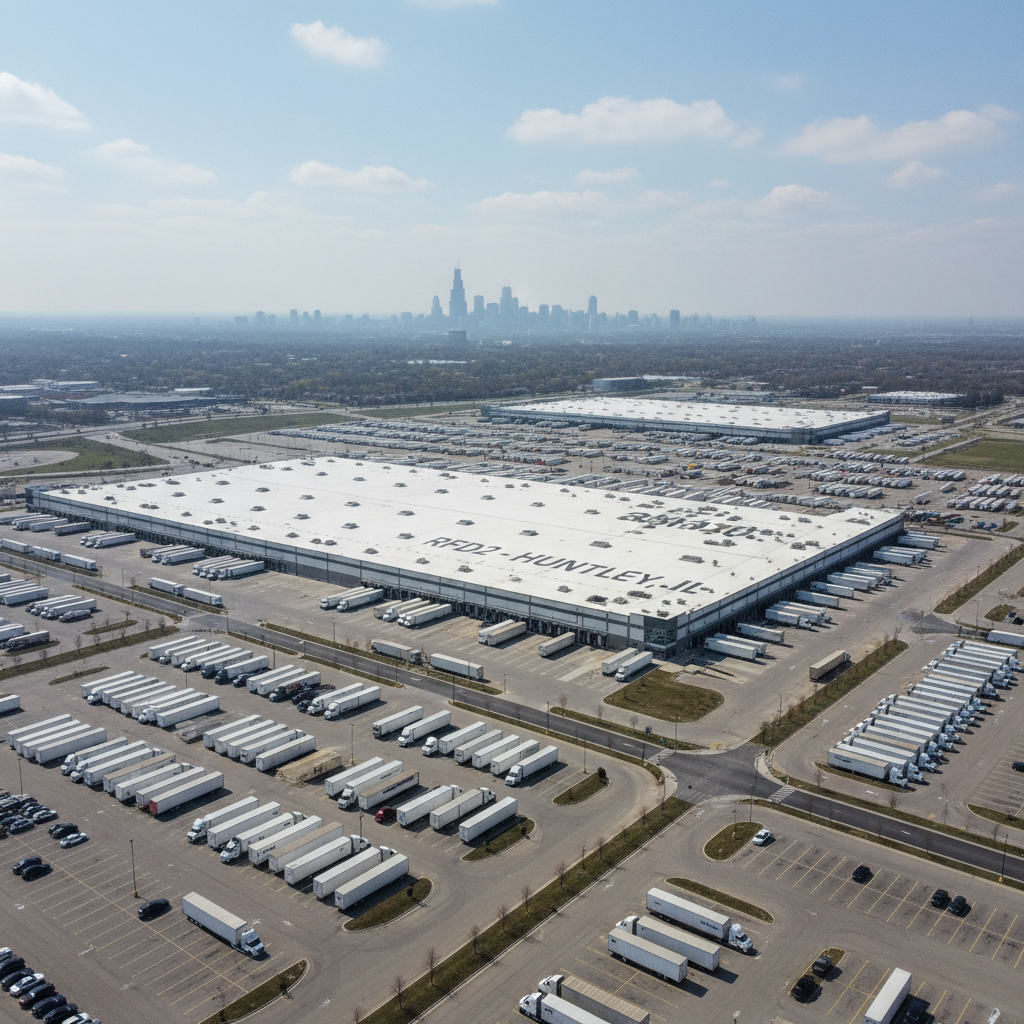
What Is Amazon Fulfillment Center RFD2?
If you’ve ever tracked an Amazon package in the Midwest and wondered, “What on earth is RFD2 and why is my stuff there?”, you’re in the right place.
Let’s take a walk through Amazon’s RFD2 facility in Huntley, Illinois—what it is, what happens inside, what changed for sellers in 2024, and what it means if you work or ship through there.
RFD2 is an Amazon facility located at 11500 Freeman Road, Huntley, IL 60142, about an hour northwest of Chicago. Multiple warehouse-location directories and FBA tools list it clearly under that address as an Amazon site used in the FBA network.
The site is often referred to as an Amazon Fulfillment Center, but functionally it behaves more like a cross-dock / inbound–outbound hub (IXD) than a classic, pick-and-pack storage facility. In other words:
- Traditional fulfillment centers store items for a while, pick them for individual customer orders, then ship.
- RFD2’s primary role is to receive, sort, and move freight between other facilities—rather than be the long‑term home of your inventory.
Think of it less as a giant closet and more as a high-speed transfer station where packages barely have time to sit down.
RFD2 is an Amazon facility in Huntley, IL, operating mainly as a high-volume sort / cross-dock hub within the broader fulfillment network.
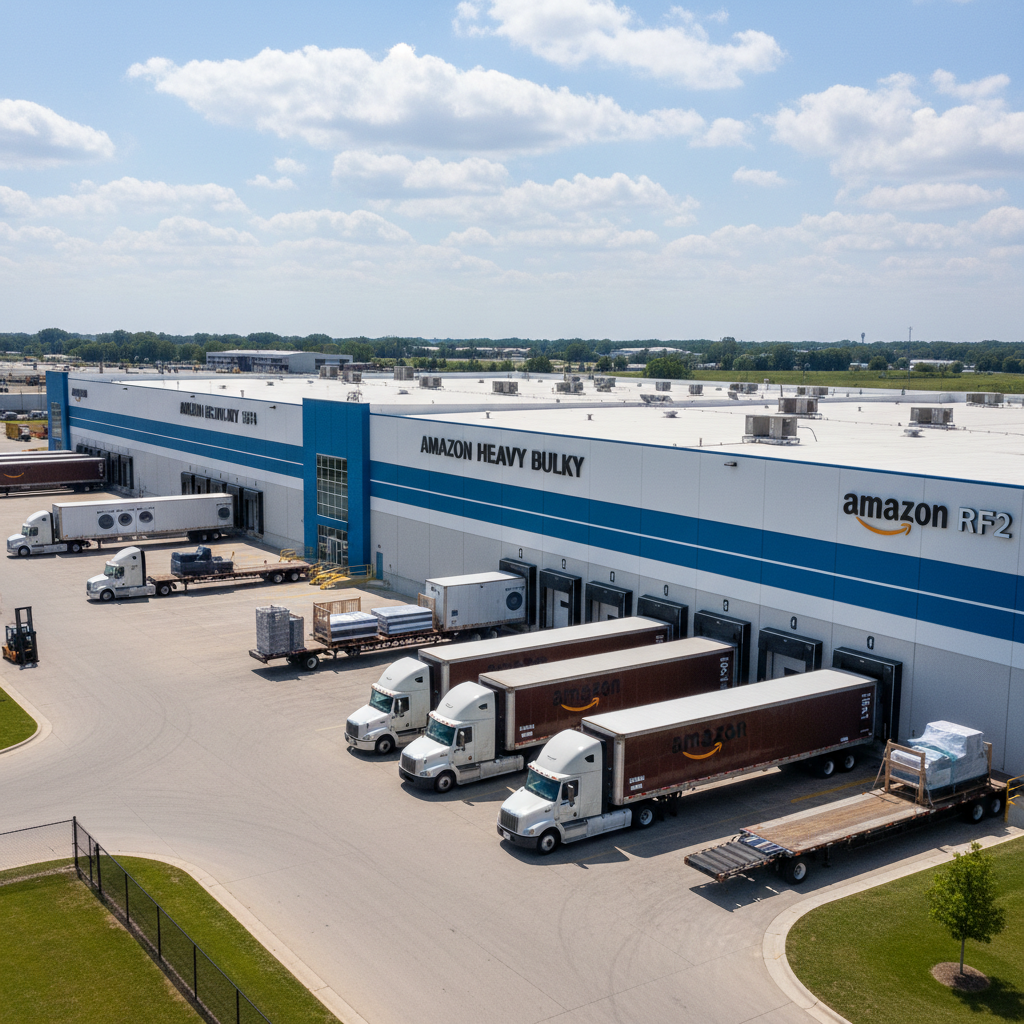
Where Exactly Is RFD2 and What’s Around It?
The RFD2 building sits in a growing Amazon cluster in Huntley, Illinois. Directories of Amazon locations point to that Freeman Road address, and regional news has highlighted Amazon’s rapid expansion in Huntley with multiple large facilities.
A few things to note about the local setup:
- RFD2 on Freeman Road is the large hub often referenced in shipping tools and seller dashboards.
- RFD4, a second Amazon building behind/next to RFD2, is described by workers and local reports as a more traditional XL / heavy and bulky fulfillment center. That nearby site specializes in large items like furniture and appliances, using a different layout, equipment, and workflows than RFD2.
So when someone says, “I work at the Amazon facility in Huntley,” they might mean RFD2, RFD4, or another related building. Each one plays a different role in the larger logistics system.
RFD2 isn’t an isolated warehouse—it’s part of a small Amazon logistics ecosystem in Huntley, with neighboring sites handling different types of inventory and operations.
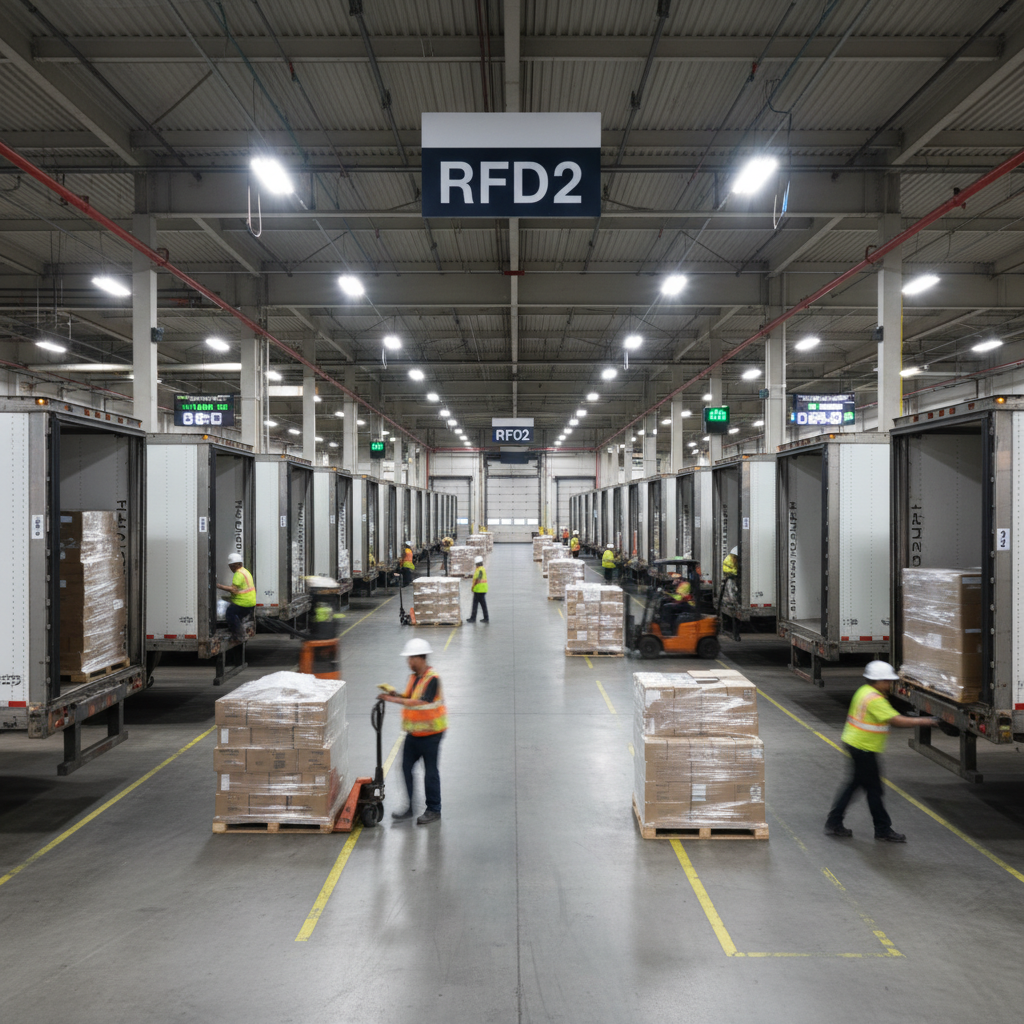
What Happens Inside RFD2 Day to Day?
You won’t find a detailed public blueprint of RFD2’s processes (Amazon keeps its operational playbooks pretty tight), but we can piece together a good picture based on its role, size, and similar facilities.
1. High-Volume Inbound and Outbound
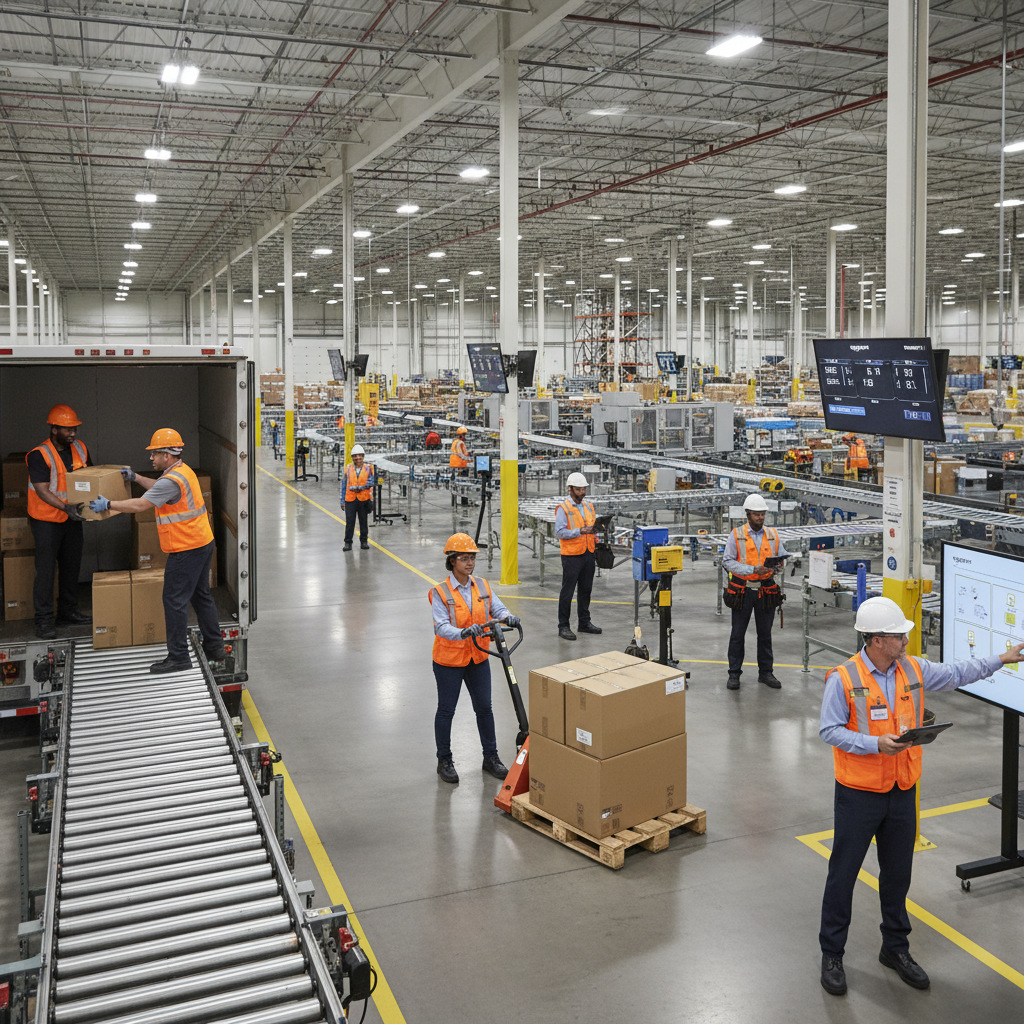
RFD2 handles large volumes of inbound trailers from suppliers, other Amazon sites, and sometimes third‑party logistics partners. The key steps typically look like this:
- Trailers arrive and are docked. Yard teams coordinate which trucks go where and in what order.
- Unload and sort. Pallets or cartons are unloaded, scanned, and routed based on destination and priority.
- Short-term staging. Instead of storing products long-term, freight is staged briefly in designated areas.
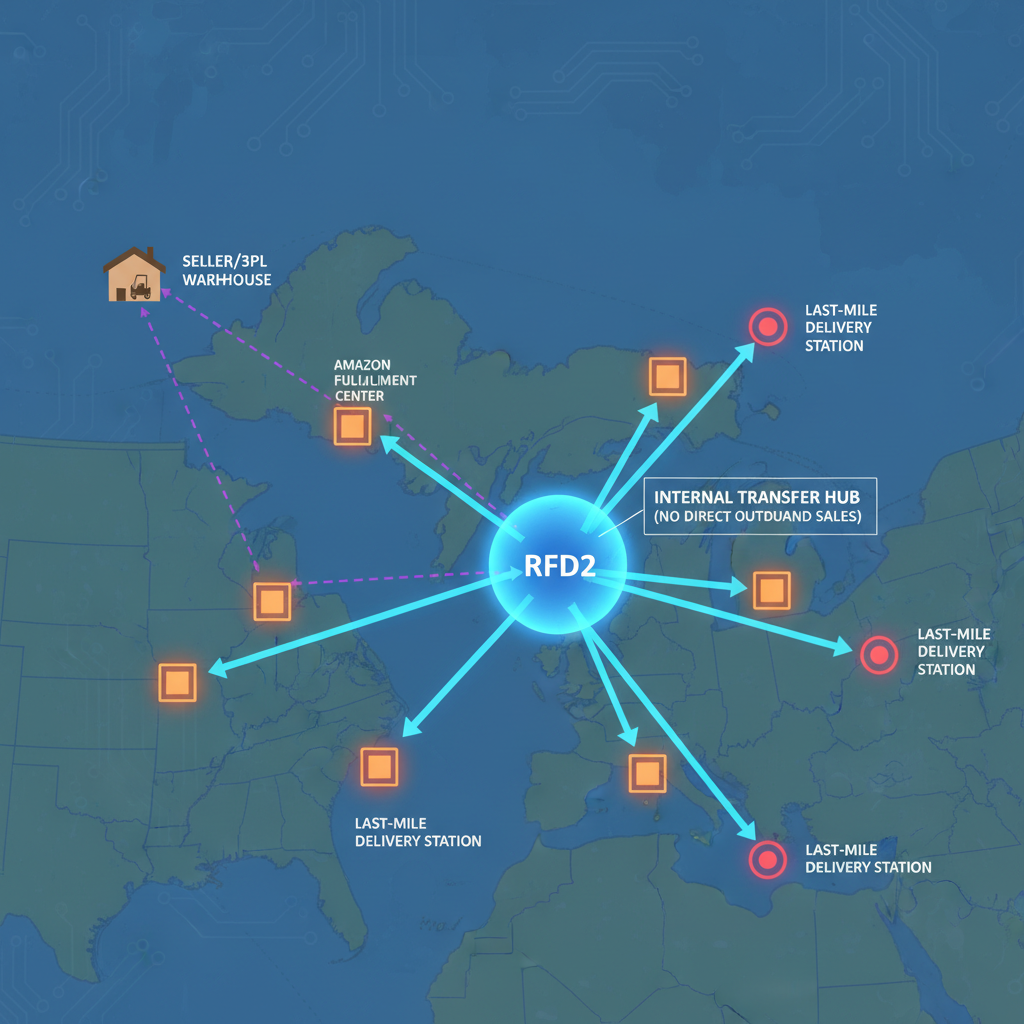
- Reload and dispatch. Freight is consolidated onto outbound trailers heading to other Amazon fulfillment centers, sort centers, and last‑mile delivery stations.
Because RFD2 functions more like a cross-dock, the goal is speed, not storage.
- A shipment of mixed FBA inventory arrives from a midwestern supplier.
- RFD2 receives and quickly redistributes that freight to multiple traditional fulfillment centers across the region.
- Those downstream FCs then handle long-term storage, picking, and final customer shipping.
2. Robotics, Automation, and Scanning
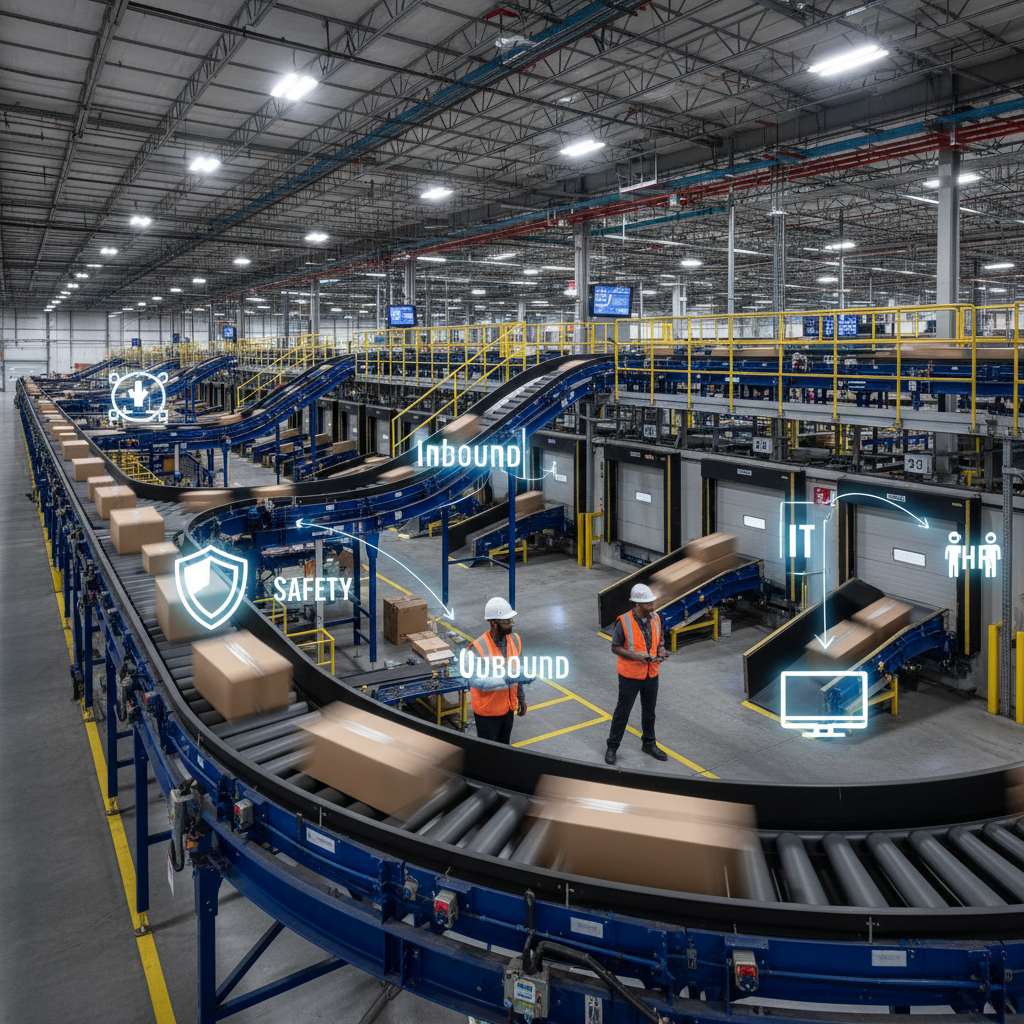
While Amazon doesn’t publish a robotics spec sheet for RFD2, the company has rolled out a wide array of robots, conveyors, automated sorters, and scanning systems across its network—especially at high-volume hubs.
That typically means:
- Miles of conveyors moving pallets, cases, or totes.
- Automated sortation sending items to the correct dock door or zone.
- Handheld scanners and terminals for every associate, tracking where each pallet or container goes.
The human job becomes supervising, feeding, and troubleshooting this flow rather than manually moving every box from point A to B.
3. Safety, Radios, and Roles
Internal radio-frequency charts and industry observers note that large Amazon facilities like the “RFD” group often have dedicated radio channels for Safety, HR, IT, Learning, Inbound Dock, Outbound Dock, Flow, Transportation Ops, Housekeeping, and Emergency teams.
That tells us a few things about life inside RFD2:
- There are specialized departments (Safety, RME/maintenance, Learning, etc.), not just one big blob of “warehouse workers.”
- Safety announcements and emergency alerts can be broadcast across all groups when needed.
- Communication is constant—coordinating fast-moving freight, equipment, and people.
RFD2 is built for fast, high-volume movement of freight between other Amazon sites, with heavy use of automation and tightly coordinated teams.
The 2024 Shift: RFD2 Goes “Internal Only”
If you’re a seller or freight forwarder, this part matters.
In August 2024, logistics and freight-forwarding communities circulated Amazon notifications stating that several facilities—including RFD2—would become internal-use only as of August 18, 2024. That meant:
- These buildings would no longer be available as target locations for external shipping or new FBA shipments.
- Existing or already-scheduled shipments were still honored and processed, but shippers were told to choose alternative warehouses going forward.
In practice, for FBA sellers and 3PLs, this likely meant:
- You stopped seeing RFD2 show up as a valid destination in routing plans or inbound creation tools.
- Any previous habit of sending containers directly to RFD2 had to be replaced with other FCs or designated receiving sites.
To be clear, this doesn’t mean RFD2 “shut down.” It means it shifted roles—from being a facility external partners could ship to, to a node that Amazon uses purely within its internal network.
Since mid‑August 2024, RFD2 has effectively been off-limits as a direct destination for new third‑party shipments and is now reserved for internal Amazon operations.
What Does RFD2 Mean for Workers?
If you work (or are considering working) at Amazon RFD2 in Huntley, here’s what this kind of facility usually means for your day-to-day.
1. Job Types You’ll Typically See
Common roles at a cross-dock / high‑throughput site include:
- Warehouse associate / fulfillment associate – unloading, loading, scanning, moving freight.
- Problem solver / process guide – dealing with exceptions, mis‑scans, or unexpected freight.
- Yard specialist / yard marshal – managing trailers, docks, and traffic.
- RME / maintenance technicians – keeping conveyors, doors, and equipment running.
- Learning ambassadors / trainers – onboarding and upskilling new associates.
- Safety and operations leadership – ensuring safe, efficient flow and meeting throughput targets.
Because RFD2 handles big volume swings, shifts can be physically demanding but rhythm-based—lots of repeated motions, some heavy lifting depending on role, and close coordination with your area team.
2. Workload and Pace
Cross-dock style buildings are often:
- High-pace, schedule-driven – tied to carrier and trailer appointments.
- Less focused on individual customer orders, more on whole trailers, pallets, or container loads.
- Metrics-based – trailer turn times, processing rate, error rates, and safety metrics are constantly tracked.
People who like clear structure, visible progress (“we cleared that row of trailers”), and team-based problem solving often do well in this kind of environment.
3. Safety and Training
With so much freight and equipment moving, safety is a huge focus:
- Mandatory safety shoes, vests, and PPE in active areas.
- Strict rules around powered industrial trucks (forklifts, pallet jacks, tuggers).
- Frequent safety huddles, refreshers, and audits.
New hires usually go through:
- A general orientation (Amazon policies, culture, and benefits).
- Site-specific training on processes, equipment, and emergency procedures.
- On-the-floor shadowing with experienced associates.
For workers, RFD2 means fast, structured, physically active shifts in a safety- and metrics-driven environment, with roles ranging from dock work to maintenance and safety.
What Does RFD2 Mean for FBA Sellers and Shippers?
If you’re on the seller or logistics side, you probably landed on this topic because RFD2 popped up in routing, or suddenly stopped popping up.
Here’s what you should keep in mind.
1. Don’t Manually Choose RFD2 as a Destination Anymore
Since its transition to internal-only use in 2024, RFD2 is not a valid destination for new external shipments. If it still appears in some outdated documentation or third‑party tools, treat that as stale data.
Instead, you should:
- Let Amazon’s automatic inbound placement select appropriate FCs.
- If you use a 3PL or freight forwarder, make sure they don’t hard-code RFD2 into routing templates.
2. Expect RFD2 to Still Touch Your Inventory—Behind the Scenes
Even if you never ship directly to RFD2 now, your inventory may still move through it as part of Amazon’s internal network balancing. For example:
- You send inventory to FC A.
- Amazon decides to balance stock and moves part of it through a hub like RFD2 to FC B or C.
You’ll see this reflected in transfer events in your FBA inventory records, but you won’t be asked to create inbound shipments to RFD2 itself.
3. Keep an Eye on Official Amazon Notices
Because Amazon occasionally reconfigures its network, the best way to keep up is to:
- Watch Seller Central announcements about FBA routing and FC changes.
- Pay attention to routing instructions on each new shipment—don’t reuse old labels or addresses.
Treat RFD2 as an internal Amazon hub. You probably won’t ship there directly anymore, but it may still be part of the invisible journey your inventory takes.
Is RFD2 a Good Place to Work or Ship Through?
That depends on who you are and what you care about.
If You’re a Job Seeker
Pros of a site like RFD2:
- Stable demand – as a big regional hub, volume tends to be steady.
- Clear structure and roles – lots of defined processes and training.
- Growth pathways – exposure to multiple departments (yard, dock, safety, maintenance, learning) can open doors.
Challenges:
- Physically demanding – walking, lifting, and repetitive motion are part of the deal.
- Fast-paced – trailer schedules and throughput goals can make shifts intense.
If you like physical work, structure, and problem solving under time pressure, RFD2-style facilities can be a solid fit.
If You’re a Seller or Shipper
- You shouldn’t aim shipments at RFD2 anymore.
- You can trust that Amazon will still use hubs like RFD2 behind the scenes to keep delivery times competitive in the Midwest.
Your focus should be on:
- Clean data: correct carton/pallet labels, ASN info, and lead times.
- Letting Amazon’s placement algorithms pick the right network destinations.
For workers, RFD2 can be a solid logistics job environment; for sellers, it’s a behind-the-scenes node you don’t manually interact with.
Final Thoughts: Why RFD2 Matters More Than You Think
You may never set foot in RFD2. You may never print its address on a label again. But facilities like RFD2 are a big reason why:
- Your random Tuesday-night order shows up on Thursday.
- Inventory can be rebalanced across the Midwest without you lifting a finger.
- The rest of Amazon’s fulfillment centers aren’t buried under every inbound truck at once.
In the background, hubs like RFD2 take in trailers, reshuffle freight, and push it back out—thousands of times a day—so the rest of the network can breathe.
So the next time your tracking page quietly flashes “Arrived at Amazon facility – RFD2,” you’ll know what’s really happening: a highly choreographed, high-speed relay race where your package is just one of millions sprinting through Huntley, Illinois.
Leave a Reply